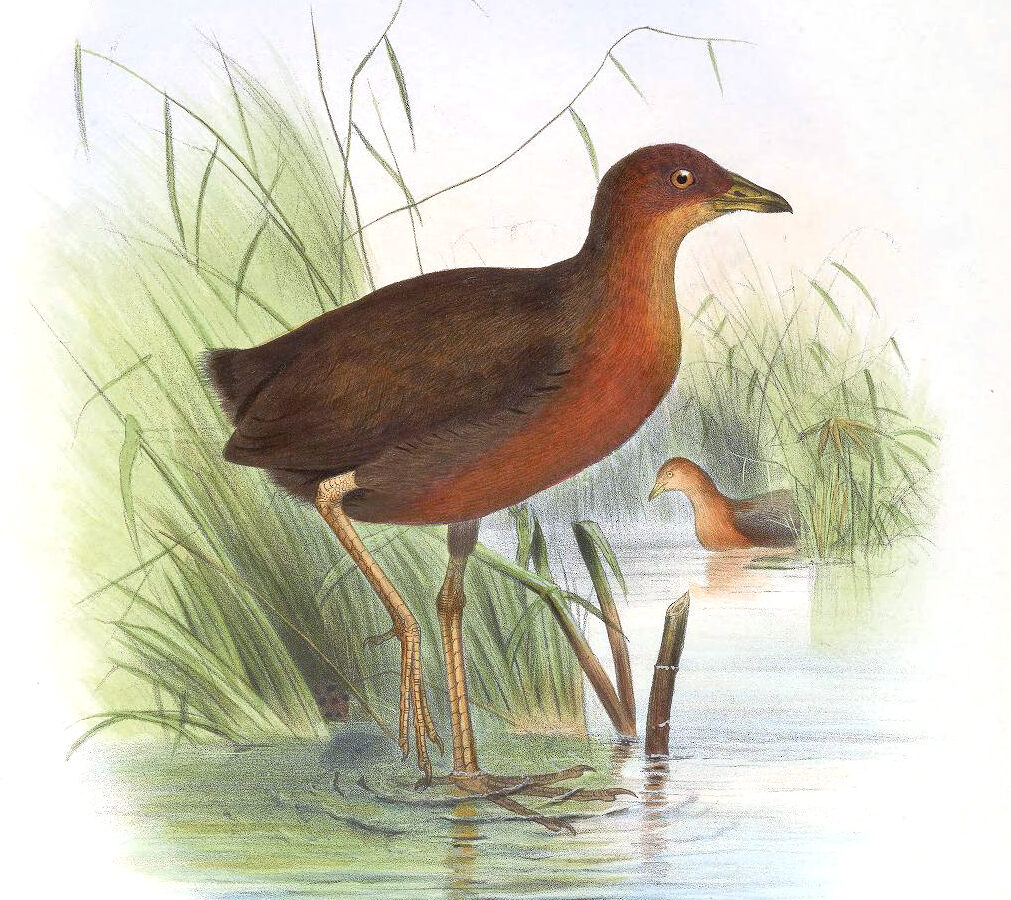
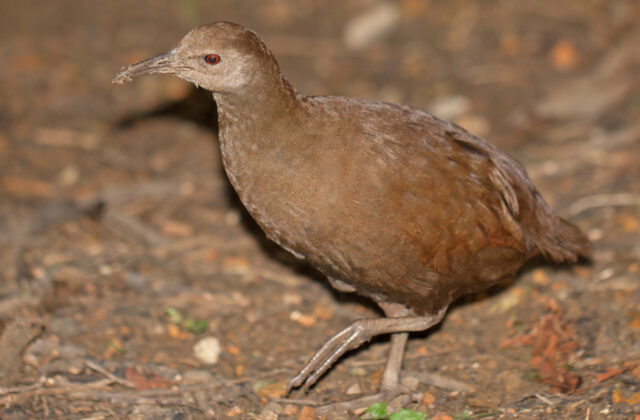
Photo: Joseph Smit / Public domain (Wikimedia Commons)
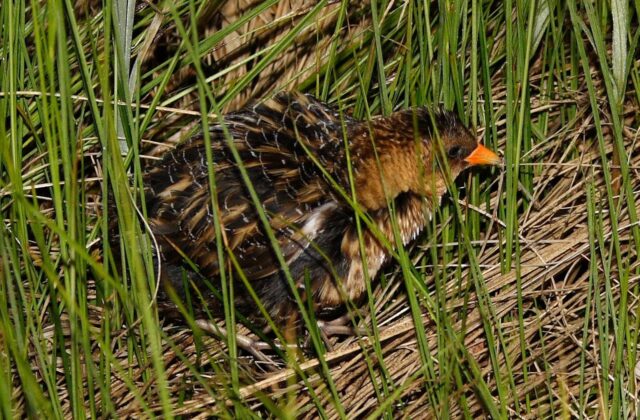
Chestnut-headed Crake
Anurolimnas castaneiceps
Chestnut-headed Crake (Anurolimnas castaneiceps) — Cranes & Rails of South America.
Found across 8 guides in our atlas — open any for the full checklist, photos and what's around right now.
The Chestnut-headed Crake (Anurolimnas castaneiceps) is a member of the Rallidae family found in South America. Adults weigh 126 g.
Where it fits
- Class Aves
- Order Gruiformes
- Family Rallidae Rails, Crakes & Coots
- Genus Anurolimnas
- Species castaneiceps
Quick facts
- Weight
- 126 g
- Diet
- Invertebrate-eaters
- Family
- Rallidae
- Order
- Gruiformes
- Habitat
- Urban & human-modified
How to identify
Similar birds
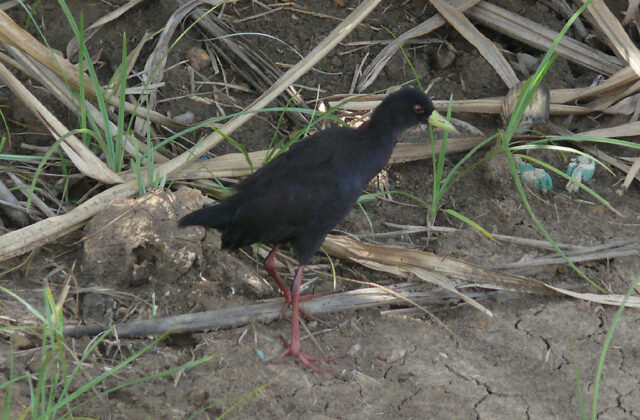 Least Concern
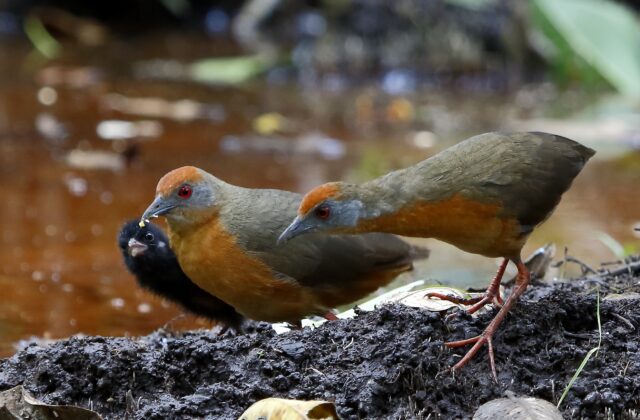 Least Concern
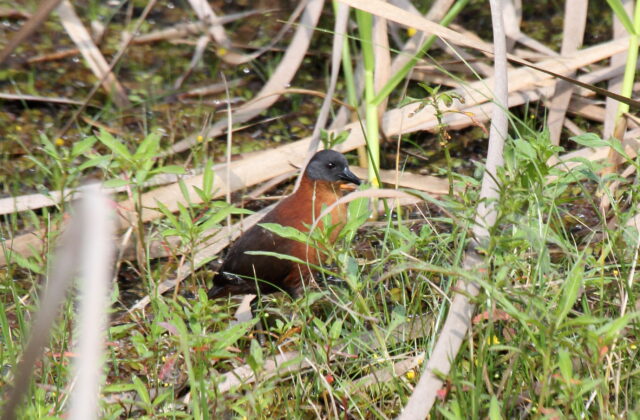 Least Concern
Biology & behaviour
Diet
The Chestnut-headed Crake is a invertivore — it feeds mainly on invertebrates such as insects and other small prey.
Behaviour
A bird of farmland, parks and gardens, it forages mainly on the ground.
Migration
The Chestnut-headed Crake is largely sedentary, staying within its range year-round rather than making regular long-distance migrations.
The Chestnut-headed Crake (Anurolimnas castaneiceps) is a member of the Rallidae family, within the order Gruiformes. Its range spans South America. Its distribution covers SA s Colombia to nw Bolivia.
It is a medium-sized bird. Adults weighs around 126 g, with a wing length of about 11.1 cm and a tail of around 2.7 cm.
The species has a mapped global range of roughly 608,000 km².
Frequently asked questions
How big is the Chestnut-headed Crake?
The Chestnut-headed Crake is a medium-sized bird that weighs around 126 g.
Where does the Chestnut-headed Crake live?
The Chestnut-headed Crake is found across South America with a range covering SA s Colombia to nw Bolivia, where it adapts readily to towns, parks and gardens.
What family does the Chestnut-headed Crake belong to?
The Chestnut-headed Crake (Anurolimnas castaneiceps) belongs to the Rallidae family, in the order Gruiformes.
What does the Chestnut-headed Crake eat?
The Chestnut-headed Crake is a invertivore — it feeds mainly on invertebrates such as insects and other small prey.
Does the Chestnut-headed Crake migrate?
The Chestnut-headed Crake is largely sedentary, staying within its range year-round rather than making regular long-distance migrations.
How large is the Chestnut-headed Crake's range?
The Chestnut-headed Crake has a mapped global range of about 608,000 km².
Conservation
Every bird benefits from bird-safe windows, native plants, and keeping cats indoors. Small changes at home add up to real protection.
Explore more birds
More in Rallidae
 Least Concern
 Extinct
 Least Concern
More in Cranes & Rails
 Vulnerable
 Endangered
 Endangered
 Least Concern
 Least Concern