
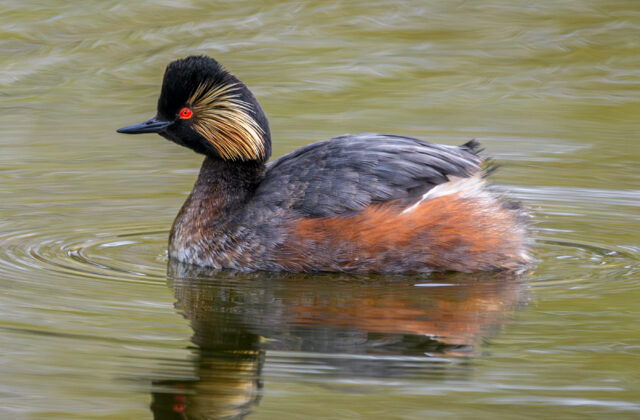
Photo: peterichman / CC BY-SA 2.0 (Wikimedia Commons)
Common Loon
Gavia immer
Common Loon (Gavia immer) — Grebes, Loons & Flamingos of North America.
Found across 10 guides in our atlas — open any for the full checklist, photos and what's around right now.
The Common Loon (Gavia immer) is a member of the Gaviidae family found in Europe & Northern Asia and North America. Adults weigh 5 kg. The IUCN Red List lists it as Least Concern.
Conservation status
IUCN Red List (opens in a new tab)Widespread and abundant — not currently at risk.
Where it fits
- Class Aves
- Order Gaviiformes
- Family Gaviidae Loons
- Genus Gavia
- Species immer
Where it lives
Western, southeastern Greenland, Iceland; subarctic to temperate northern North America: western Alaska mainland to northern tier of contiguous USA, across subarctic Canada to southern Baffin I. and New England
Quick facts
- Weight
- 5 kg
- Diet
- Aquatic hunters
- Family
- Gaviidae
- Order
- Gaviiformes
- Habitat
- Wetland, lake & coast
How to identify
Male vs female
Sexes look alike in plumage; males average significantly heavier (up to ~27% more mass).
Juvenile appearance
Juveniles/first-winter birds are gray-brown above with pale-edged feathers giving a scaly look, and whitish throat and underparts, resembling a duller winter adult.
Breeding vs non-breeding
Breeding adults have a glossy black head/neck (with a green-to-purple iridescent sheen) bearing white necklace stripes and a boldly black-and-white checkered back; in non-breeding (winter) plumage they become plain gray-brown above and white below with a dark crown and hindneck.
Similar birds
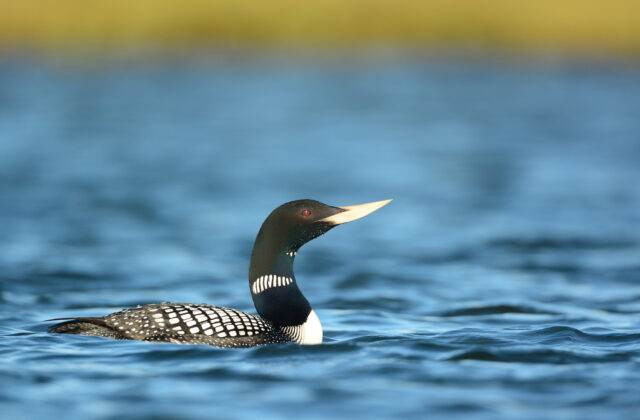 Near Threatened
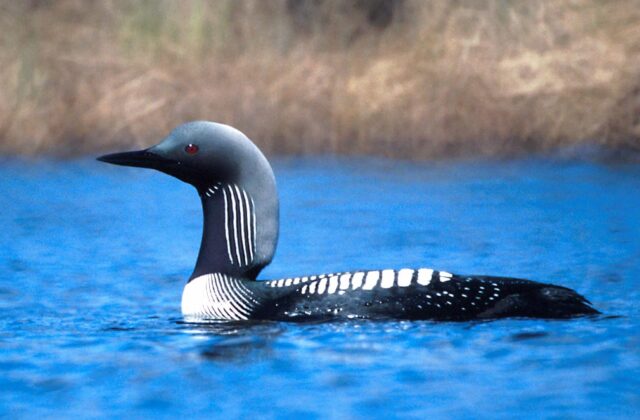 Least Concern
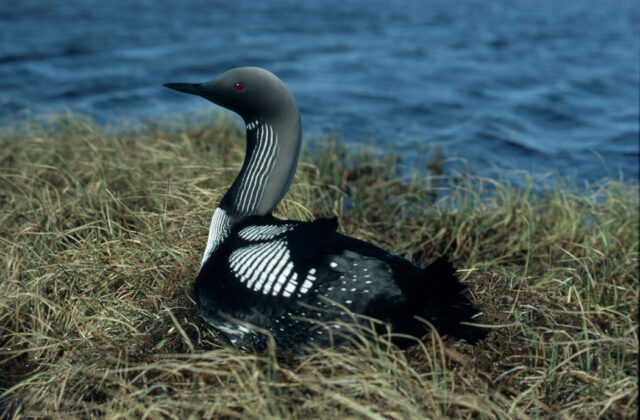 Least Concern
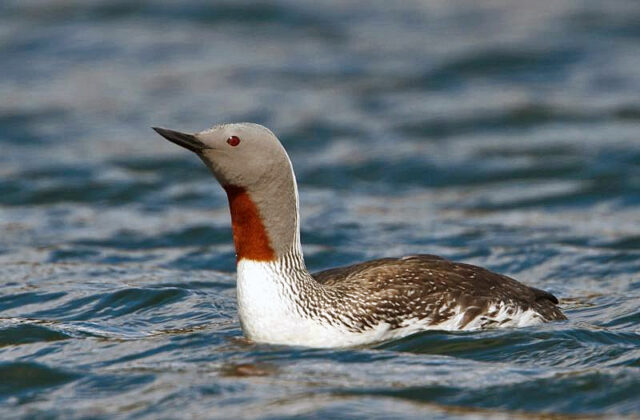 Least Concern
Biology & behaviour
Diet
The Common Loon hunts aquatic prey such as fish and aquatic invertebrates.
Behaviour
A bird of wetlands, it swims and feeds in and around water.
Migration
The Common Loon is migratory, making regular seasonal journeys between its breeding and non-breeding ranges.
The Common Loon (Gavia immer) belongs to the Gaviidae family of the order Gaviiformes. It is found across Europe & Northern Asia and North America. Its distribution covers NA, PAL w, se Greenland, Iceland; subarctic to temperate n North America: w Alaska mainland to n tier of contiguous USA, across subarctic Canada to s Baffin I. and New England.
It is a very large bird. Adults weighs around 5 kg, with a wing length of about 36.5 cm and a tail of around 5.9 cm.
The IUCN Red List currently assesses it as Least Concern. That category covers species that remain widespread and reasonably abundant in the wild.
The species has a mapped global range of roughly 9.5 million km².
Songs & calls
Frequently asked questions
How big is the Common Loon?
The Common Loon is a very large bird that weighs around 5 kg.
Where does the Common Loon live?
The Common Loon is found across Europe & Northern Asia and North America with a range covering NA, PAL w, se Greenland, Iceland; subarctic to temperate n North America: w Alaska mainland to n tier of contiguous USA, across subarctic Canada to s Baffin I. and New England, where it is associated with wetlands, lakes and other open water.
What family does the Common Loon belong to?
The Common Loon (Gavia immer) belongs to the Gaviidae family, in the order Gaviiformes.
What does the Common Loon eat?
The Common Loon hunts aquatic prey such as fish and aquatic invertebrates.
Does the Common Loon migrate?
The Common Loon is migratory, making regular seasonal journeys between its breeding and non-breeding ranges.
Is the Common Loon endangered?
The IUCN Red List currently assesses it as Least Concern That category covers species that remain widespread and reasonably abundant in the wild.
What sound does the Common Loon make?
1 real field recording of the Common Loon — including its song — can be played in the Songs & calls section on this page, credited to the recordist who captured it.
How large is the Common Loon's range?
The Common Loon has a mapped global range of about 9.5 million km².
Conservation
Every bird benefits from bird-safe windows, native plants, and keeping cats indoors. Small changes at home add up to real protection.
Explore more birds
More in Gaviidae
Least Concern
Least Concern
Near Threatened
Least Concern
More in Grebes, Loons & Flamingos
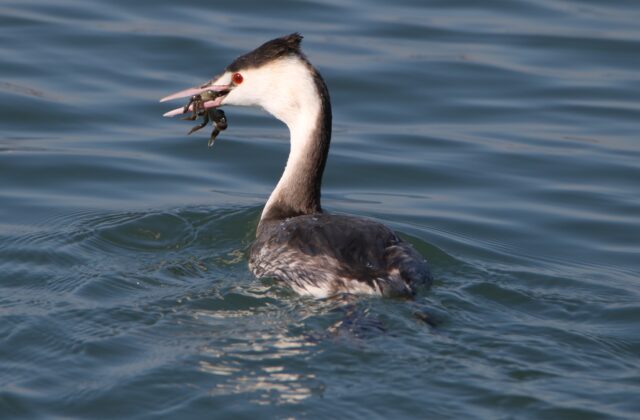 Least Concern
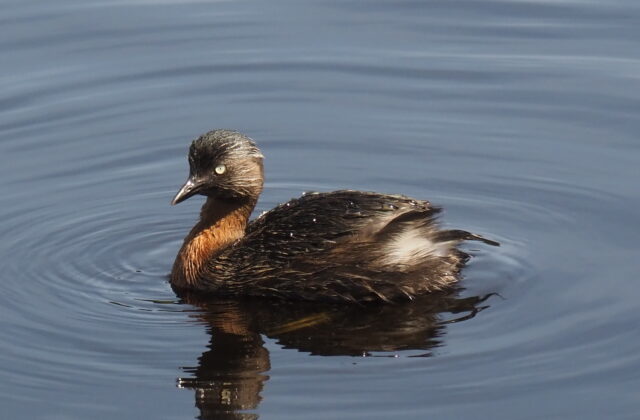 Least Concern
Least Concern
Least Concern
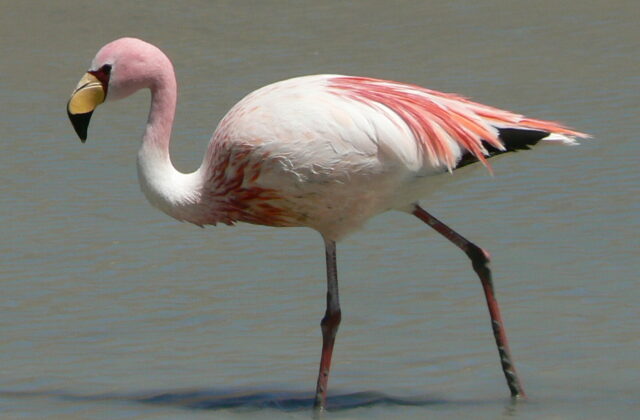 Near Threatened
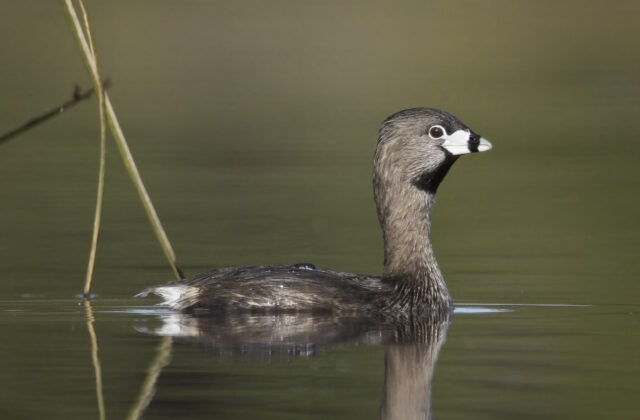 Least Concern
 Least Concern