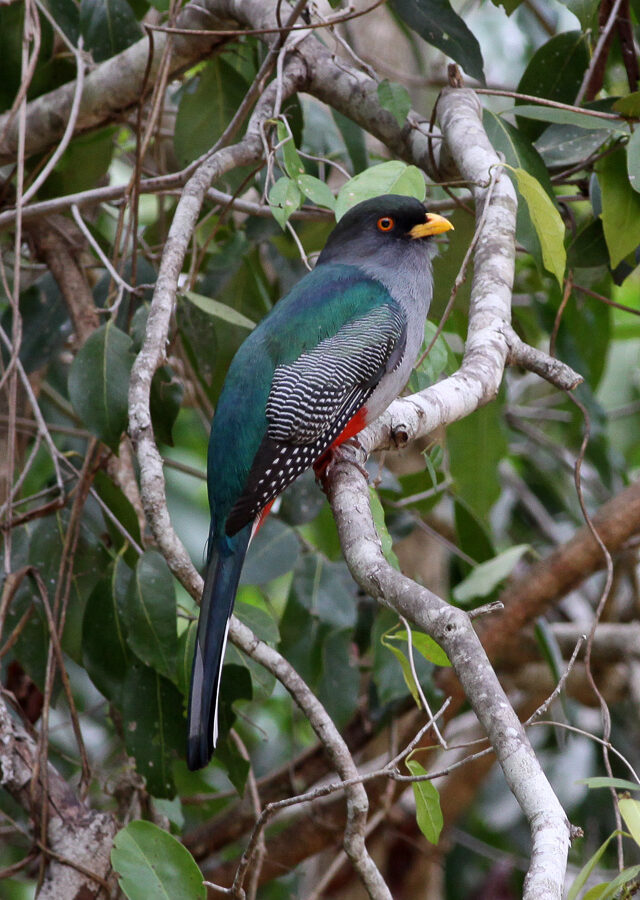
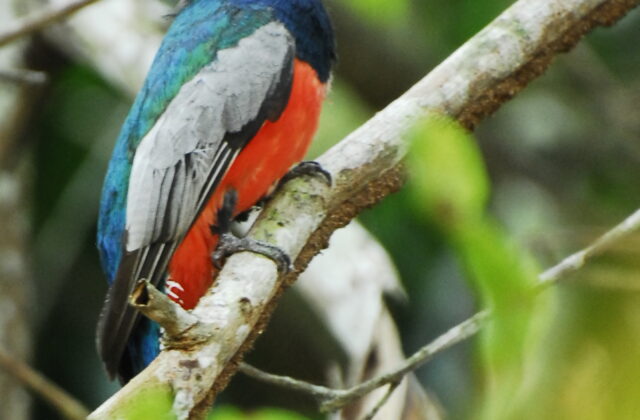
Photo: Ron Knight from Seaford, East Sussex, United Kingdom / CC BY 2.0 (Wikimedia Commons)
Hispaniolan Trogon
Priotelus roseigaster
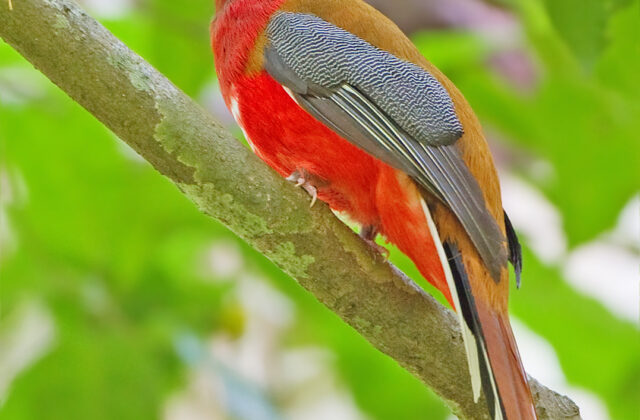
Hispaniolan Trogon (Priotelus roseigaster) — Trogons & Quetzals of North America.
The Hispaniolan Trogon (Priotelus roseigaster) is a member of the Trogonidae family found in North America. Adults weigh 74.2 g.
Where it fits
- Class Aves
- Order Trogoniformes
- Family Trogonidae Trogons
- Genus Priotelus
- Species roseigaster
Quick facts
- Weight
- 74.2 g
- Diet
- Invertebrate-eaters
- Family
- Trogonidae
- Order
- Trogoniformes
- Habitat
- Woodland
How to identify
Similar birds
 Least Concern
 Least Concern
 Least Concern
 Least Concern
Biology & behaviour
Diet
The Hispaniolan Trogon is a invertivore — it feeds mainly on invertebrates such as insects and other small prey.
Behaviour
A bird of dense forest, it spends much of its time perched in trees and shrubs.
Migration
The Hispaniolan Trogon is largely sedentary, staying within its range year-round rather than making regular long-distance migrations.
The Hispaniolan Trogon (Priotelus roseigaster) belongs to the Trogonidae family of the order Trogoniformes. Its range spans North America. Its distribution covers NA Hispaniola.
It is a medium-sized bird. Adults weighs around 74.2 g, with a wing length of about 13.3 cm and a tail of around 15.6 cm.
The species has a mapped global range of roughly 15,000 km² — a relatively restricted global range.
Songs & calls
Frequently asked questions
How big is the Hispaniolan Trogon?
The Hispaniolan Trogon is a medium-sized bird that weighs around 74.2 g.
Where does the Hispaniolan Trogon live?
The Hispaniolan Trogon is found across North America with a range covering NA Hispaniola, where it is typically found in wooded and forested habitats.
What family does the Hispaniolan Trogon belong to?
The Hispaniolan Trogon (Priotelus roseigaster) belongs to the Trogonidae family, in the order Trogoniformes.
What does the Hispaniolan Trogon eat?
The Hispaniolan Trogon is a invertivore — it feeds mainly on invertebrates such as insects and other small prey.
Does the Hispaniolan Trogon migrate?
The Hispaniolan Trogon is largely sedentary, staying within its range year-round rather than making regular long-distance migrations.
What sound does the Hispaniolan Trogon make?
1 real field recording of the Hispaniolan Trogon — including its song — can be played in the Songs & calls section on this page, credited to the recordist who captured it.
How large is the Hispaniolan Trogon's range?
The Hispaniolan Trogon has a mapped global range of about 15,000 km².
Conservation
Every bird benefits from bird-safe windows, native plants, and keeping cats indoors. Small changes at home add up to real protection.
Explore more birds
More in Trogonidae
 Least Concern
 Near Threatened
 Least Concern
 Least Concern
Least Concern
Least Concern
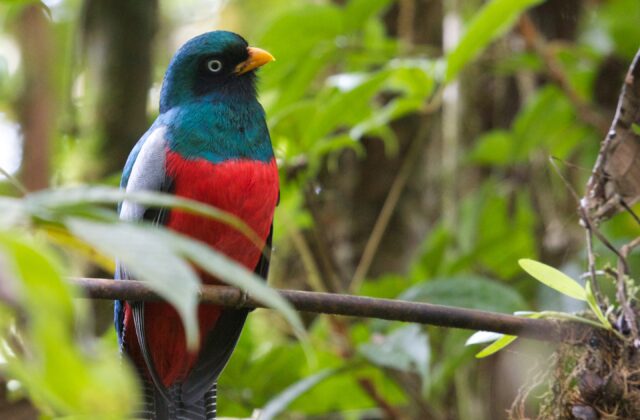 Least Concern
More in Trogons & Quetzals
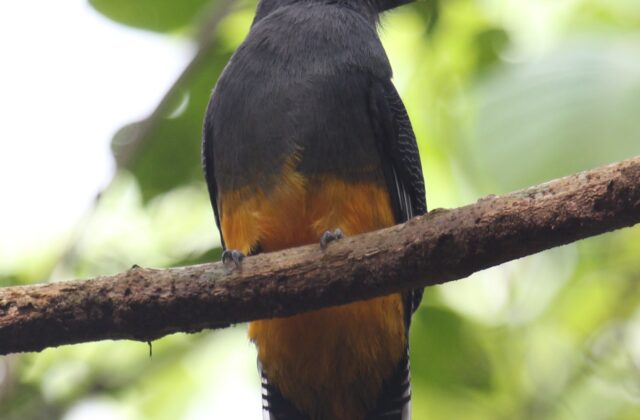 Least Concern
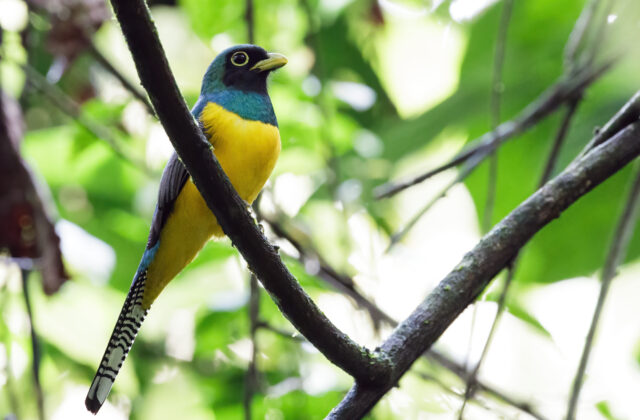 Not Evaluated
Least Concern
Near Threatened
Not Evaluated
Least Concern
Near Threatened
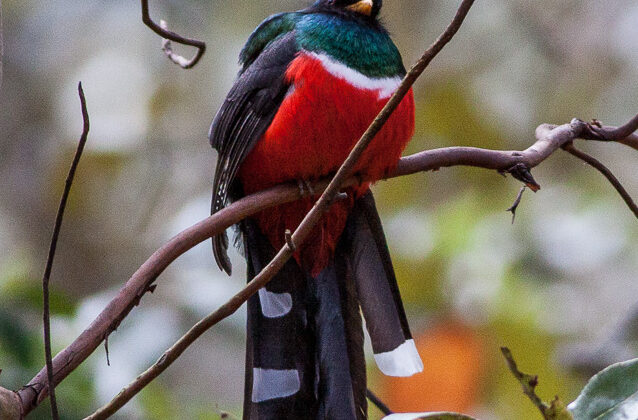 Least Concern
 Least Concern