How to Attract Baltimore Oriole to Your Yard
The honest, data-backed way to attract Baltimore Oriole to your yard — the feeders and food they actually use (nectar), nesting help, and habitat that brings them in.
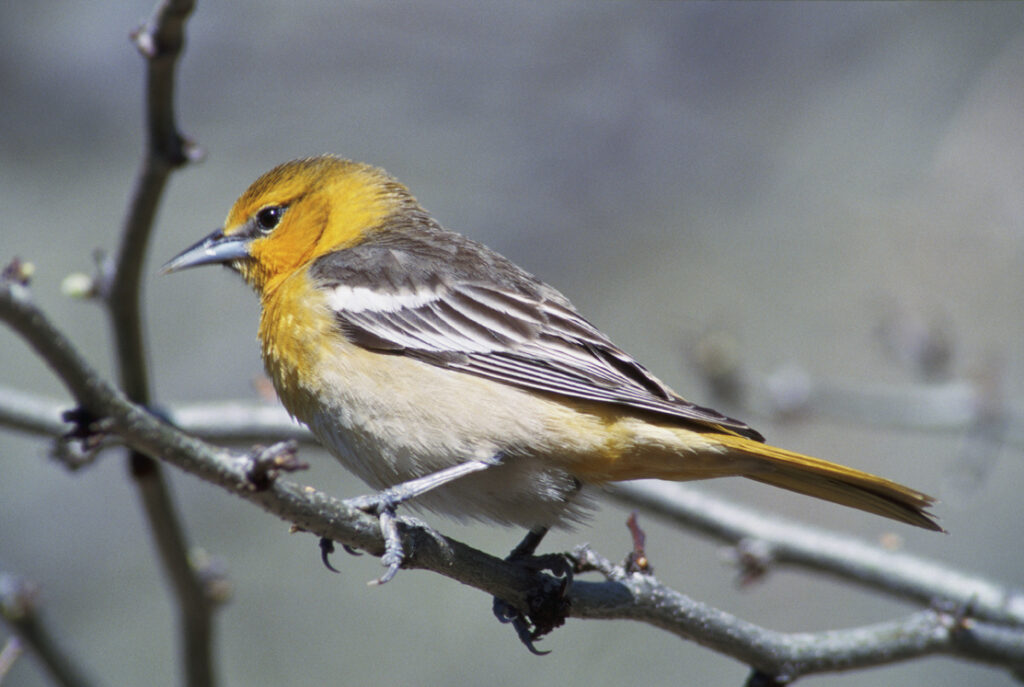
Want to bring Baltimore Oriole (Icterus galbula) to your yard? Here is the honest, data-backed version — the feeders and food they actually use, whether they will take a nest box, and the habitat that keeps them coming back. Every recommendation is drawn from real bird-science sources (the Cornell Lab, Audubon and their peers), not guesswork.
The best feeders for Baltimore Oriole
Use a dedicated oriole feeder or platform/tray. Offer sugar water (the cited sources recommend the same 1 part sugar to 4 parts water ratio used for hummingbirds). Put out orange halves and only small amounts of grape jelly, keeping jelly amounts small so birds don't soil their feathers. Orioles prefer ripe, dark fruit (dark mulberries, red cherries, deep-purple grapes) and ignore green or yellow fruit.
Feeder styles that work for this bird:
- nectar feeder
- platform / tray feeder
- fruit feeder
Platform & peanut feeders
Our take
If you only buy one thing, get a sturdy platform feeder and set it a little apart from your small-bird feeders so big birds don’t crowd them out.
Shop by what matters to you
- Platform or tray feederVersatile feeding — peanuts, kibble and scraps (searches Amazon in a new tab)
- Peanut feederOffering whole peanuts slowly (searches Amazon in a new tab)
- Ground feeder or cageBirds that naturally feed on the ground (searches Amazon in a new tab)
- See all platform or peanut feederBrowse the full range and compare current prices (searches Amazon in a new tab)
What to feed Baltimore Oriole
The foods this species takes most readily:
- nectar
- fruit
- sugar water
- jelly
- insects
Peanuts & feed
How to attract Baltimore Oriole to your yard
Put out orange halves, small amounts of grape jelly, and sugar water in spring/fall when they crave sugar for migration fat; plant fruiting and nectar plants. They weave a hanging pouch-like nest anchored to a fork in the slender upper branches of a shade tree (often American elm, also maples and cottonwoods), so tall open-grown trees near the feeder help.
See it near you
For the full profile — photos, sounds, range and ID — see the Baltimore Oriole species page. To find where it is being reported right now, use Birds Near You.
Frequently asked questions
What is the best feeder for Baltimore Oriole?
Use a dedicated oriole feeder or platform/tray. Offer sugar water (the cited sources recommend the same 1 part sugar to 4 parts water ratio used for hummingbirds). Put out orange halves and only small amounts of grape jelly, keeping jelly amounts small so birds don't soil their feathers. Orioles prefer ripe, dark fruit (dark mulberries, red cherries, deep-purple grapes) and ignore green or yellow fruit.
What do you feed Baltimore Oriole?
Baltimore Oriole readily takes nectar, fruit, sugar water, jelly and insects.
Will Baltimore Oriole use a nest box?
No — Baltimore Oriole is not a cavity nester and will not use a nest box. It builds an open nest, so cover and habitat help more.