How to Attract Rose-breasted Grosbeak to Your Yard
The honest, data-backed way to attract Rose-breasted Grosbeak to your yard — the feeders and food they actually use (black-oil sunflower), nesting help, and habitat that brings them in.
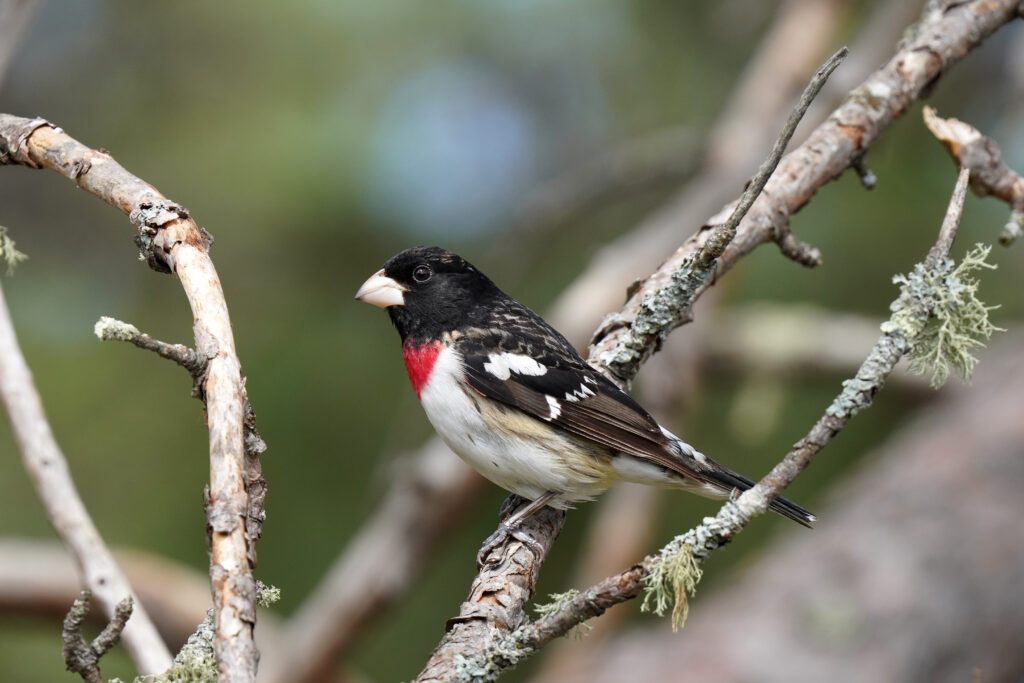
Want to bring Rose-breasted Grosbeak (Pheucticus ludovicianus) to your yard? Here is the honest, data-backed version — the feeders and food they actually use, whether they will take a nest box, and the habitat that keeps them coming back. Every recommendation is drawn from real bird-science sources (the Cornell Lab, Audubon and their peers), not guesswork.
The best feeders for Rose-breasted Grosbeak
A large, heavy-billed songbird: it feeds best from a platform or hopper, and will only use a seed tube if it has an attached tray/perch broad enough to support its body. Spring migration (birds hungry from travel) is the prime window to draw it in with fresh sunflower.
Feeder styles that work for this bird:
- platform / tray feeder
- hopper feeder
- tube feeder
Seed feeders
Our take
If you only buy one thing, get a tube or hopper feeder and fill it with sunflower hearts — it suits the widest range of garden songbirds.
Shop by what matters to you
- Tube feederFinches, tits and other small, agile birds (searches Amazon in a new tab)
- Hopper or “house” feederA wide mix of garden species (searches Amazon in a new tab)
- Platform or tray feederGround-feeders like doves, sparrows and juncos (searches Amazon in a new tab)
- See all seed feederBrowse the full range and compare current prices (searches Amazon in a new tab)
What to feed Rose-breasted Grosbeak
The foods this species takes most readily:
- black-oil sunflower
- striped sunflower
- safflower
- raw peanuts
Seed & feed
How to attract Rose-breasted Grosbeak to your yard
Breeds in open deciduous and mixed woods, favoring edges and openings with a mix of shrubs and tall trees rather than unbroken forest. Yards bordering such woodland, stocked with black-oil sunflower on a wide platform/hopper during spring migration, are the reliable draw; it builds a loose open-cup nest 5–20 ft up in a fork of a sapling or shrub and does not use boxes.
See it near you
For the full profile — photos, sounds, range and ID — see the Rose-breasted Grosbeak species page. To find where it is being reported right now, use Birds Near You.
Frequently asked questions
What is the best feeder for Rose-breasted Grosbeak?
A large, heavy-billed songbird: it feeds best from a platform or hopper, and will only use a seed tube if it has an attached tray/perch broad enough to support its body. Spring migration (birds hungry from travel) is the prime window to draw it in with fresh sunflower.
What do you feed Rose-breasted Grosbeak?
Rose-breasted Grosbeak readily takes black-oil sunflower, striped sunflower, safflower and raw peanuts.
Will Rose-breasted Grosbeak use a nest box?
No — Rose-breasted Grosbeak is not a cavity nester and will not use a nest box. It builds an open nest, so cover and habitat help more.