Pacific Parrotlet Care Guide: Diet, Lifespan, Housing & Health
A vet-informed care guide for the Pacific Parrotlet — an intermediate-level companion bird that can live 15-20 years. Housing, diet (and toxic foods to avoid), temperament, health and enrichment.
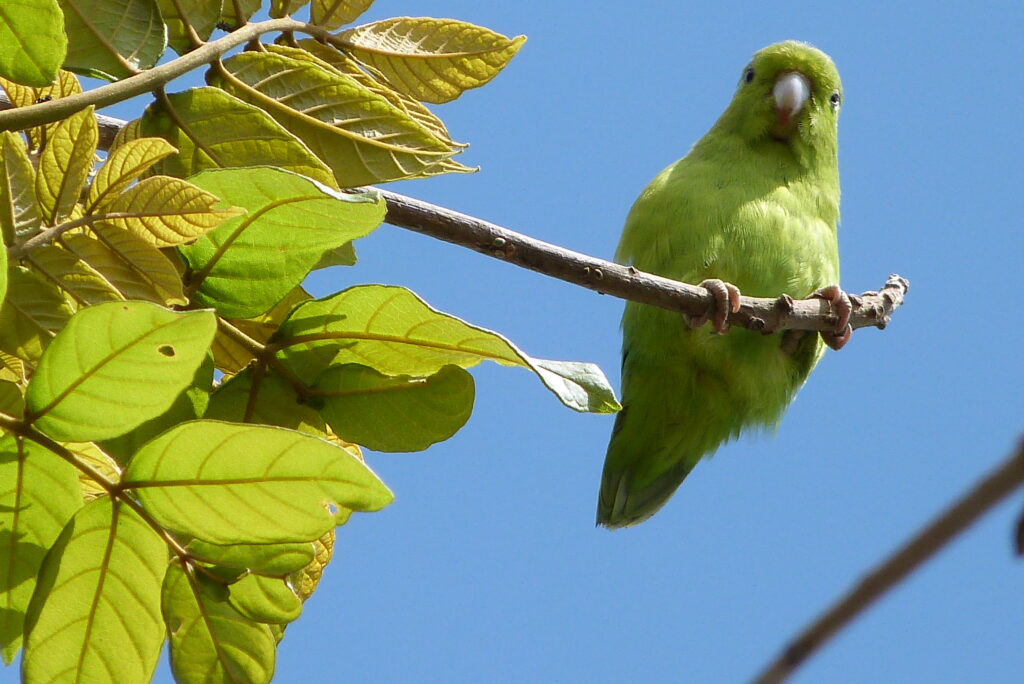
The Pacific Parrotlet (Forpus coelestis) is an intermediate-level companion bird that can live around 15-20 years — a long commitment. Here is how to care for one properly: housing, diet, health, temperament and enrichment, based on avian-veterinary guidance.
Quick facts
| Care level | Intermediate |
|---|---|
| Lifespan | 15-20 years |
| Adult size | 11-14 cm (~4.3-5.5 in) |
| Noise level | Quiet |
| Talking ability | Limited |
| Best for | Apartment dwellers wanting a quiet bird and experienced or committed keepers who can handle a bold small parrot daily; not ideal for young children due to bite. |
Housing a Pacific Parrotlet
Minimum recommended cage: 46 x 46 x 46 cm (18 x 18 x 18 in) absolute minimum, larger strongly preferred (e.g. 60 x 45 x 60 cm); bar spacing 0.6-1.3 cm (1/4-1/2 in) to prevent escape and head entrapment. Bigger is always better — birds fly horizontally, so width matters more than height. Provide varied natural-wood perches of different diameters, and place the cage in a social, draught-free part of the home away from the kitchen (cooking fumes, especially from non-stick cookware, are deadly to birds).
What to feed a Pacific Parrotlet
Staple: Formulated pellets as the base with only sparing seed (all-seed diets cause fatty liver disease, the leading killer); provide a calcium source such as cuttlebone.
Fresh foods: Daily vegetables and leafy greens (kale, spinach, carrot, bell pepper, broccoli) plus occasional fruit.
Foods that are toxic to your Pacific Parrotlet — never feed these
Avocado, chocolate, caffeine, alcohol, onion, garlic, fruit pits and apple seeds, and salty or sugary foods.
Temperament & social needs
Big personality in a tiny body — bold, feisty and fearless; can be nippy and territorial if not handled consistently.
Needs daily one-on-one interaction to stay tame; often best kept singly for a strong human bond, as pairs may bond to each other and become aggressive toward hands.
Enrichment
Small foraging and chewable toys, training and daily interaction to stay tame; enjoys bathing.
Common health problems in Pacific Parrotlet
Fatty liver disease (hepatic lipidosis) from seed-heavy diets, obesity, egg-binding in hens, respiratory disease (incl. aspergillosis), psittacosis.
Birds hide illness until they are seriously unwell — a bird that looks "off" is an emergency. Establish care with an avian vet before you need one, and schedule an annual well-bird check.
Setup essentials
Birbs.com may earn a commission from qualifying purchases made through links on this page, at no extra cost to you.
In the wild
The Pacific Parrotlet is also a wild bird — see the Pacific Parrotlet species profile for its natural range, behaviour and conservation status.
Frequently asked questions
How long do Pacific Parrotlet live?
With good care a Pacific Parrotlet typically lives 15-20 years — a long-term commitment.
Is a Pacific Parrotlet a good pet for beginners?
It is rated Intermediate-level. Pacific Parrotlets suit apartment dwellers wanting a quiet bird and experienced or committed keepers who can handle a bold small parrot daily; not ideal for young children due to bite.
What can Pacific Parrotlet not eat?
Never feed a Pacific Parrotlet: Avocado, chocolate, caffeine, alcohol, onion, garlic, fruit pits and apple seeds, and salty or sugary foods.. These are toxic to birds.
Sources & further reading
- Lafeber Co. — Pacific Parrotlet species profile (opens in a new tab)
- WebMD Pets — What to Know About the Pacific Parrotlet (opens in a new tab)
- Wikipedia — Pacific parrotlet, Forpus coelestis (species measurements and taxonomy, cross-checked) (opens in a new tab)
- Psittacology — Lifespan of a Parrotlet (opens in a new tab)
- World Parrot Trust / avian-vet consensus on foods toxic to parrots (avocado, chocolate, caffeine, onion/garlic, fruit pits, salt, alcohol)