Rainbow Lorikeet Care Guide: Diet, Lifespan, Housing & Health
A vet-informed care guide for the Rainbow Lorikeet — an advanced-level companion bird that can live 20-30 years. Housing, diet (and toxic foods to avoid), temperament, health and enrichment.
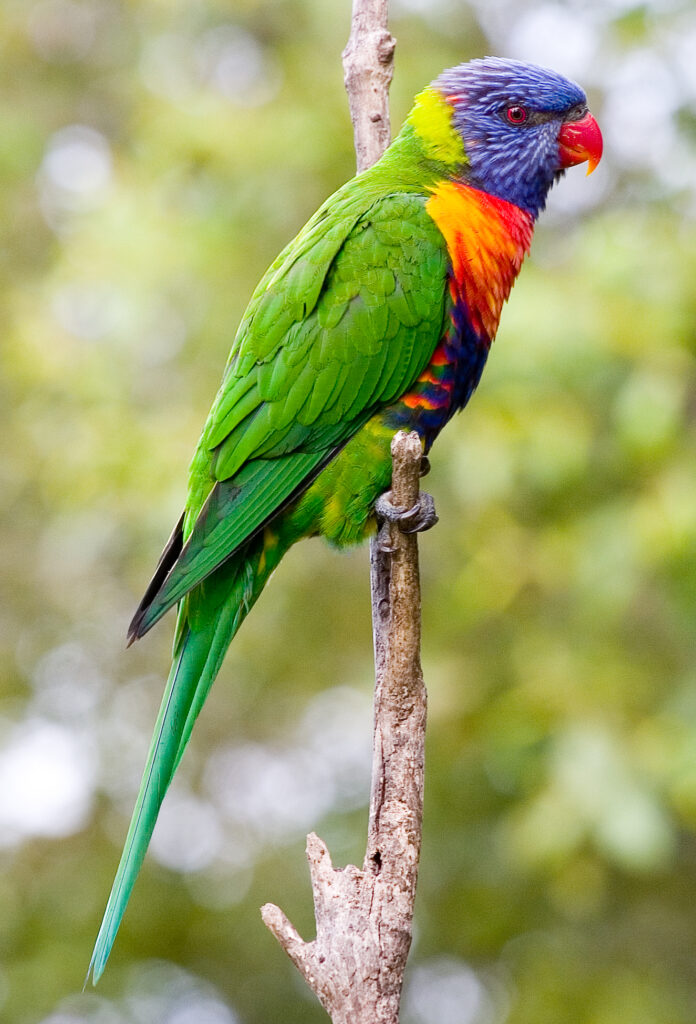
The Rainbow Lorikeet (Trichoglossus moluccanus) is an advanced-level companion bird that can live around 20-30 years — a long commitment. Here is how to care for one properly: housing, diet, health, temperament and enrichment, based on avian-veterinary guidance.
Quick facts
| Care level | Advanced |
|---|---|
| Lifespan | 20-30 years |
| Adult size | 25-30 cm |
| Noise level | Loud |
| Talking ability | Some |
| Best for | Experienced keepers prepared for a specialized twice-daily nectar diet, high mess/humidity and loud, active birds; not for low-effort or apartment settings |
Housing a Rainbow Lorikeet
Minimum recommended cage: VCA lory/lorikeet minimum 60 x 90 x 90 cm (2 x 3 x 3 ft); ~90 x 60 x 120 cm or larger commonly recommended, with easy-to-clean surfaces. Bigger is always better — birds fly horizontally, so width matters more than height. Provide varied natural-wood perches of different diameters, and place the cage in a social, draught-free part of the home away from the kitchen (cooking fumes, especially from non-stick cookware, are deadly to birds).
What to feed a Rainbow Lorikeet
Staple: Specialized commercial nectar/pollen (lory) diet mixed fresh in small amounts and offered at least twice daily; NOT a seed-based diet (lorikeets cannot digest seed kernels). Some formulated lory pellets are an acceptable alternative and produce firmer droppings.
Fresh foods: Fresh diced fruits and berries and edible flowers, changed out roughly every 12 hours to prevent spoilage; only small amounts of vegetables
Foods that are toxic to your Rainbow Lorikeet — never feed these
Avocado, chocolate, caffeine (coffee/tea/soda), alcohol, onion/garlic (allium), salt/salty foods, and fruit pits/seeds such as apple seeds, cherry, peach and apricot pits (cyanogenic). Because lorikeets are prone to iron-storage disease, also limit high-iron foods (e.g. spinach, pomegranate, grapes, raisins) and avoid iron-fortified products, and never leave them without fresh nectar.
Temperament & social needs
Bubbly, bold, comical and affectionate but loud and high-energy; not reliably friendly toward other birds.
Highly social and active; needs daily interaction and lots of space/out-of-cage time; messy liquid (often projectile) droppings require diligent daily cleaning
Enrichment
Easily bored; needs a spacious enclosure or flight, many hanging and grabbing toys, foraging opportunities, bathing opportunities and frequent enrichment changes
Common health problems in Rainbow Lorikeet
Hemochromatosis (iron-storage disease) – the signature lorikeet concern, requiring a low-iron diet and periodic liver-function monitoring; also bacterial/fungal (e.g. yeast) infections from spoiled wet food when hygiene lapses.
Birds hide illness until they are seriously unwell — a bird that looks "off" is an emergency. Establish care with an avian vet before you need one, and schedule an annual well-bird check.
Setup essentials
Birbs.com may earn a commission from qualifying purchases made through links on this page, at no extra cost to you.
In the wild
The Rainbow Lorikeet is also a wild bird — see the Rainbow Lorikeet species profile for its natural range, behaviour and conservation status.
Frequently asked questions
How long do Rainbow Lorikeet live?
With good care a Rainbow Lorikeet typically lives 20-30 years — a long-term commitment.
Is a Rainbow Lorikeet a good pet for beginners?
It is rated Advanced-level. Rainbow Lorikeets suit experienced keepers prepared for a specialized twice-daily nectar diet, high mess/humidity and loud, active birds; not for low-effort or apartment settings.
What can Rainbow Lorikeet not eat?
Never feed a Rainbow Lorikeet: Avocado, chocolate, caffeine (coffee/tea/soda), alcohol, onion/garlic (allium), salt/salty foods, and fruit pits/seeds such as apple seeds, cherry, peach and apricot pits (cyanogenic). Because lorikeets are prone to iron-storage disease, also limit high-iron foods (e.g. spinach, pomegranate, grapes, raisins) and avoid iron-fortified products, and never leave them without fresh nectar.. These are toxic to birds.