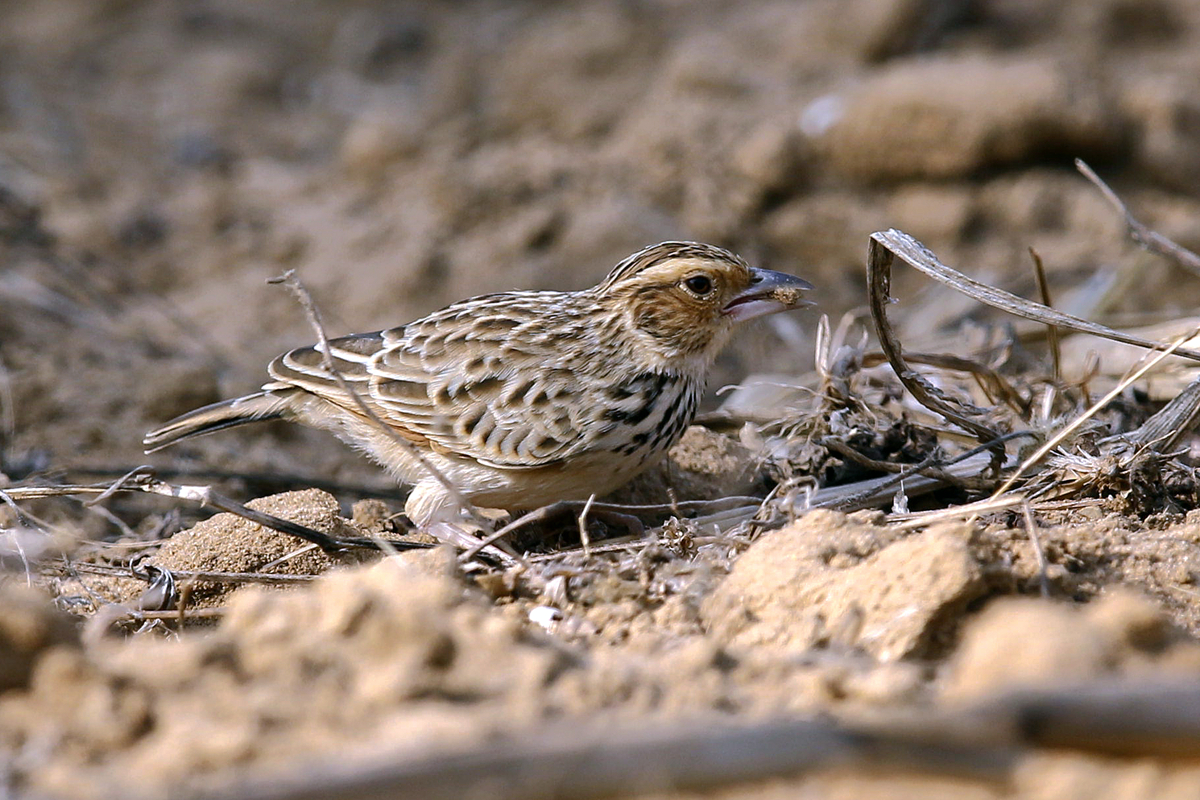
Photo: lonelyshrimp / CC0 (Wikimedia Commons)
Burmese Bush Lark
Plocealauda microptera
Burmese Bush Lark (Plocealauda microptera) — Songbirds & Perching Birds of South & Southeast Asia.
The Burmese Bush Lark (Plocealauda microptera) is a member of the Alaudidae family found in South & Southeast Asia. The IUCN Red List lists it as Least Concern.
Conservation status
IUCN Red List (opens in a new tab)Widespread and abundant — not currently at risk.
Where it fits
- Class Aves
- Order Passeriformes
- Family Alaudidae Larks
- Genus Plocealauda
- Species microptera
Quick facts
- Family
- Alaudidae
- Order
- Passeriformes
Biology & behaviour
The Burmese Bush Lark (Plocealauda microptera) is a member of the Alaudidae family, within the order Passeriformes. Its range spans South & Southeast Asia. Its distribution covers OR c Myanmar.
The IUCN Red List currently assesses it as Least Concern. That category covers species that remain widespread and reasonably abundant in the wild.
Frequently asked questions
Where does the Burmese Bush Lark live?
The Burmese Bush Lark is found across South & Southeast Asia with a range covering OR c Myanmar.
What family does the Burmese Bush Lark belong to?
The Burmese Bush Lark (Plocealauda microptera) belongs to the Alaudidae family, in the order Passeriformes.
Is the Burmese Bush Lark endangered?
The IUCN Red List currently assesses it as Least Concern That category covers species that remain widespread and reasonably abundant in the wild.
Conservation
Every bird benefits from bird-safe windows, native plants, and keeping cats indoors. Small changes at home add up to real protection.
Explore more birds
More in Alaudidae
 Least Concern
 Not Evaluated
 Least Concern
 Least Concern
 Least Concern
More in Songbirds
 Least Concern
 Least Concern
 Vulnerable
 Least Concern
 Least Concern
Guides for this bird
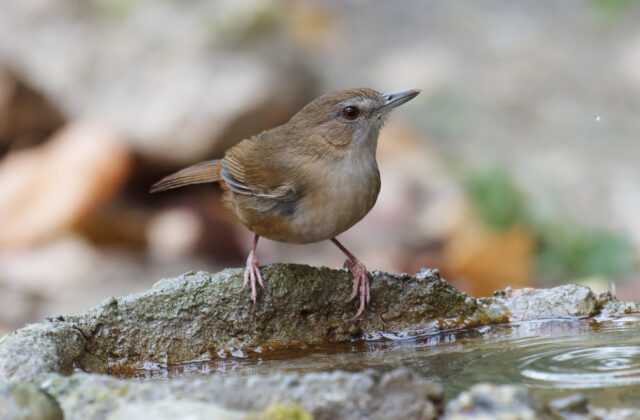
Best Bird Feeders for Garden Songbirds
How to choose a bird feeder for garden songbirds — the feeder styles compared, the seed they prefer, where to hang it, and how to keep birds safe. A decision framework grounded in real data, with no mystery picks.