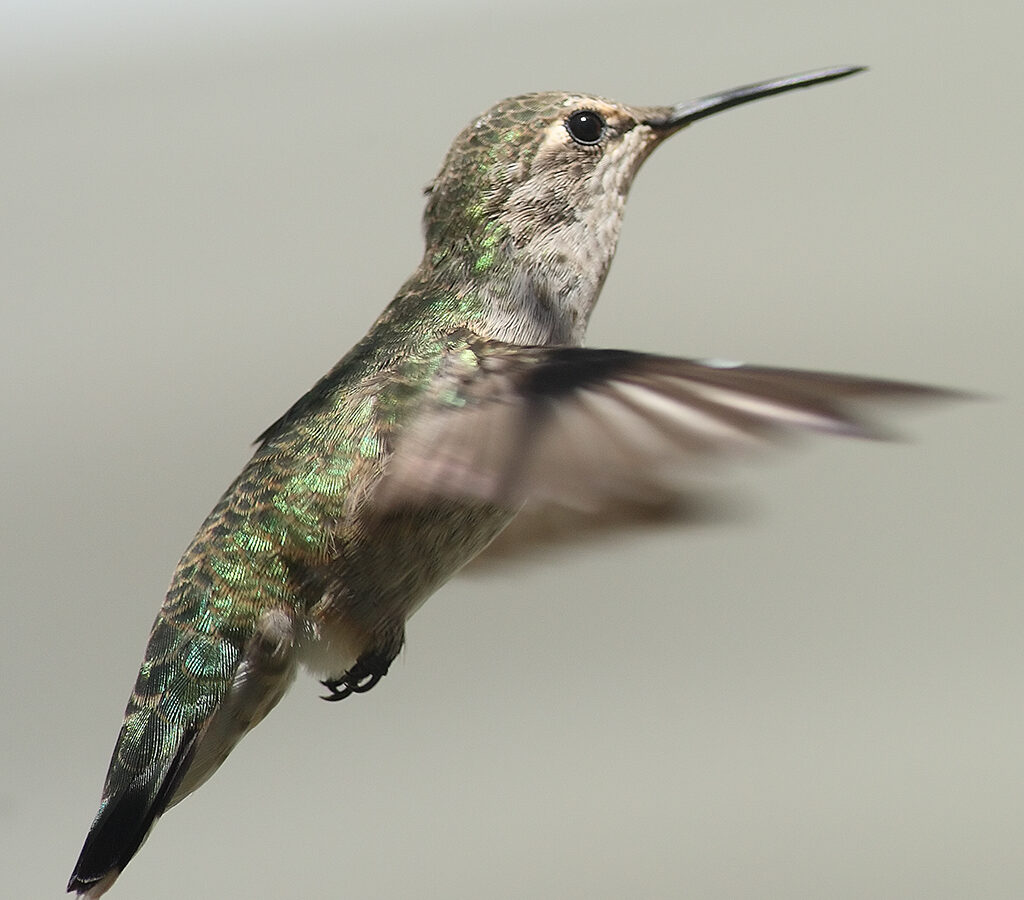
Anna’s Hummingbird
Calypte anna
Birb mood: the tiny disco knight
A pugnacious, jewel-throated hummingbird that overwinters along the Pacific coast and sings — yes, sings — through the cold.
Also known as: Anna Hummingbird
What's in a name? The species honours Anna Masséna, a 19th-century Italian duchess; Calypte derives from Greek for "covered" or "veiled", a nod to the male's hidden, flashing colour.
Found across 13 guides in our atlas — open any for the full checklist, photos and what's around right now.
The Anna’s Hummingbird (Calypte anna) is a member of the Trochilidae family found in North America. Adults measure 9–11 cm and weigh 3–6 g. The IUCN Red List lists it as Least Concern.
Conservation status
IUCN Red List (opens in a new tab)Widespread and abundant — not currently at risk.
Where it fits
- Class Aves
- Order Apodiformes
- Family Trochilidae Hummingbirds
- Genus Calypte
- Species anna
Quick facts
- Size
- 9–11 cm
- Weight
- 3–6 g
- Wingspan
- 12 cm
- Lifespan
- 2 years typical; up to 8 recorded
- Clutch size
- 2 tiny white eggs
- Diet
- Nectar-feeders
- Family
- Trochilidae
- Order
- Apodiformes
- Habitat
- Deserts & Scrub, Suburban Gardens
How to identify
Males show a rose-pink crown and throat that can flash or look black depending on the angle. Both sexes are stocky for a hummingbird, with a grey-green body and a straight, medium-length bill.
Male vs female
Males have the full magenta crown and gorget; females are green above and grey below, usually with a small central patch of pink throat feathers.
Juvenile appearance
Young birds resemble females; young males gradually acquire scattered pink gorget feathers as they mature.
Similar birds
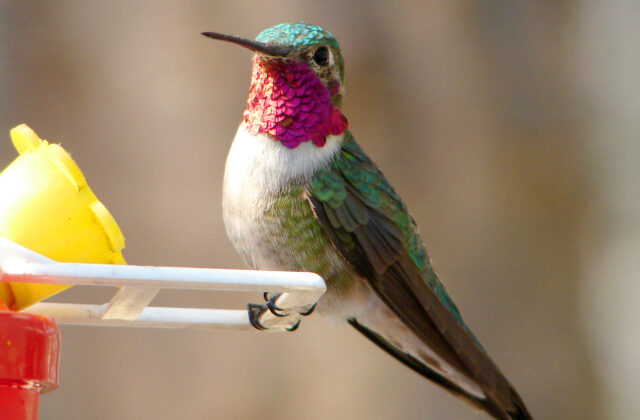 Least Concern
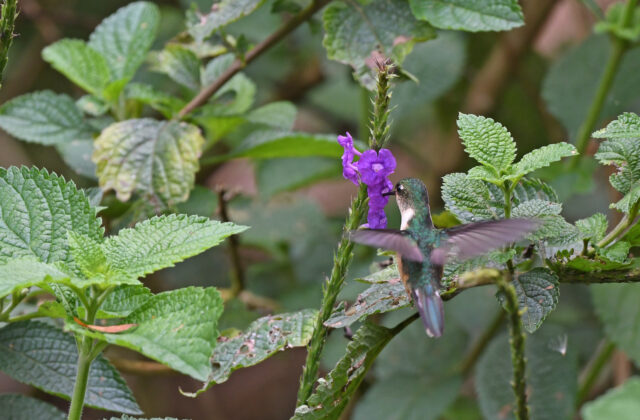 Least Concern
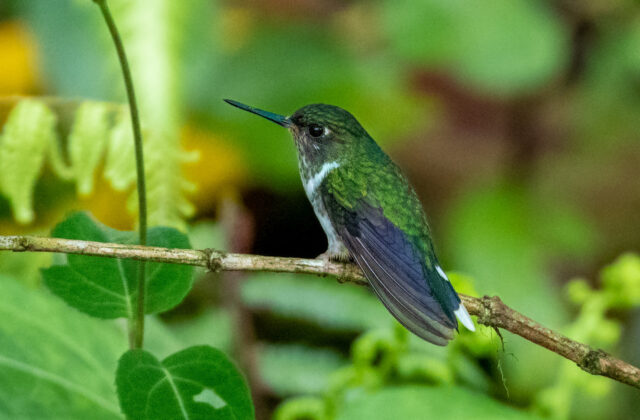 Least Concern
Biology & behaviour
Diet
Nectar from flowers and feeders for fuel, plus small insects and spiders for the protein that nectar lacks. It will hawk gnats from mid-air with startling agility.
Behaviour
Fiercely territorial around food, chasing off rivals many times its size. To survive cold nights it can drop into torpor, slowing its heart and metabolism dramatically until dawn.
Breeding
One of the earliest nesters on the continent, sometimes building its walnut-sized lichen-and-spider-silk nest as early as December. The female raises the young alone.
Migration
Largely resident — unusual for a hummingbird — with some short-distance, post-breeding movements to higher ground or fresh blooms.
Population trend: Increasing
Anna’s Hummingbird is the bold, year-round sprite of the North American Pacific coast. The male’s gorget and crown flare an electric rose-magenta when the light hits right, then vanish to dull grey when it does not — a trick of structural colour, not pigment.Tougher than its size suggests, Anna’s has expanded its range north as gardens and feeders spread, and it is one of the few hummingbirds to hold territory and sing through winter. The male’s breathtaking dive display ends in a sharp chirp made not by the voice but by the tail feathers.
Songs & calls
Frequently asked questions
Should I leave my hummingbird feeder up in winter?
Along the Pacific coast, yes — Anna's overwinters there. Keep the nectar from freezing and clean the feeder regularly.
What should I put in a hummingbird feeder?
Only plain white sugar dissolved in water at a 1:4 ratio. Never use honey, red dye or artificial sweeteners.
Why does the colour keep disappearing?
The gorget is structural colour — it flashes brilliantly at the right angle and looks dark grey at others.
Conservation
Every bird benefits from bird-safe windows, native plants, and keeping cats indoors. Small changes at home add up to real protection.
Explore more birds
More in Trochilidae
 Least Concern
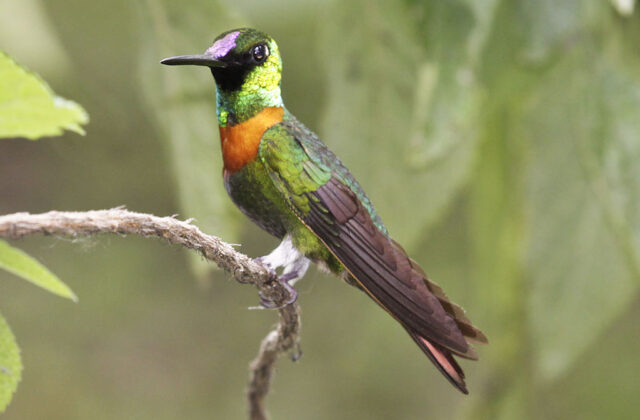 Least Concern
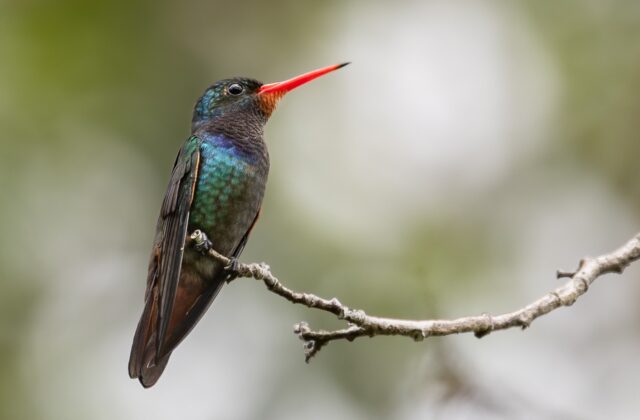 Not Evaluated
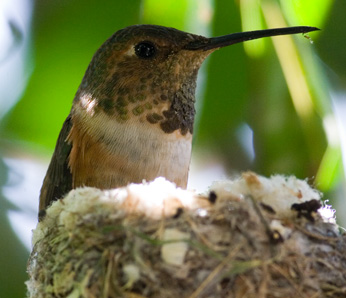 Least Concern
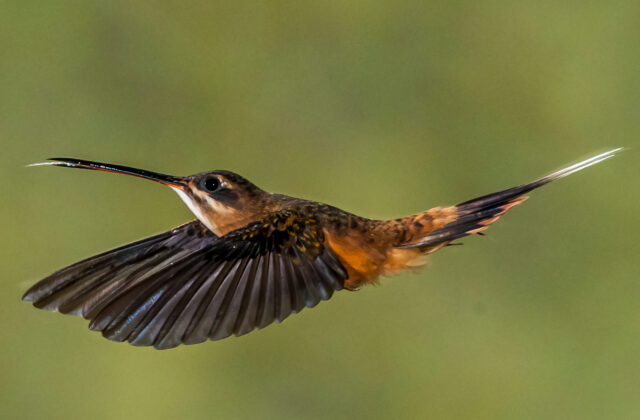 Least Concern
More in Hummingbirds
 Least Concern
 Least Concern
 Vulnerable
 Least Concern
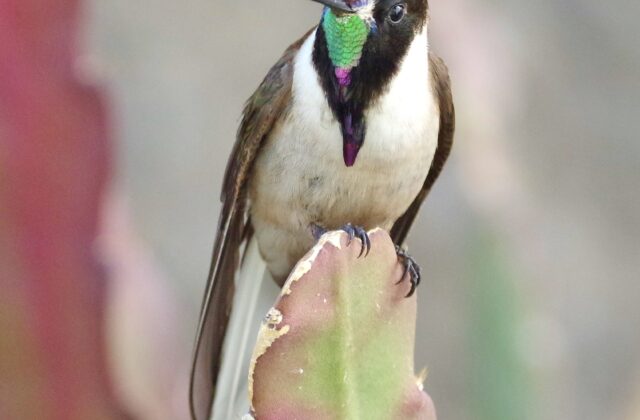 Least Concern
Guides for this bird
Best Hummingbird Feeders
How to choose a hummingbird feeder — the two main styles compared, the right sugar-water mix, and how to keep it clean so the birds stay safe. A decision framework with the hummingbird species in the Birbs encyclopedia.
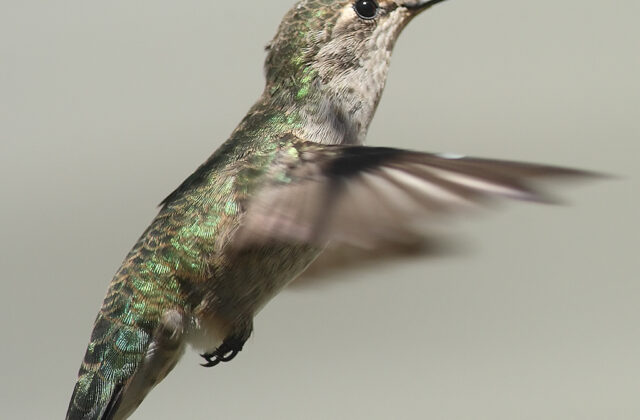
How to Attract Anna’s Hummingbird to Your Yard
The honest, data-backed way to attract Anna's Hummingbird to your yard — the feeders and food they actually use (nectar), nesting help, and habitat that brings them in.
Meet the Trochilidae
A field guide to the Trochilidae family — 366 species in the Birbs encyclopedia, with the best-known members to start with.