Best Hummingbird Feeders
How to choose a hummingbird feeder — the two main styles compared, the right sugar-water mix, and how to keep it clean so the birds stay safe. A decision framework with the hummingbird species in the Birbs encyclopedia.
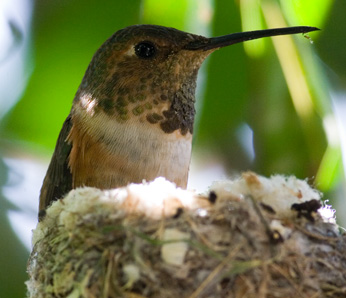
Hummingbirds feed on nectar, so a sugar-water feeder is how you bring them close. The whole game with hummingbird feeders is cleaning — sugar water spoils fast, so the easiest-to-clean feeder is almost always the best one. The Birbs encyclopedia profiles 366 hummingbird species — here is how to choose a hummingbird feeder, with no mystery picks.
The short answer
Start here If you only buy one thing, get a saucer-style feeder — it comes fully apart, so it’s the easiest to keep clean, which matters more than anything else.
- You want the easiest one to keep cleanSaucer / dish feeder
- You have lots of visitors and refill oftenBottle / inverted feeder
- Ants or bees are a problemSaucer feeder + an ant moat
From the encyclopedia
Real hummingbird species profiled on Birbs, with the data we actually hold. Tap any bird for its full profile.
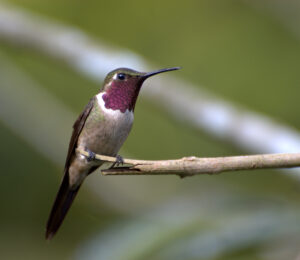 LCAmethyst Woodstar2.8 gTinyNectar
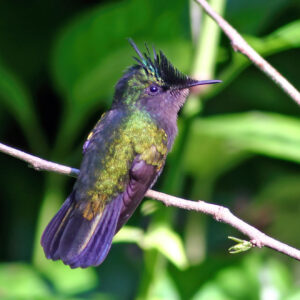 LCAntillean Crested Hummingbird3 gTinyNectar
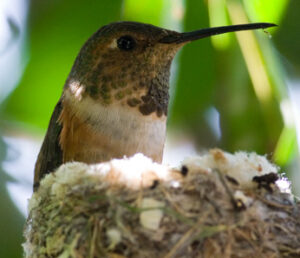 LCAllen’s Hummingbird3.4 gTinyNectar
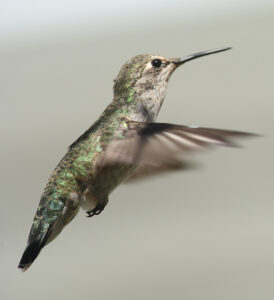 LCAnna’s Hummingbird3–6 gTinyNectar
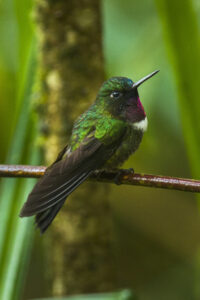 LCAmethyst-throated Sunangel5 gTinyNectar
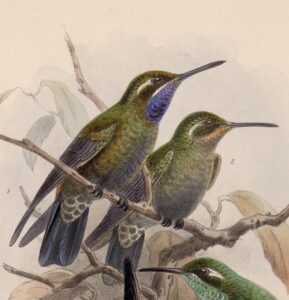 LCAmethyst-throated Mountaingem5.2 gTinyNectar
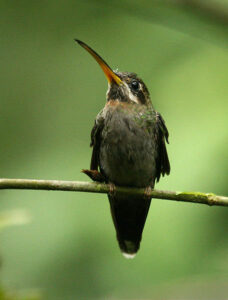 LCBand-tailed Barbthroat5.2 gTinyNectar
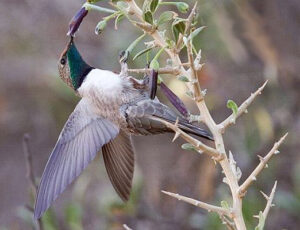 LCAndean Hillstar8.1 gTinyNectar
The coloured tag on each bird is its main diet — which points to what to put out:
- Nectar nectar
How they compare
Every figure below is real data from the encyclopedia — handy because port size, perch and platform strength scale with the bird. Blanks mean we don’t hold that figure yet (never a guess).
| Bird | Weight | Size | Length | Diet |
|---|---|---|---|---|
| Amethyst Woodstar | 2.8 g | Tiny | — | Nectar |
| Antillean Crested Hummingbird | 3 g | Tiny | — | Nectar |
| Allen’s Hummingbird | 3.4 g | Tiny | — | Nectar |
| Anna’s Hummingbird | 3–6 g | Tiny | — | Nectar |
| Amethyst-throated Sunangel | 5 g | Tiny | — | Nectar |
| Amethyst-throated Mountaingem | 5.2 g | Tiny | — | Nectar |
| Band-tailed Barbthroat | 5.2 g | Tiny | — | Nectar |
| Andean Hillstar | 8.1 g | Tiny | — | Nectar |
Choosing a hummingbird feeder: the main styles
Fill it with a simple sugar-water solution — the widely recommended mix is one part white table sugar to four parts water, with no red dye and never honey (which ferments and can harm hummingbirds). You make this at home; there’s nothing to buy.
Saucer / dish feeder
Best for Anyone who wants to keep it spotless with no fuss
Good when Ants are a problem and you want zero drips
Trade-off Holds less nectar, so top up more often in busy spots
Bottle / inverted feeder
Best for High-traffic gardens with lots of hummingbirds
Good when You’d rather refill less often
Trade-off Fiddlier to clean and can drip in the heat
What to look for
- Takes apart fully for cleaning Mould is the real danger — this is the feature that matters most.
- A built-in ant moat and bee guards To keep insects out of the ports.
- Red on the feeder, not in the water To attract birds without dye.
- A size that matches your traffic A small feeder you empty often beats a big one that ferments.
Where to buy a hummingbird feeder
Hummingbird feeders
Our take
If you only buy one thing, get a saucer-style feeder — it comes fully apart, so it’s the easiest to keep clean, which matters more than anything else.
Shop by what matters to you
- Saucer / dish feederAnyone who wants to keep it spotless with no fuss (searches Amazon in a new tab)
- Bottle / inverted feederHigh-traffic gardens with lots of hummingbirds (searches Amazon in a new tab)
- See all hummingbird feederBrowse the full range and compare current prices (searches Amazon in a new tab)
Handy extras
A few accessories make feeding cleaner, safer and squirrel-proofer — worth it once your feeder is busy.
Handy extras
Where to put it & keeping birds safe
Hang it in part shade so the nectar keeps longer, where you can see it but it’s sheltered from the strongest sun. In warm weather change the water and rinse the feeder every couple of days (more often in real heat); cloudy water means it’s past time.
Do
- Mix one part white sugar to four parts water; store spare mix in the fridge.
- Clean every two to three days in warm weather, daily in real heat.
- Hang it in part shade to slow fermentation.
Don’t
- Don’t use honey, brown sugar or artificial sweetener — they can harm hummingbirds.
- Don’t add red dye; choose a feeder with red on it instead.
- Don’t let cloudy or black-specked nectar sit — empty and scrub it.
Through the seasons
Spring
Put feeders out as migrants return; fresh nectar helps after a long journey.
Summer
Peak season — clean every couple of days and keep up with demand.
Autumn
Leave feeders up a couple of weeks after your last sighting for late migrants.
Winter
In most areas hummingbirds have moved on; in mild regions keep one clean feeder going.
Keep exploring
- See all hummingbirds in the encyclopedia →
- Identify a bird you’ve seen →
- Best Bird Feeders for Garden Songbirds →
- Best Feeders for Jays & Larger Garden Birds →
- Best Suet Feeders for Woodpeckers →
Birbs helps you choose — we don’t make or sell these products. The guidance here is general, and we only ever point to real listings (never invented prices or reviews).
Frequently asked questions
What do I put in a hummingbird feeder?
Plain sugar water: one part white sugar dissolved in four parts water. Skip red dye and never use honey or artificial sweetener — they can harm the birds. Spare mix keeps in the fridge.
How often do I need to clean it?
In warm weather, every two to three days; in real heat, daily. Sugar water ferments and grows mould quickly, which is why a feeder that comes fully apart is worth choosing.
Will a feeder stop hummingbirds migrating?
No — migration is driven by day length, not food. It’s safe to leave a clean feeder up for late stragglers.