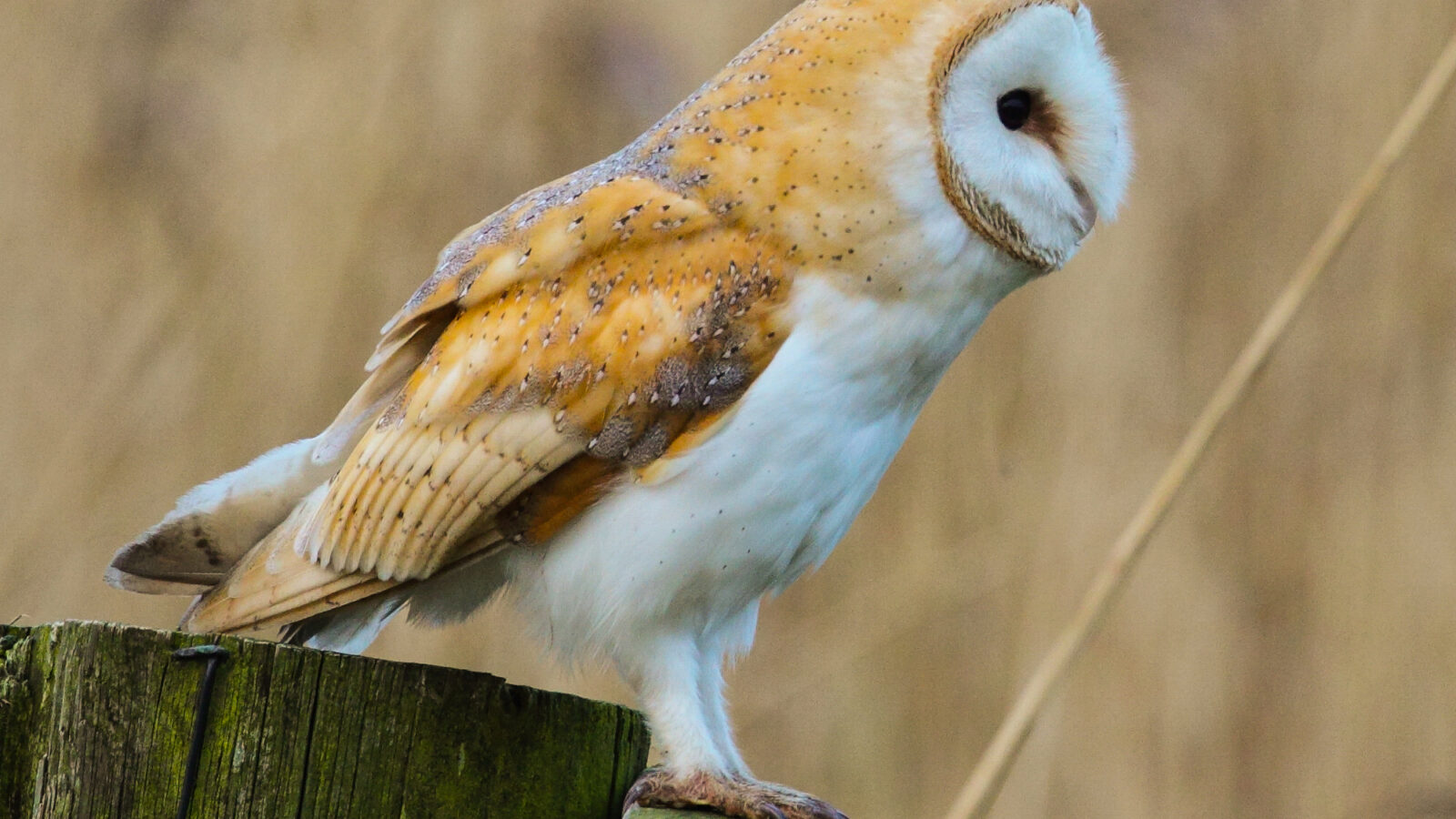
Photo: User:Alun Williams333 / CC BY-SA 4.0 (Wikimedia Commons)
Barn Owl
Tyto alba
Birb mood: the heart-faced ghost
The pale, heart-faced ghost of dusk — a silent, near-global rodent specialist that hunts by sound alone.
Also known as: Common Barn Owl, White Owl, Ghost Owl
What's in a name? Tyto is Greek for "owl"; alba is Latin for "white", for the bird's pale underparts and luminous face.
Found across 11 guides in our atlas — open any for the full checklist, photos and what's around right now.
The Barn Owl (Tyto alba) is a member of the Tytonidae family found in Africa and Europe & Northern Asia. Adults measure 33–39 cm and weigh 250–480 g. The IUCN Red List lists it as Least Concern.
Conservation status
IUCN Red List (opens in a new tab)Widespread and abundant — not currently at risk.
Where it fits
- Class Aves
- Order Strigiformes
- Family Tytonidae Barn Owls
- Genus Tyto
- Species alba
Quick facts
- Size
- 33–39 cm
- Weight
- 250–480 g
- Wingspan
- 80–95 cm
- Lifespan
- 4 years typical; survival is hard in the first winter
- Clutch size
- 4–7 eggs, sometimes more in a good vole year
- Diet
- Vertebrate hunters
- Family
- Tytonidae
- Order
- Strigiformes
- Habitat
- Open Grassland, Woodland
How to identify
Look for the white, heart-shaped face, golden-buff upperparts speckled with grey, and clean white underparts. In flight it appears almost entirely pale, with a buoyant, moth-like wingbeat.
Male vs female
Sexes look similar; females average slightly larger and tend to be more heavily spotted below, with buffier underparts.
Juvenile appearance
Fledglings resemble adults but with downier feathering and, briefly, a more dishevelled facial disc.
Similar birds
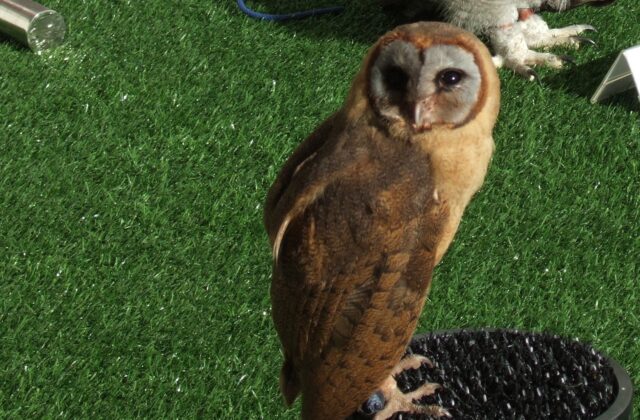 Least Concern
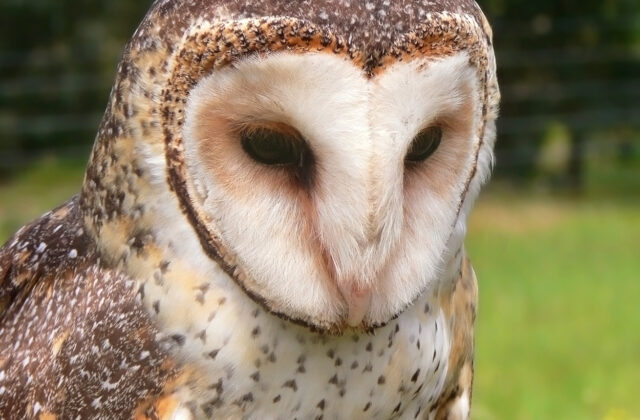 Least Concern
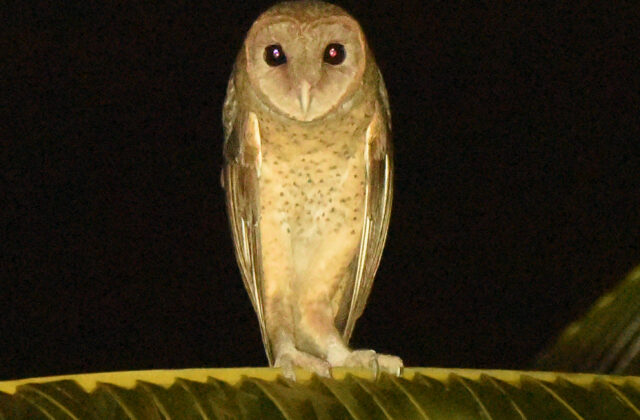 Not Evaluated
Biology & behaviour
Diet
Almost entirely small mammals — voles, mice and shrews — swallowed whole and later coughed up as neat pellets that reveal exactly what the owl has eaten.
Behaviour
Nocturnal and crepuscular, hunting on a slow, quartering flight. Its asymmetrical ear openings let it pinpoint prey in three dimensions by sound alone.
Breeding
Cavity and ledge nesters that readily take to nest boxes, barns and tree hollows. Clutch size tracks prey abundance closely.
Migration
Largely sedentary; young birds disperse to find territory but most adults stay near their hunting grounds year-round.
Population trend: Stable
Drifting low over a hedgerow at dusk, ghostly pale and utterly silent, the Barn Owl is one of the most widely distributed birds on Earth — found on every continent except Antarctica. Its heart-shaped facial disc is not just striking; it funnels the faintest rustle to ears so precisely tuned the bird can strike prey in total darkness.Specialised, soft-feathered and exquisitely quiet on the wing, the Barn Owl is a farmer’s ally and a conservation barometer. Where rough grassland and old buildings remain, it thrives; where they vanish, it is among the first to disappear.
Songs & calls
Fun birb facts
Frequently asked questions
How big is the Barn Owl?
The Barn Owl is a large bird that weighs around 250–480 g and measures about 33–39 cm.
Where does the Barn Owl live?
The Barn Owl is found across Africa and Europe & Northern Asia with a range covering AF, PAL widespread, where it adapts readily to towns, parks and gardens.
What family does the Barn Owl belong to?
The Barn Owl (Tyto alba) belongs to the Tytonidae family, in the order Strigiformes.
What does the Barn Owl eat?
The Barn Owl preys mainly on other vertebrates.
Does the Barn Owl migrate?
The Barn Owl is largely sedentary, staying within its range year-round rather than making regular long-distance migrations.
Is the Barn Owl endangered?
The IUCN Red List currently assesses it as Least Concern That category covers species that remain widespread and reasonably abundant in the wild.
What sound does the Barn Owl make?
5 real field recordings of the Barn Owl — including its song, alarm call and flight call — can be played in the Songs & calls section on this page, each credited to the recordist who captured it.
How large is the Barn Owl's range?
The Barn Owl has a mapped global range of about 63.1 million km².
Conservation
Every bird benefits from bird-safe windows, native plants, and keeping cats indoors. Small changes at home add up to real protection.
Explore more birds
More in Tytonidae
Not Evaluated
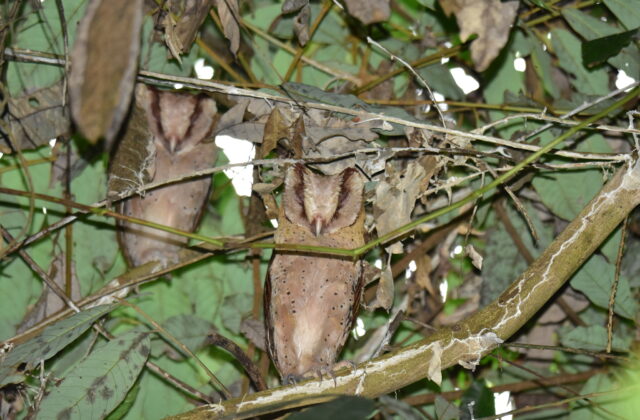 Least Concern
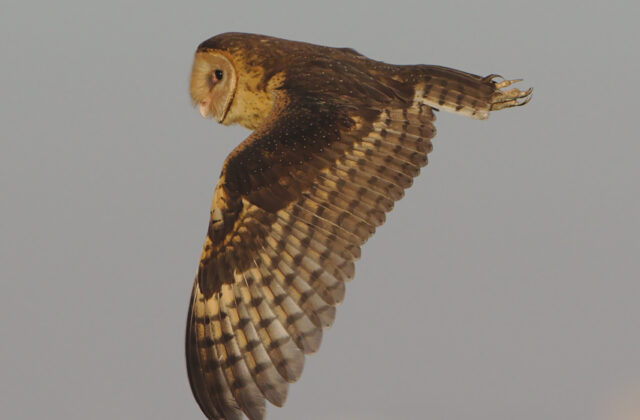 Least Concern
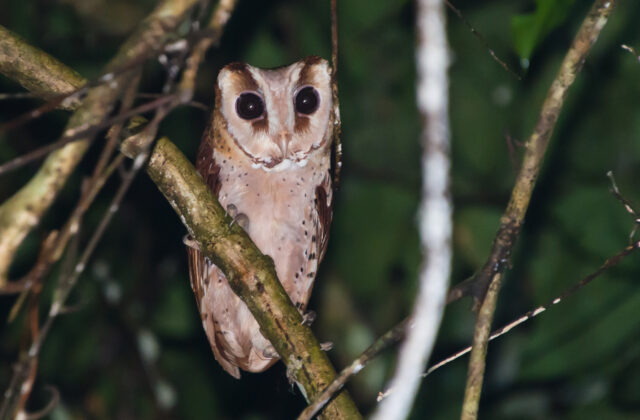 Least Concern
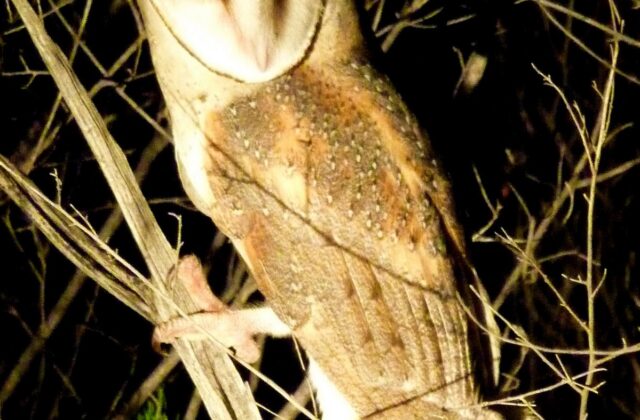 Not Evaluated
More in Owls
 Least Concern
 Extinct
 Least Concern
 Least Concern
 Near Threatened