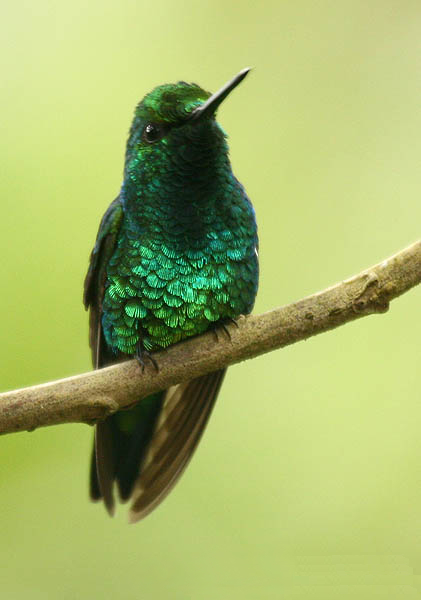
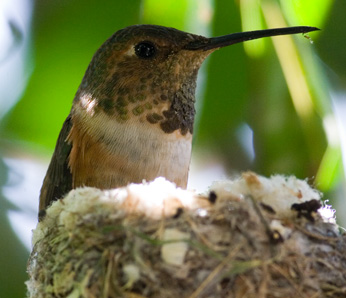
Photo: Michael Woodruff / CC BY-SA 2.0 (Wikimedia Commons)
Western Emerald
Chlorostilbon melanorhynchus
Western Emerald (Chlorostilbon melanorhynchus) — Hummingbirds of South America.
Found across 4 guides in our atlas — open any for the full checklist, photos and what's around right now.
The Western Emerald (Chlorostilbon melanorhynchus) is a member of the Trochilidae family found in South America. Adults weigh 2.6 g.
Where it fits
- Class Aves
- Order Apodiformes
- Family Trochilidae Hummingbirds
- Genus Chlorostilbon
- Species melanorhynchus
Quick facts
- Weight
- 2.6 g
- Diet
- Nectar-feeders
- Family
- Trochilidae
- Order
- Apodiformes
- Habitat
- Woodland
How to identify
Similar birds
 Least Concern
 Least Concern
 Least Concern
Biology & behaviour
Diet
The Western Emerald is a nectarivore — it feeds mainly on nectar.
Behaviour
A bird of semi-open forest, it is highly aerial, spending much of its time on the wing.
Migration
The Western Emerald is partially migratory: some populations move with the seasons while others stay resident year-round.
The Western Emerald (Chlorostilbon melanorhynchus) is a species of bird in the Trochilidae family, part of the order Apodiformes. It is found across South America. Its distribution covers SA w Colombia and w, c Ecuador.
It is a very small bird. Adults weighs around 2.6 g, with a wing length of about 4.5 cm and a tail of around 2.7 cm.
The species has a mapped global range of roughly 152,000 km².
Songs & calls
Frequently asked questions
How big is the Western Emerald?
The Western Emerald is a very small bird that weighs around 2.6 g.
Where does the Western Emerald live?
The Western Emerald is found across South America with a range covering SA w Colombia and w, c Ecuador, where it favours woodland, forest and well-treed country.
What family does the Western Emerald belong to?
The Western Emerald (Chlorostilbon melanorhynchus) belongs to the Trochilidae family, in the order Apodiformes.
What does the Western Emerald eat?
The Western Emerald is a nectarivore — it feeds mainly on nectar.
Does the Western Emerald migrate?
The Western Emerald is partially migratory: some populations move with the seasons while others stay resident year-round.
What sound does the Western Emerald make?
1 real field recording of the Western Emerald — including its call — can be played in the Songs & calls section on this page, credited to the recordist who captured it.
How large is the Western Emerald's range?
The Western Emerald has a mapped global range of about 152,000 km².
Conservation
Every bird benefits from bird-safe windows, native plants, and keeping cats indoors. Small changes at home add up to real protection.
Explore more birds
More in Trochilidae
 Least Concern
 Least Concern
 Least Concern
 Least Concern
 Least Concern
 Least Concern
More in Hummingbirds
 Vulnerable
 Least Concern
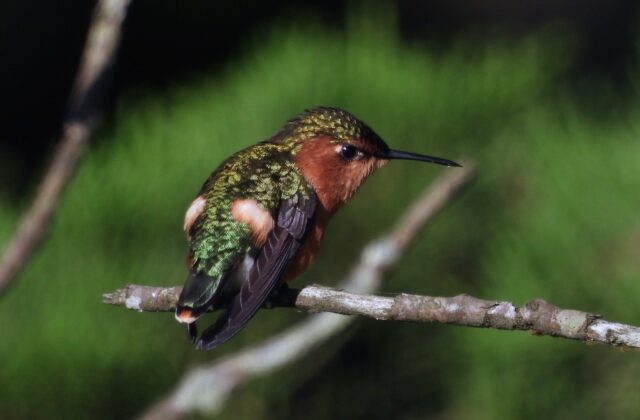 Least Concern
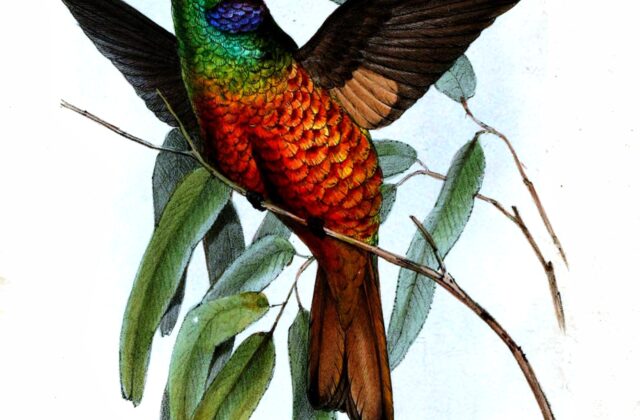 Least Concern
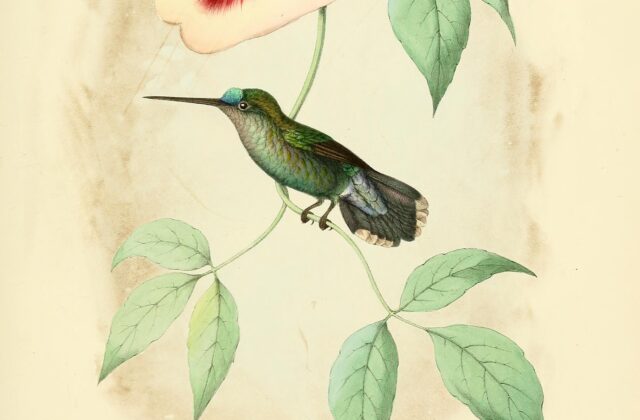 Least Concern
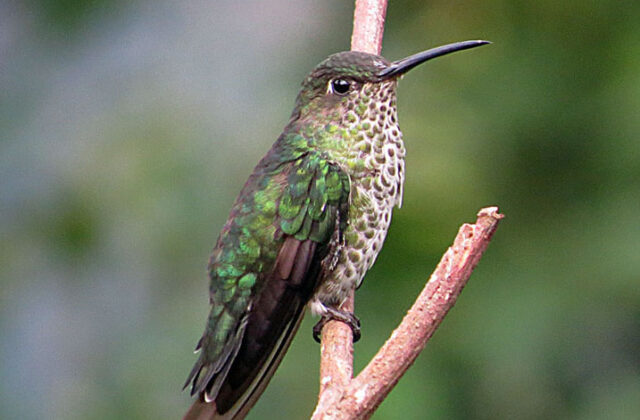 Least Concern
Guides for this bird
Best Hummingbird Feeders
How to choose a hummingbird feeder — the two main styles compared, the right sugar-water mix, and how to keep it clean so the birds stay safe. A decision framework with the hummingbird species in the Birbs encyclopedia.
Meet the Trochilidae
A field guide to the Trochilidae family — 366 species in the Birbs encyclopedia, with the best-known members to start with.