How to Attract Downy Woodpecker to Your Yard
The honest, data-backed way to attract Downy Woodpecker to your yard — the feeders and food they actually use (suet), nesting help, and habitat that brings them in.
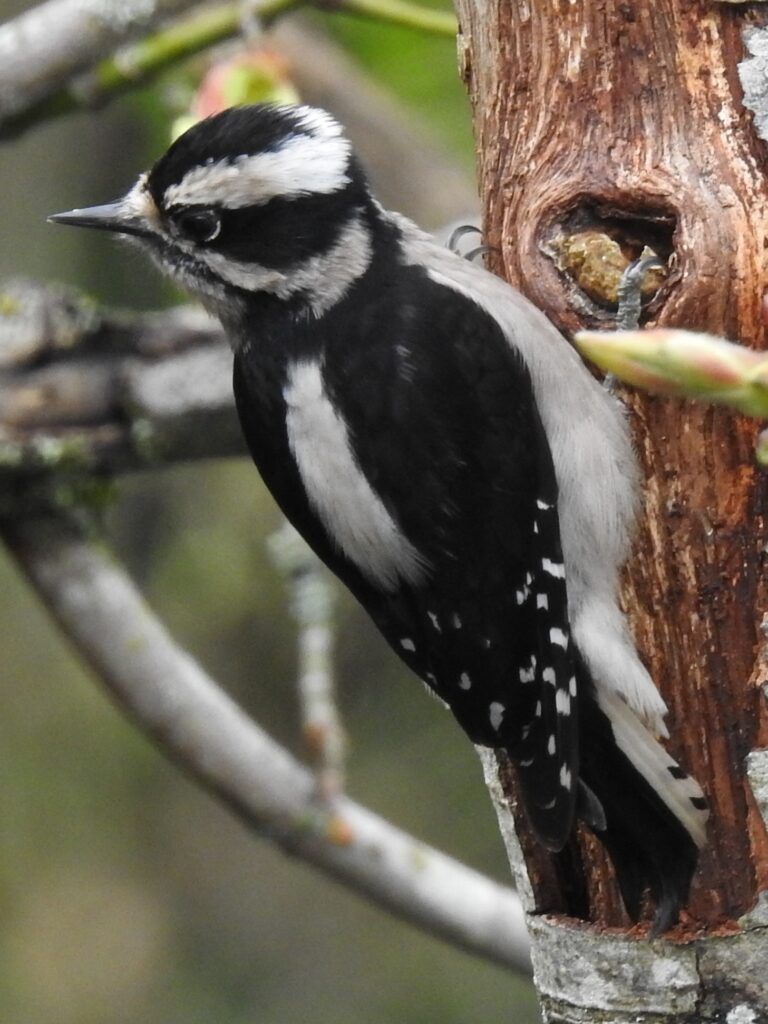
Want to bring Downy Woodpecker (Dryobates pubescens) to your yard? Here is the honest, data-backed version — the feeders and food they actually use, whether they will take a nest box, and the habitat that keeps them coming back. Every recommendation is drawn from real bird-science sources (the Cornell Lab, Audubon and their peers), not guesswork.
The best feeders for Downy Woodpecker
The most feeder-reliable of the group; a suet cage is the anchor, but per Cornell it also takes black-oil sunflower, millet, peanuts, and chunky peanut butter from hoppers/trays and will occasionally sip from hummingbird nectar feeders. Smallest North American woodpecker, so it does not need a heavy-duty perch.
Feeder styles that work for this bird:
- suet feeder
- hopper feeder
- platform / tray feeder
- peanut feeder
- nectar feeder
Suet feeders
Our take
If you only buy one thing, get a tail-prop suet feeder — the extended board lets a woodpecker brace its stiff tail and feed naturally.
Shop by what matters to you
- Suet cageA simple, cheap start that holds a standard cake (searches Amazon in a new tab)
- Tail-prop feederBigger woodpeckers that brace their stiff tail (searches Amazon in a new tab)
- Upside-down suet feederKeeping starlings off (searches Amazon in a new tab)
- See all suet feederBrowse the full range and compare current prices (searches Amazon in a new tab)
What to feed Downy Woodpecker
The foods this species takes most readily:
- suet
- black-oil sunflower
- peanuts
- chunky peanut butter
- millet
Suet & feed
Will Downy Woodpecker use a nest box?
Downy Woodpecker will use a nest structure, but the right design is specialised — follow NestWatch's species plan for exact dimensions and placement rather than a generic box.
How to attract Downy Woodpecker to your yard
Excavates its own cavity in dead trees or the dead stub of a live tree, favoring wood softened by fungus; the cavity is lined only with wood chips. Leave standing dead limbs/snags and keep brushy, weedy edges; it frequents open deciduous woods, orchards, parks, and backyards. NestWatch lists it as a nest-box user (roughly a bluebird-sized box with a ~1 1/2 in hole, filled with wood chips), but note it more often roosts than truly nests in boxes; exact NestWatch 'Right Bird, Right House' floor/height figures were not confirmable, so no box dimensions are provided.
See it near you
For the full profile — photos, sounds, range and ID — see the Downy Woodpecker species page. To find where it is being reported right now, use Birds Near You.
Frequently asked questions
What is the best feeder for Downy Woodpecker?
The most feeder-reliable of the group; a suet cage is the anchor, but per Cornell it also takes black-oil sunflower, millet, peanuts, and chunky peanut butter from hoppers/trays and will occasionally sip from hummingbird nectar feeders. Smallest North American woodpecker, so it does not need a heavy-duty perch.
What do you feed Downy Woodpecker?
Downy Woodpecker readily takes suet, black-oil sunflower, peanuts, chunky peanut butter and millet.
Will Downy Woodpecker use a nest box?
Yes, Downy Woodpecker will use a nest structure — follow NestWatch's species plan for the correct dimensions.