How to Attract Evening Grosbeak to Your Yard
The honest, data-backed way to attract Evening Grosbeak to your yard — the feeders and food they actually use (black-oil sunflower), nesting help, and habitat that brings them in.
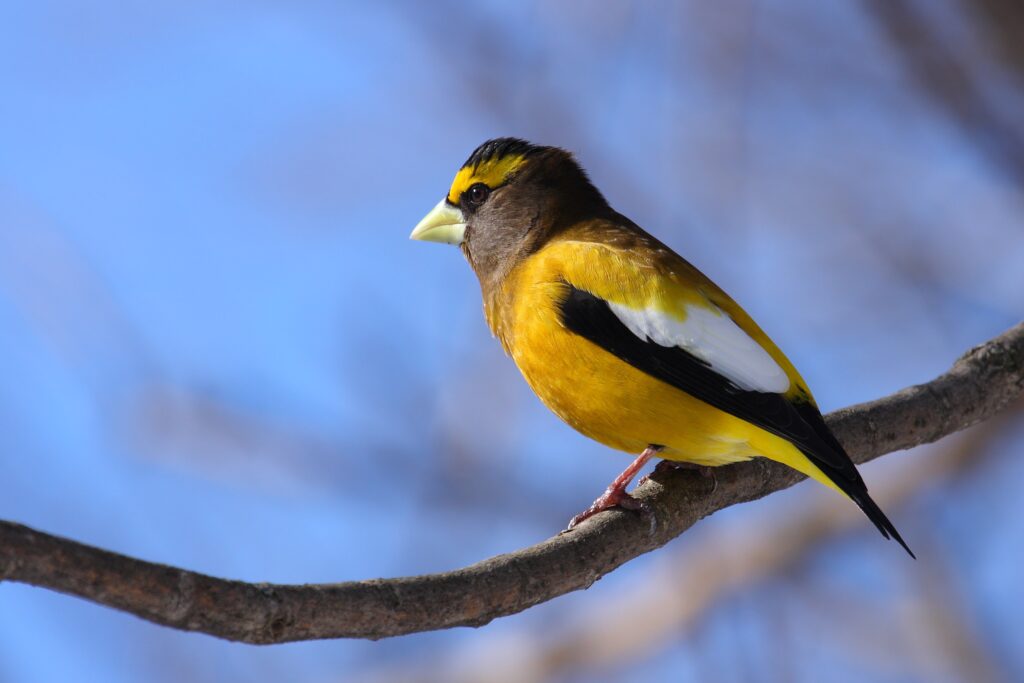
Want to bring Evening Grosbeak (Hesperiphona vespertina) to your yard? Here is the honest, data-backed version — the feeders and food they actually use, whether they will take a nest box, and the habitat that keeps them coming back. Every recommendation is drawn from real bird-science sources (the Cornell Lab, Audubon and their peers), not guesswork.
The best feeders for Evening Grosbeak
Heavyset, thick-billed finch of northern conifer forests; at feeders it eats black-oil sunflower seeds. A large, flock-feeding bird, so a wide platform (tray) or a substantial hopper with room for several birds works far better than a small tube feeder. An irruptive winter visitor, unpredictable year to year and heaviest in poor cone-crop years. Note: the binomial is unstable across authorities — IOC/HBW place it in Hesperiphona (H. vespertina), while Clements/AOS use Coccothraustes vespertinus.
Feeder styles that work for this bird:
- platform / tray feeder
- hopper feeder
Seed feeders
Our take
If you only buy one thing, get a tube or hopper feeder and fill it with sunflower hearts — it suits the widest range of garden songbirds.
Shop by what matters to you
- Tube feederFinches, tits and other small, agile birds (searches Amazon in a new tab)
- Hopper or “house” feederA wide mix of garden species (searches Amazon in a new tab)
- Platform or tray feederGround-feeders like doves, sparrows and juncos (searches Amazon in a new tab)
- See all seed feederBrowse the full range and compare current prices (searches Amazon in a new tab)
What to feed Evening Grosbeak
The foods this species takes most readily:
- black-oil sunflower
Seed & feed
How to attract Evening Grosbeak to your yard
Set out black-oil sunflower seed on trays/hoppers with water nearby; the species also forages on the seeds, buds, berries, and fruits of trees, especially maples and box elder, plus ash, cherry, apple, and crabapple. Breeds high in northern spruce-fir and pine forests, building a flimsy saucer nest on a branch, so it will not use a nest box.
See it near you
For the full profile — photos, sounds, range and ID — see the Evening Grosbeak species page. To find where it is being reported right now, use Birds Near You.
Frequently asked questions
What is the best feeder for Evening Grosbeak?
Heavyset, thick-billed finch of northern conifer forests; at feeders it eats black-oil sunflower seeds. A large, flock-feeding bird, so a wide platform (tray) or a substantial hopper with room for several birds works far better than a small tube feeder. An irruptive winter visitor, unpredictable year to year and heaviest in poor cone-crop years. Note: the binomial is unstable across authorities — IOC/HBW place it in Hesperiphona (H. vespertina), while Clements/AOS use Coccothraustes vespertinus.
What do you feed Evening Grosbeak?
Evening Grosbeak readily takes black-oil sunflower.
Will Evening Grosbeak use a nest box?
No — Evening Grosbeak is not a cavity nester and will not use a nest box. It builds an open nest, so cover and habitat help more.