Bird Collective Nouns: What to Call a Group of Any Bird
A group of crows is a murder; owls, a parliament; starlings, a murmuration. The real, well-documented collective nouns for dozens of bird groups — with their origins, and honestly labelled where a term is more literary than everyday.
A group of crows is a murder. A group of owls is a parliament. A group of starlings is a murmuration. English has a delightful set of collective nouns for birds — some in everyday use, others charming relics of the 1486 Book of St Albans. Below are the well-documented ones for 39 bird groups, with where each comes from. Terms that are more literary than everyday are labelled as such; the popular inventions with no real pedigree are left out.
Collective nouns for birds, A–Z
| Birds | A group is called… | Where it comes from |
|---|---|---|
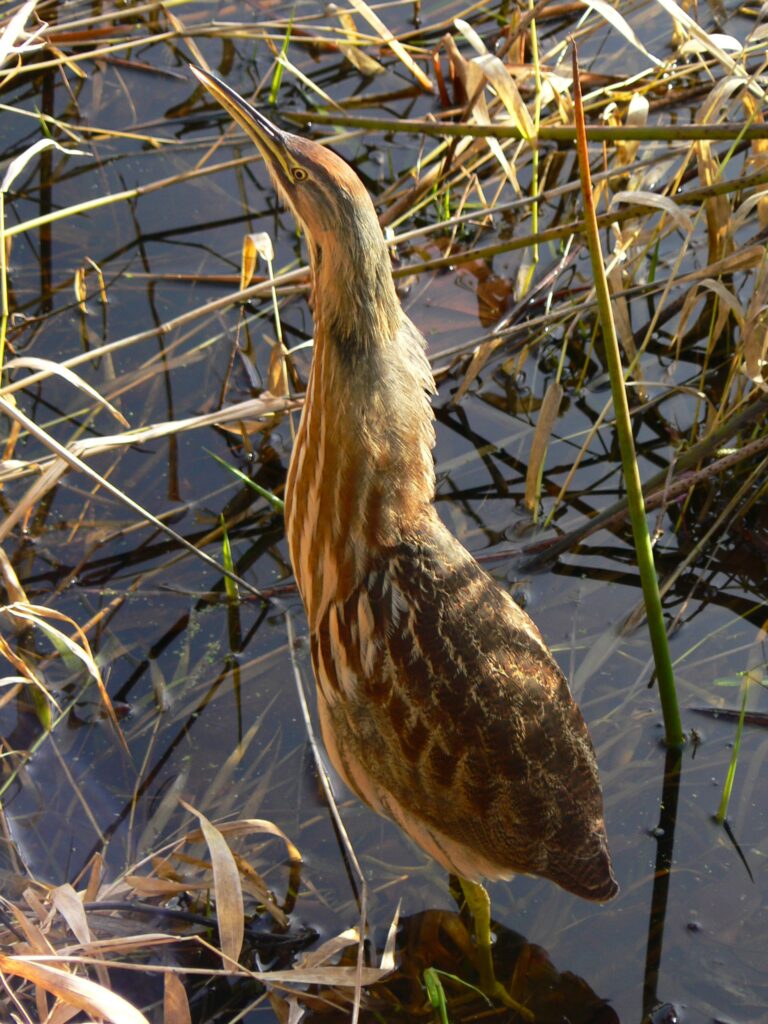
| Bitterns | a sedge or a siege (chiefly literary) | 'Sedge'/'sege' (variant 'siege') of bitterns is recorded in the Book of St Albans (1486) — the marsh-plant metaphor shared with herons and cranes. |
| Chickens | a brood, a peep or a clutch | 'A brood of chickens' (a hen with her chicks) and 'a clutch' (of eggs/newly hatched) are standard dictionary terms; |
| Coots | a covert or a raft (chiefly literary) | 'Cover'/'covert' of coots appears in old company-term lists but Baltimore Bird Club marks it Group E (not in the OED as a bird-group name) — listed-but-unverified rather than dictionary-established. |
| Cormorants | a flight or a gulp | 'Flight' of cormorants is Baltimore Bird Club Group A (the same generic 'flight' applied historically to swallows, doves, goshawks). |
| Cranes | a herd, a sedge or a siege (chiefly literary) | 'Sedge'/'siege' and 'herd' of cranes are recorded in the Book of St Albans (1486) — sedge/sege the marsh-plant metaphor shared with herons and bitterns. |
| Crows | a murder | First recorded in John Lydgate's 'Hors, Shepe, & Ghoos' (c.1470), NOT the Book of St Albans; |
| Doves | a dole, a dule or a piteousness (chiefly literary) | 'A dole (or dule) of doves' and 'a piteousness of doves' are traditional venery terms evoking the mournful cooing; |
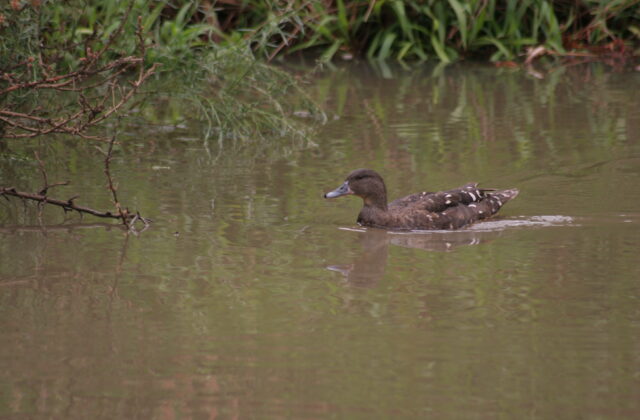
| Ducks | a raft, a paddling or a team | 'Raft' (on water) is Baltimore Bird Club Group A. |
| Eagles | a convocation (chiefly literary) | 'Convocation of eagles' (Latin convocare, 'to call together') is a traditional term of venery in the St-Albans-era lineage and the most widely recognised term; |
| Falcons | a cast or a kettle | 'Cast' is genuine falconry terminology (OED-standard, Baltimore Bird Club Group A) for a pair flown together — the same 'cast' used for hawks. |
| Finches | a charm | 'A charm of finches' (originally goldfinches). |
| Flamingos | a flamboyance or a stand | 'Flamboyance' is a modern coinage (NOT in the Book of St Albans; |
| Geese | a gaggle, a skein or a wedge | 'Gaggle' and 'skein' trace to the Book of St Albans (1486); |
| Grouse | a covey, a pack or a lek | 'A covey of grouse' (small family group) and 'a pack of grouse' (larger late-season flock) are genuine field/hunting terms. |
| Gulls | a colony or a flock | Gulls have no distinctive historical term of venery. |
| Hawks | a cast or a kettle | 'Cast of hawks' is genuine falconry usage — the OED-standard term (Baltimore Bird Club Group A), strictly a pair flown together. |
| Herons | a siege or a sedge | 'Siege' (Middle English sege — the heron 'besieging' the water's edge) is from the Book of St Albans (1486) and is Baltimore Bird Club Group A. |
| Hummingbirds | a charm or a glittering (chiefly literary) | 'A charm of hummingbirds' is the most-cited term (borrowing 'charm' from finches) and appears in references such as Britannica; |
| Ibises | a colony | Ibises have no distinctive historical term of venery. |
| Larks | an exaltation or a bevy | 'An exaltation of larks' is one of the best-known terms of venery — it appears in the Book of St Albans (1486) as 'exaltyng'/'exaltation' and is now a standard idiomatic phrase (title of James Lipton's classic book). |
| Magpies | a tidings (chiefly literary) | 'A tidings of magpies' is a 15th-c. |
| Nightingales | a watch (chiefly literary) | 'A watch of nightingales' is a traditional term of venery (evoking the bird's nocturnal song) — attested in the Book of St Albans as 'a watche of nyghtyngalys' but chiefly literary rather than in real use. |
| Owls | a parliament | Derives from Chaucer's 'Parlement of Foules' (c.1380); |
| Parrots | a company or a pandemonium (chiefly literary) | 'A company of parrots' is the traditional venery form. |
| Peafowl | an ostentation, a muster or a pride | 'An ostentation of peacocks' (playing on the display) and 'a muster of peacocks' are both traditional terms of venery; |
| Pheasants | a nye, a nide or a bouquet | 'A nye (or nide) of pheasants' is a genuine hunting term for a brood/group (from Anglo-Norman ny, Latin nidus 'nest'), attested in the Book of St Albans. |
| Pigeons | a flock, a kit or a loft | Pigeons have no old venery term; |
| Plovers | a congregation or a wing (chiefly literary) | 'Congregation' of plovers is in the Book of St Albans (1486) but is Baltimore Bird Club Group D — obsolete, unused for centuries — so historical/literary rather than established. |
| Quail | a bevy or a covey | 'A bevy of quail' and 'a covey of quail' are both established hunting terms. |
| Ravens | an unkindness or a conspiracy (chiefly literary) | 'Unkindness' is genuinely old — 'an vnkyndenes of Rauenes' in the Book of St Albans (1486), from a medieval folk-belief that ravens abandon their young; |
| Rooks | a building, a parliament or a clamour (chiefly literary) | 'Building of rooks' is the historically attested term (the rookery of nests in tall trees); |
| Sparrows | a host or a quarrel (chiefly literary) | 'A host of sparrows' is the traditional venery form (with a scriptural echo); |
| Starlings | a murmuration | 'A murmuration of starlings' is a genuine dictionary entry — Merriam-Webster records the sense 'of starlings: flock', from the low rushing sound of huge dusk flocks. |
| Storks | a muster (chiefly literary) | 'Muster' of storks is Baltimore Bird Club Group C — archaic, from old lists and somewhat revived 19th-20th c. |
| Swallows | a flight | 'A flight of swallows' is the standard, long-used term (Baltimore Bird Club Group A generic 'flight'). |
| Swans | a wedge or a bevy | 'Wedge' (in V-flight) is the traditional term (Baltimore Bird Club lists it). |
| Turkeys | a rafter or a flock | 'A rafter of turkeys' is the traditional, dictionary-recognised term (dates to at least the 16th c.; |
| Vultures | a kettle, a wake or a committee | Context-specific: 'kettle' = vultures wheeling on a thermal (genuine, established hawk-watcher/ornithological usage — the most defensible); |
| Woodpeckers | a descent (chiefly literary) | 'A descent of woodpeckers' is the traditionally listed venery term (a pun on the birds working down a trunk). |
Tap a bird group to explore its species. Sources: major dictionaries (Merriam-Webster / Oxford), the historical Book of St Albans (1486), and reputable ornithological references — listed below.
Frequently asked questions
What is a group of crows called?
A murder. A group of crows is called a murder.
What is a group of owls called?
A parliament. A group of owls is called a parliament.
What is a group of ravens called?
An unkindness. A group of ravens is called an unkindness (a historical, chiefly literary term).
What is a group of starlings called?
A murmuration. A group of starlings is called a murmuration.
What is a group of flamingos called?
A flamboyance. A group of flamingos is called a flamboyance.
What is a group of geese called?
A gaggle. A group of geese is called a gaggle.