How to Attract Red-headed Woodpecker to Your Yard
The honest, data-backed way to attract Red-headed Woodpecker to your yard — the feeders and food they actually use (suet), nesting help, and habitat that brings them in.
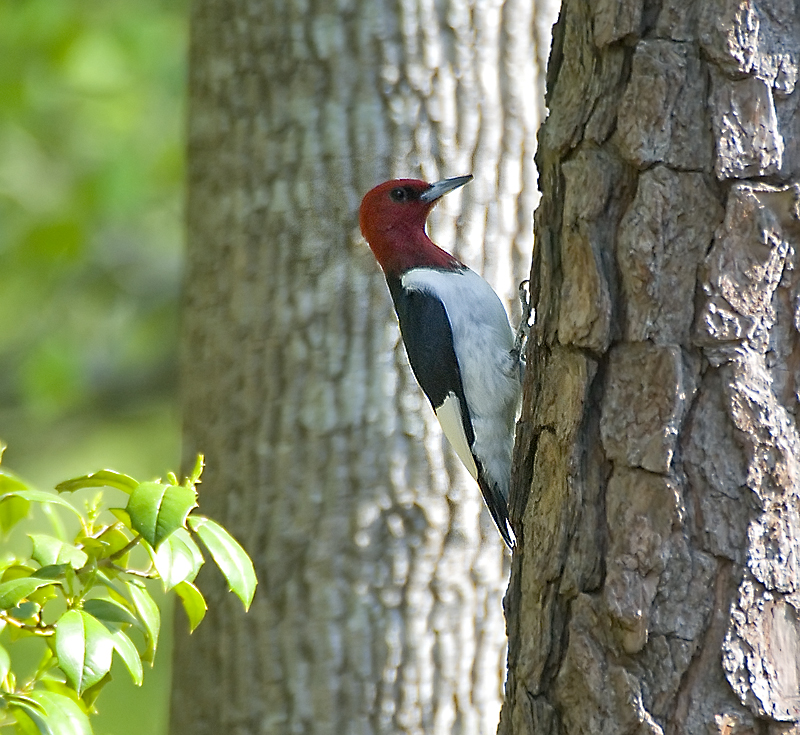
Want to bring Red-headed Woodpecker (Melanerpes erythrocephalus) to your yard? Here is the honest, data-backed version — the feeders and food they actually use, whether they will take a nest box, and the habitat that keeps them coming back. Every recommendation is drawn from real bird-science sources (the Cornell Lab, Audubon and their peers), not guesswork.
The best feeders for Red-headed Woodpecker
Only an occasional feeder visitor per Cornell, mainly in winter and mainly for suet. It caches acorns and beech nuts, so nuts, cracked corn, and fruit on a platform can draw it where the species is present. Roughly two-thirds of its diet is plant material (nuts, fruit) and one-third insects, many caught in flight — so it is more an open-perch flycatcher than a typical feeder woodpecker.
Feeder styles that work for this bird:
- suet feeder
- platform / tray feeder
- peanut feeder
- fruit feeder
Suet feeders
Our take
If you only buy one thing, get a tail-prop suet feeder — the extended board lets a woodpecker brace its stiff tail and feed naturally.
Shop by what matters to you
- Suet cageA simple, cheap start that holds a standard cake (searches Amazon in a new tab)
- Tail-prop feederBigger woodpeckers that brace their stiff tail (searches Amazon in a new tab)
- Upside-down suet feederKeeping starlings off (searches Amazon in a new tab)
- See all suet feederBrowse the full range and compare current prices (searches Amazon in a new tab)
What to feed Red-headed Woodpecker
The foods this species takes most readily:
- suet
- acorns
- cracked corn
- peanuts
- fruit
Suet & feed
Will Red-headed Woodpecker use a nest box?
Red-headed Woodpecker will use a nest structure, but the right design is specialised — follow NestWatch's species plan for exact dimensions and placement rather than a generic box.
How to attract Red-headed Woodpecker to your yard
Nests in dead trees or dead parts of live trees (pines, maples, birches, cottonwoods, oaks) in open woodlots, savannas, and clearings — often in bark-stripped snags; per Cornell it will also nest in bird houses. Its biggest limiting factor is loss of dead trees, so keeping standing snags and dead limbs is the single best way to attract it; oak/beech mast and open ground with scattered trees also help. No NestWatch 'Right Bird, Right House' box spec exists for this species, so exact box dimensions are not provided.
See it near you
For the full profile — photos, sounds, range and ID — see the Red-headed Woodpecker species page. To find where it is being reported right now, use Birds Near You.
Frequently asked questions
What is the best feeder for Red-headed Woodpecker?
Only an occasional feeder visitor per Cornell, mainly in winter and mainly for suet. It caches acorns and beech nuts, so nuts, cracked corn, and fruit on a platform can draw it where the species is present. Roughly two-thirds of its diet is plant material (nuts, fruit) and one-third insects, many caught in flight — so it is more an open-perch flycatcher than a typical feeder woodpecker.
What do you feed Red-headed Woodpecker?
Red-headed Woodpecker readily takes suet, acorns, cracked corn, peanuts and fruit.
Will Red-headed Woodpecker use a nest box?
Yes, Red-headed Woodpecker will use a nest structure — follow NestWatch's species plan for the correct dimensions.