Green-cheeked Conure Care Guide: Diet, Lifespan, Housing & Health
A vet-informed care guide for the Green-cheeked Conure — a beginner-level companion bird that can live 20-30 years. Housing, diet (and toxic foods to avoid), temperament, health and enrichment.
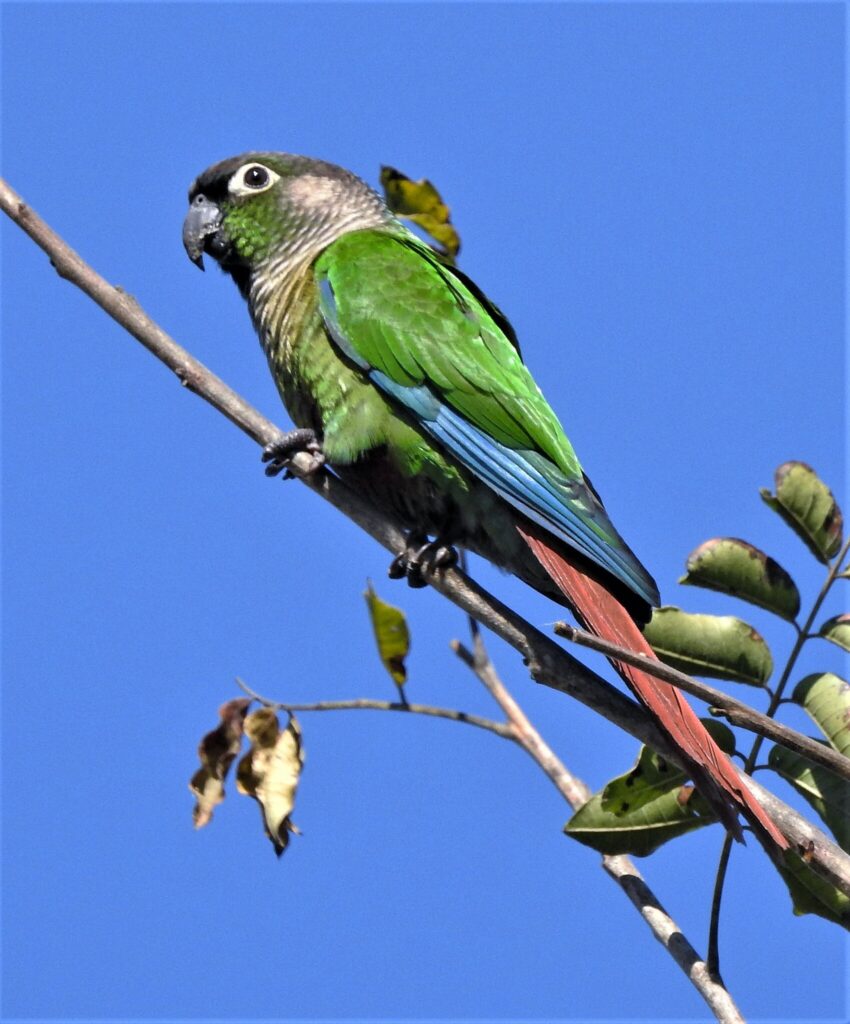
The Green-cheeked Conure (Pyrrhura molinae) is a beginner-level companion bird that can live around 20-30 years — a long commitment. Here is how to care for one properly: housing, diet, health, temperament and enrichment, based on avian-veterinary guidance.
Quick facts
| Care level | Beginner |
|---|---|
| Lifespan | 20-30 years |
| Adult size | 25-26 cm (about 10 in) |
| Noise level | Moderate |
| Talking ability | Limited |
| Best for | First-time and apartment keepers wanting a small, relatively quiet, affectionate parrot that still needs daily attention |
Housing a Green-cheeked Conure
Minimum recommended cage: VCA conure minimum 60 x 60 x 90 cm (2 x 2 x 3 ft); larger is always better and horizontal flight space matters more than height. Bigger is always better — birds fly horizontally, so width matters more than height. Provide varied natural-wood perches of different diameters, and place the cage in a social, draught-free part of the home away from the kitchen (cooking fumes, especially from non-stick cookware, are deadly to birds).
What to feed a Green-cheeked Conure
Staple: Formulated pellets as the staple (roughly 75-80% of the diet per VCA), with only a small amount of a quality seed mix
Fresh foods: Daily fresh vegetables and dark leafy greens (kale, carrots, peppers, squash, broccoli) making up 20-40% of intake, with fruit limited to about 10% due to sugar/water content
Foods that are toxic to your Green-cheeked Conure — never feed these
Avocado, chocolate, caffeine, alcohol, onion and garlic, apple seeds and fruit pits (cyanide-forming), and salty/sugary/fatty processed foods
Temperament & social needs
Playful, affectionate and comparatively quiet — one of the least noisy conures, but still capable of loud screeching when excited or seeking attention.
Highly social flock bird; needs daily interaction and several hours of supervised out-of-cage time; does well kept singly with plenty of attention or in pairs
Enrichment
Very active and inquisitive; needs chew toys, foraging toys, swings and regularly rotated enrichment plus daily out-of-cage exploration
Common health problems in Green-cheeked Conure
Malnutrition and vitamin A deficiency on seed-heavy diets, obesity/fatty liver disease, PBFD (psittacine beak and feather disease), psittacosis (chlamydiosis, zoonotic), proventricular dilatation disease (PDD/avian bornavirus), and feather-destructive behavior if under-stimulated
Birds hide illness until they are seriously unwell — a bird that looks "off" is an emergency. Establish care with an avian vet before you need one, and schedule an annual well-bird check.
Setup essentials
Birbs.com may earn a commission from qualifying purchases made through links on this page, at no extra cost to you.
In the wild
The Green-cheeked Conure is also a wild bird — see the Green-cheeked Conure species profile for its natural range, behaviour and conservation status.
Frequently asked questions
How long do Green-cheeked Conure live?
With good care a Green-cheeked Conure typically lives 20-30 years — a long-term commitment.
Is a Green-cheeked Conure a good pet for beginners?
It is rated Beginner-level. Green-cheeked Conures suit first-time and apartment keepers wanting a small, relatively quiet, affectionate parrot that still needs daily attention.
What can Green-cheeked Conure not eat?
Never feed a Green-cheeked Conure: Avocado, chocolate, caffeine, alcohol, onion and garlic, apple seeds and fruit pits (cyanide-forming), and salty/sugary/fatty processed foods. These are toxic to birds.