How to Tame a Nervous Bird: A Step-by-Step Trust Guide
Step-by-step ways to tame a scared bird with rewards, not force: read its body language, build trust, teach step up, and stop biting before it starts.
You tame a nervous bird by making it feel safe and rewarding small, voluntary steps towards you, never by forcing it. The Association of Avian Veterinarians strongly recommends reward-based training, and warns that forcing and punishing birds harms the bond and causes fear and aggression.
This guide works for budgies, cockatiels and larger parrots alike, because the principles are the same. Allow plenty of time, especially if your bird has had a hard start in life.
Why your bird is nervous
Parrots are prey animals. Behaviour scientist Dr Susan Friedman writes that a wild parrot’s first defence is to flee, and that serious biting is not its typical reaction. Aggression is often the predictable result of being pushed too far, too fast or too forcefully.
Much of what looks like a bad temperament is learned. Trainer Barbara Heidenreich points out that parrots are not hatched fearing hands or biting them. They learn this from experience, such as a hand pushed into the chest, being quickly scooped up or having their toes peeled off a perch. Parrot behaviour consultant Pamela Clark describes an African grey that lost trust in its owner after one bad fall, and notes that fear of new things is common in adult parrots.
This is good news: what was learned can be replaced.
First, rule out illness
A bird in pain may behave very differently. The AAV lists changes in vocalisation, eating habits or aggression among early signs that call for a vet visit. If the change is sudden, or your bird is new to you, see an avian vet before you start training.
Learn to read your bird’s body language
This is the most useful skill you can build. Birds often give warnings before they bite. These postures come from LafeberVet’s body language handout:
| Mood | What you may see | What to do |
|---|---|---|
| Relaxed | Soft, slightly fluffed feathers, preening, stretching, beak grinding, tail wagging or shaking | A good time for training |
| Afraid or stressed | Stiff, skinny posture, feathers held flat, quivering wings held slightly away from the body, head high and forward | Stop. Move back, or remove what is causing the fear |
| Excited or aggressive | Standing tall, wings spread, tail fanned, raised crest or neck feathers, eye pinning, head lowered, beak open, lunging, foot tapping | Do not handle. Let your bird calm down first |
- Eye pinning is when the pupils rapidly shrink and enlarge. LafeberVet calls it an extremely important sign of strong excitement, good or bad, and VCA says it often means a bird is about to bite.
- Crests on cockatoos and cockatiels go up in response to both good and bad things, so read them with everything else.
- A flared tail is a serious warning. LafeberVet says it is a sign of extreme excitement that can often be associated with aggression.
- Persistently fluffed feathers with lethargy are a sign of illness, not contentment. See an avian vet at once.
LafeberVet adds that these clues are not foolproof, particularly in younger birds. Watch your own bird and learn what its signals mean.
Set your bird up to feel safe
- Cage position: RSPCA Australia suggests a corner away from busy walkways, at about chest height, not on the floor where people and pets loom over it. The RSPCA in the UK suggests putting the back of the cage against a solid wall.
- Your movements: stay calm, avoid fast hand movements and loud noises, and do not let strangers approach until your bird shows an interest in them.
- Enough sleep: most birds do best with 10 to 12 hours a night.
- New objects: Clark’s case study began far enough from a new stand that the bird showed no concern. The RSPCA says to introduce new items gradually, away from the cage first.
Step 1: find a reward your bird really wants
Training only works if the reward matters to the bird. The RSPCA suggests favourite foods, gentle head scratches or a favourite toy, along with praise in a soft voice. Clark says fearful birds often need a very high-value treat, and her case study kept these for training. Small pieces work best, because avian vet Dr Brian Speer and Julie Murad note that they let you keep a session going.
Is your bird not interested in treats? Clark suggests looking at its diet, as it may be getting too much rich food overall. Talk to your avian vet before changing it. Never starve a bird to make it work.
Step 2: make your presence and hand mean good things
Give treats for free at first. VCA’s approach is to offer a favourite treat by hand without asking for anything, over several days, until your bird takes it several times without trying to bite.
If your bird won’t come near your hand, start further away. In Clark’s case study, the owner began at a distance where the bird showed no nervousness at all, and moved closer only in very small steps, waiting until it was completely comfortable each time. The technical name for this is desensitisation. Speer and Murad describe how pairing it with a highly desirable food can replace a fear response.
Step 3: teach targeting
Targeting lets you guide your bird without touching it. Friedman describes teaching a bird to touch a chosen object, such as the end of a chopstick, in return for a reward. One simple way to start:
- Hold the target where your bird can easily reach it.
- The moment its beak touches the target, praise and give a treat.
- Move the target a little further away, so your bird takes a step to reach it.
- Over time, use it to guide your bird out of the cage or closer to your hand.
Heidenreich notes that this also helps with daily care during training, so you don’t slip back into forcing your bird to move.
Step 4: teach step up as a request, not a command
Asked what one thing she would teach parrot owners, Heidenreich chose the difference between a command and a request. In her method, your hand stays still and your bird chooses to come to it. Here is the method, combined from RSPCA Australia and Clark:
- Say “step up” and lean for a treat. Say the words at each stage. Hold a treat so your bird leans forward to take it, with your other hand steady and at a comfortable distance.
- Move the treat behind your hand, so your bird must lean over your hand to reach it.
- Reward a touch. When a foot touches your hand, give the treat straight away.
- Reward one foot on the hand, then both feet.
- Give the treat and put your bird straight back down. Clark says this reassures it that you only want a brief moment on your hand.
- Build up to walking a step or two with your bird on your hand.
- Teach “step down” the same way, onto a perch.
Keep your hand steady. Don’t push it into your bird’s chest or belly, scoop it up or frighten it onto your hand. If your bird refuses, Clark’s advice is to walk away, come back a few minutes later and try again. Don’t chase it. If your hand is still too frightening, VCA suggests starting with a wooden perch, and the RSPCA also accepts a hand-held stick.
If your bird bites
The VCA and RSPCA advice is similar:
- Stay calm and say nothing. Strong reactions, even yelling, can teach your bird that biting gets attention.
- Slowly put your bird down and walk away. Wait until it is calm before you ask again. The RSPCA suggests going out of sight for a couple of minutes, and advises against using the cage as a punishment.
- Never hit a bird. It only teaches fear of hands.
- Review what happened. What did your bird do just before it bit? Next time, respond to that signal first.
You don’t need to “take the bite” to prove a point. Heidenreich calls this painful and unnecessary, and recommends avoiding the bite in the first place by heeding your bird’s body language. If your bird does show aggression while you are working, she suggests gently removing your hand and the reward for a few seconds, then continuing to reward calm behaviour.
Common causes of bites
- Cage protectiveness: most pet birds can become protective of their cages, and may bite when you reach in. Targeting can guide your bird out instead.
- Displaced aggression: a bird upset by another bird may bite whoever is closest.
- Over-excitement: an excited bird can bite as hard as an angry one. LafeberVet advises allowing it to calm down first.
- Attachment to one person: a bird with a strong preference may become aggressive to others. The RSPCA suggests staying calm and walking away if this happens.
- Beak use: parrots also use beaks for climbing and holding on. The RSPCA says this is not biting, unless the grip becomes painful.
Build a healthy bond, not a pair bond
RSPCA Australia says that birds and owners should interact as flock members, not mates. Cuddling, kissing and feeding a bird from your mouth can confuse it. The AAV agrees that excessive petting can be read as mating behaviour, and recommends including your bird in daily activities, foraging and trick training.
Let other people take part as well. RSPCA Australia calls “one-person birds” a myth, and says birds should be encouraged to accept several people. A bird bonded to just one person may be more aggressive towards others, and sometimes towards that person too.
What not to do
- Do not grab or chase your bird. This damages trust and can teach it to fear you.
- Avoid “flooding”. Friedman warns against restraining or wrapping a bird until it stops struggling. The apparent calm may be learned helplessness or exhaustion, it often does not last, and no new behaviour is taught.
- Do not wear gloves. VCA notes that most birds are afraid of them. A thick towel can protect your hand if you need it.
- Do not punish. Speer and Murad warn that frequent punishment raises the likelihood of aggression, apathy, generalised fear and escape behaviour.
- Do not carry your bird on your shoulder. The RSPCA explains that you cannot read its body language there, and it could bite your face or be carried outside by mistake.
- Take care with wing clipping. In Clark’s case study, a too-short trim led to the fall that started the problem. The AAV says to discuss the pros and cons of clipping with your vet.
Extra skills worth teaching
- Going into a carrier. The RSPCA’s method takes two or three short sessions a day over several days: leave the carrier nearby, reward your bird for going closer, then put food inside. Close the door briefly only once your bird is confident.
- Accepting a towel. Speer and Murad describe how a bird frightened of towels can get used to one through repeated gentle exposure. This makes vet visits much less stressful.
- Staying on a perch. RSPCA Australia suggests a table-top perch so that your bird can safely join the household, rewarding it for staying there. If it climbs down, calmly put it back with no reward.
How long will it take?
Expect anything from minutes to months. RSPCA Australia says the average parrot learns to step up in 10 to 15 minutes, in short and frequent sessions. A fearful bird is another matter: Clark’s case study took several months, with a complete beginner as the trainer. She credits patience, consistency and keeping going, not expert skill.
It helps to write down what you see. Speer and Murad recommend describing behaviour in terms of what you can observe, not labels. Note what happened just before and just after, then change one of those things and see what happens.
When to get help
Ask your avian vet for help if biting or fear isn’t improving, or if your bird is plucking its feathers. VCA notes that your vet may be able to refer you to an avian behaviourist. The AAV lists training resources, including Good Bird Inc and the International Association of Avian Trainers and Educators. Be careful with advice you find online, as the RSPCA notes that it isn’t always reliable. Avoid anyone who recommends force. For the basics of a new bird, see Budgie Care 101 and our cockatiel guide, and keep our bird first aid guide to hand.
About this guide
Birbs Editorial compiled this guide from the sources listed below, which we read in November 2026. It has not been individually reviewed by a veterinarian or certified behaviour consultant. It does not replace one, especially if you or your bird are at risk of injury.
Birds in this guide
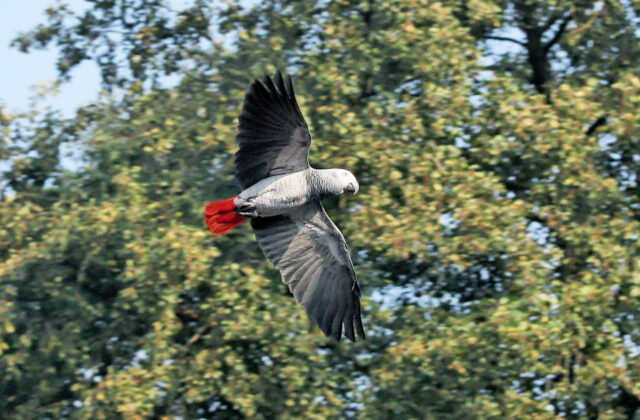 Endangered
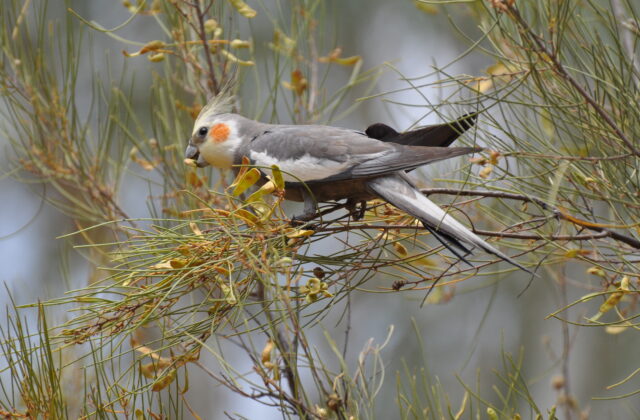 Least Concern
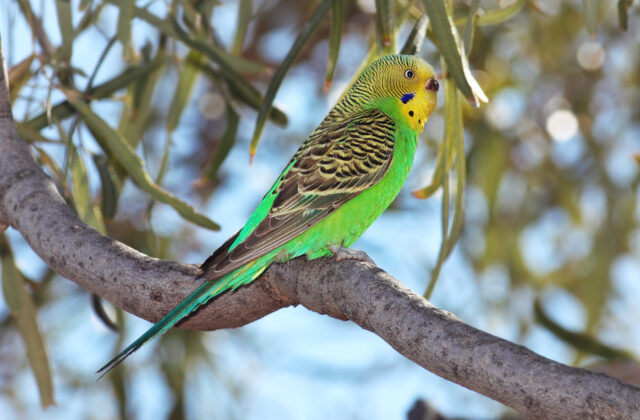 Least Concern
Birb mood:
the chatty pocket parrot
Frequently asked questions
How long does it take to tame a bird?
It depends on the bird's history. RSPCA Australia says an average parrot can learn to step up in 10 to 15 minutes, but a fearful bird can take far longer. Parrot behaviour consultant Pamela Clark describes one case that took several months of patient work.
Can you tame an older bird?
Often, yes. Behaviour scientist Dr Susan Friedman writes that learned behaviours can be unlearned, and trainer Barbara Heidenreich says a bird that has learned to fear or bite hands can be retrained, though it can be challenging.
Why is my bird scared of my hands?
Usually because of past experience. Heidenreich notes that parrots are not hatched with a fear of hands. They learn it through unpleasant experiences, such as having toes peeled off a perch, being scooped up or having a hand pushed into their chest. A single frightening accident can also do it.
Why does my bird bite me?
VCA lists fear, excitement, territorial behaviour, aggression and displaced aggression. Many bites happen when a bird's earlier warning signs were missed. If a bite makes the hand go away, the bird learns that biting works.
What should I do when my bird bites?
Stay calm and do not shout or react dramatically. Slowly put the bird down and walk away, as VCA and the RSPCA advise, then try again later. Never hit a bird. Then work out what you missed, so that you can avoid the next bite.
Should I wear gloves to handle my bird?
VCA generally advises against it, because most birds are afraid of gloves. A thick towel can protect your hand if needed, and some birds feel more comfortable stepping onto a wooden perch.
Should I let my bird sit on my shoulder?
The RSPCA advises against it. You cannot keep eye contact or read your bird's body language there, it could bite your face, ears or lips, and you might carry it outside by mistake.
What is flooding, and why should I avoid it?
Flooding means forcing an animal to stay with what it fears until it stops reacting, such as wrapping a bird in a towel until it gives up. Friedman warns that the apparent calm can be learned helplessness or exhaustion, the effect often does not last, and nothing new is learned.
Sources & further reading
- Association of Avian Veterinarians — Basic Care for Companion Birds (PDF) (opens in a new tab)
- Association of Avian Veterinarians — Signs of Illness in Companion Birds (PDF) (opens in a new tab)
- LafeberVet — Reading Bird Body Language (Pollock, PDF) (opens in a new tab)
- LafeberVet — Psittacine Behavior, Handling, and Restraint (Speer and Murad) (opens in a new tab)
- World Parrot Trust — Step Up: Command or Request? (Heidenreich, PDF) (opens in a new tab)
- Behavior Works — Alternatives to Breaking Parrots (Friedman, PDF) (opens in a new tab)
- Pamela Clark, CPBC — Teaching a Fearful Parrot to Step Up (opens in a new tab)
- VCA Animal Hospitals — Biting and Screaming in Birds (opens in a new tab)
- RSPCA — How to Train Your Pet Bird (opens in a new tab)
- RSPCA — Understanding Your Pet Bird's Behaviour (opens in a new tab)
- RSPCA — Environment: Giving Your Bird a Good Place to Live (opens in a new tab)
- RSPCA Australia — How Do I Bond With My Companion Bird? (opens in a new tab)
- RSPCA Australia — What Kind of Enclosure Does My Bird Need? (Doneley) (opens in a new tab)