Yellow-naped Amazon Care Guide: Diet, Lifespan, Housing & Health
A vet-informed care guide for the Yellow-naped Amazon — an advanced-level companion bird that can live 50-80 years. Housing, diet (and toxic foods to avoid), temperament, health and enrichment.
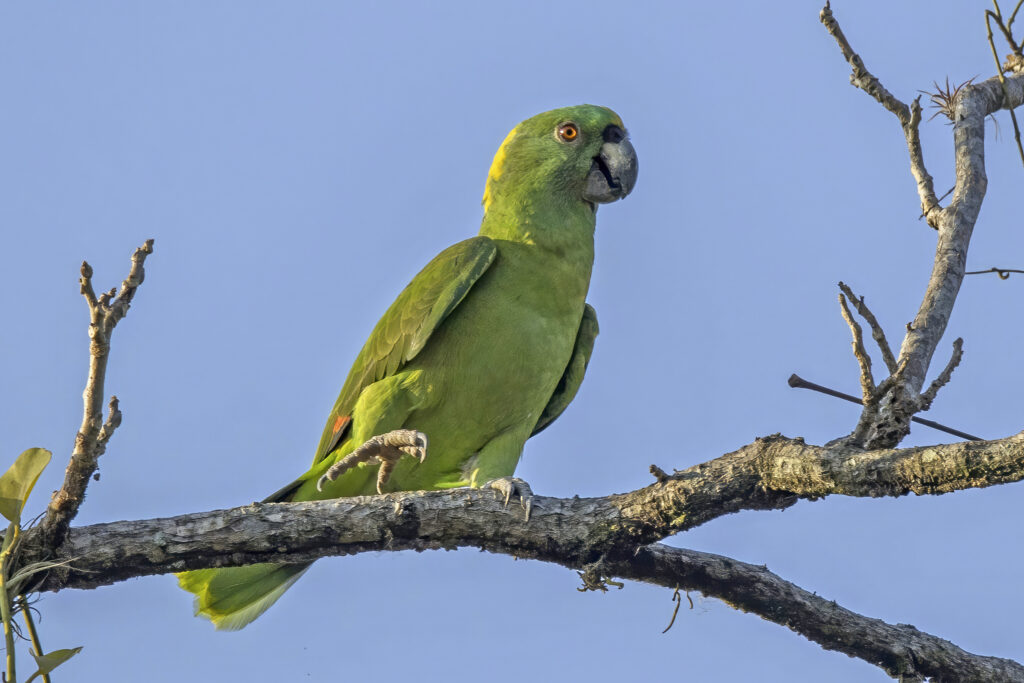
The Yellow-naped Amazon (Amazona auropalliata) is an advanced-level companion bird that can live around 50-80 years — a long commitment. Here is how to care for one properly: housing, diet, health, temperament and enrichment, based on avian-veterinary guidance.
Quick facts
| Care level | Advanced |
|---|---|
| Lifespan | 50-80 (verified records to ~82; individuals occasionally reported older) years |
| Adult size | 35-38 |
| Noise level | Loud |
| Talking ability | Excellent |
| Best for | Experienced keepers who want an outstanding talker and can manage decades of care plus mature-bird aggression and CITES-I provenance requirements; not for first-time owners or noise-sensitive homes. |
Housing a Yellow-naped Amazon
Minimum recommended cage: MSD Veterinary Manual recommends ~102 x 76 x 152 (40 x 30 x 60 in) for Amazons; absolute minimum ~91 x 61 x 122 (36 x 24 x 48 in) with strong bars, larger always preferred. Bar spacing ~19 mm (0.75 in); do not exceed 22 mm or the bird can wedge its head.. Bigger is always better — birds fly horizontally, so width matters more than height. Provide varied natural-wood perches of different diameters, and place the cage in a social, draught-free part of the home away from the kitchen (cooking fumes, especially from non-stick cookware, are deadly to birds).
What to feed a Yellow-naped Amazon
Staple: Formulated pellets as the staple (~60-70%); avoid all-seed diets and limit fatty seeds/nuts (~10%) to prevent obesity and atherosclerosis.
Fresh foods: ~20-30% fresh vegetables and leafy greens (sweet potato, carrot, dark greens) for vitamin A; fruit in moderation.
Foods that are toxic to your Yellow-naped Amazon — never feed these
Avocado (persin), chocolate (theobromine), caffeine, alcohol, onion and garlic, salty/sugary/high-fat processed foods, fruit pits and apple seeds (cyanogenic compounds), and xylitol; also over-reliance on seed.
Temperament & social needs
Prized talkers/singers and highly intelligent, but notorious for becoming territorial and aggressive with sexual maturity — especially males — requiring experienced handling.
Social and interactive but needs firm, consistent handling; at least ~3-4 hours out-of-cage time daily; hormonal aggression must be managed as birds mature.
Enrichment
Foraging and chew toys, puzzle feeders and training; needs ~10-12 hours of dark, quiet sleep and consistent daily mental engagement.
Common health problems in Yellow-naped Amazon
Obesity, atherosclerosis and fatty liver (hepatic lipidosis), hypovitaminosis A, psittacosis (chlamydiosis), respiratory/sinus infections, cloacal/internal papillomatosis (associated with psittacid herpesvirus); behavioral aggression with maturity.
Birds hide illness until they are seriously unwell — a bird that looks "off" is an emergency. Establish care with an avian vet before you need one, and schedule an annual well-bird check.
Setup essentials
Birbs.com may earn a commission from qualifying purchases made through links on this page, at no extra cost to you.
In the wild
The Yellow-naped Amazon is also a wild bird — see the Yellow-naped Amazon species profile for its natural range, behaviour and conservation status.
Frequently asked questions
How long do Yellow-naped Amazon live?
With good care a Yellow-naped Amazon typically lives 50-80 years — a long-term commitment.
Is a Yellow-naped Amazon a good pet for beginners?
It is rated Advanced-level. Yellow-naped Amazons suit experienced keepers who want an outstanding talker and can manage decades of care plus mature-bird aggression and cites-i provenance requirements; not for first-time owners or noise-sensitive homes.
What can Yellow-naped Amazon not eat?
Never feed a Yellow-naped Amazon: Avocado (persin), chocolate (theobromine), caffeine, alcohol, onion and garlic, salty/sugary/high-fat processed foods, fruit pits and apple seeds (cyanogenic compounds), and xylitol; also over-reliance on seed.. These are toxic to birds.
Sources & further reading
- Lafeber Pet Birds — Yellow-Naped Amazon Parrot species profile (opens in a new tab)
- Lafeber Pet Birds — Foods Toxic to Pet Birds (opens in a new tab)
- MSD/Merck Veterinary Manual — Minimum Cage Size and Bar Spacing Recommendations (opens in a new tab)
- MSD/Merck Veterinary Manual — Viral Diseases of Pet Birds (internal papillomatosis / psittacid herpesvirus)
- Exotic Animal Veterinary Center (Pasadena) — Unsafe Foods for Birds (opens in a new tab)