Sulphur-crested Cockatoo Care Guide: Diet, Lifespan, Housing & Health
A vet-informed care guide for the Sulphur-crested Cockatoo — an advanced-level companion bird that can live 40-60 years. Housing, diet (and toxic foods to avoid), temperament, health and enrichment.
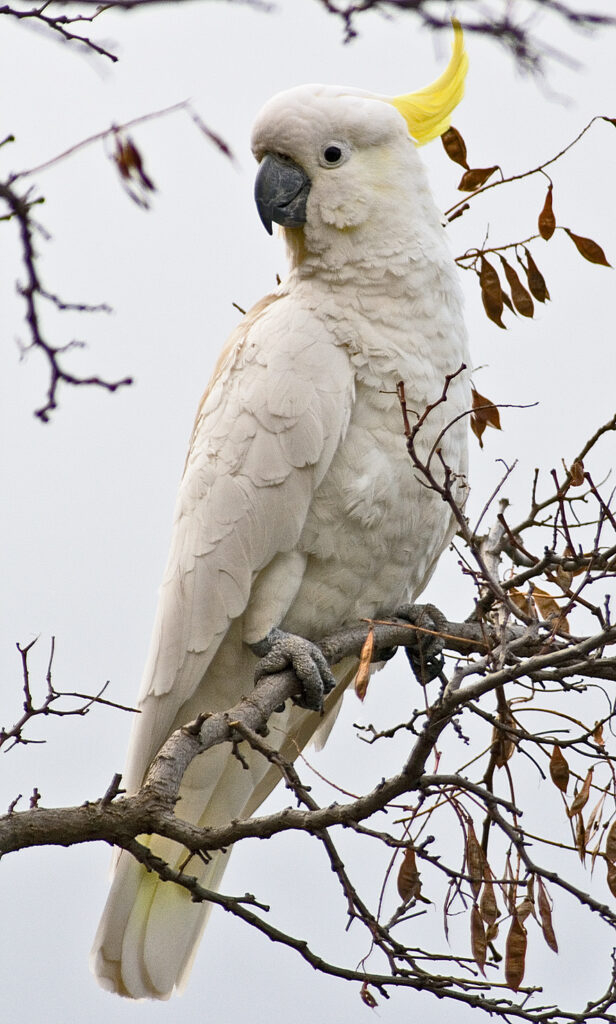
The Sulphur-crested Cockatoo (Cacatua galerita) is an advanced-level companion bird that can live around 40-60 years — a long commitment. Here is how to care for one properly: housing, diet, health, temperament and enrichment, based on avian-veterinary guidance.
Quick facts
| Care level | Advanced |
|---|---|
| Lifespan | 40-60 (well-cared-for birds average ~65; individuals reliably documented into the 70s-80s) years |
| Adult size | 44-55 (approx. 700-950 g; prone to obesity, monitor weight) |
| Noise level | Very loud |
| Talking ability | Some |
| Best for | Only experienced keepers who can meet extreme social, noise and enrichment demands over decades; unsuitable for apartments, noise-sensitive households, or first-time owners. |
Housing a Sulphur-crested Cockatoo
Minimum recommended cage: Large cage/aviary; avian minimums for a bird this size run from ~81 x 81 x 122 (32 x 32 x 48 in) up to ~91 x 122 x 152 (36 x 48 x 60 in) — bigger is always better, aviary flight ideal. Bar spacing ~20-25 mm (0.75-1 in).. Bigger is always better — birds fly horizontally, so width matters more than height. Provide varied natural-wood perches of different diameters, and place the cage in a social, draught-free part of the home away from the kitchen (cooking fumes, especially from non-stick cookware, are deadly to birds).
What to feed a Sulphur-crested Cockatoo
Staple: Formulated pellets as the staple (~60%); strictly limit high-fat seeds (sunflower, safflower) which drive obesity, lipomas and hepatic lipidosis (fatty liver).
Fresh foods: ~30% fresh vegetables, leafy greens and limited fruit; nuts/seeds (~10%) reserved for foraging enrichment only.
Foods that are toxic to your Sulphur-crested Cockatoo — never feed these
Avocado (persin), chocolate (theobromine), caffeine, alcohol, onion and garlic, and salty/sugary/high-fat human foods; minimize high-fat seeds due to obesity/lipoma/fatty-liver risk.
Temperament & social needs
Affectionate, demanding and highly bonded; among the loudest companion birds (contact-call screaming reported up to ~120 dB) and very prone to feather-plucking and screaming if social/enrichment needs are unmet.
Intensely social and attention-demanding; needs many hours of interaction and out-of-cage time daily. Under-attention is a leading cause of chronic screaming and self-mutilation.
Enrichment
Extremely high enrichment needs — heavy destructible chew toys, foraging puzzles, and constant novelty; powerful beak destroys inadequate cages/toys. Regular bathing/showering supports skin and plumage.
Common health problems in Sulphur-crested Cockatoo
PBFD/beak-and-feather disease (cockatoos are a primary reservoir; beak/feather deformity is especially severe in cockatoos, plus immunosuppression), feather-plucking/self-mutilation, obesity and lipomas/hepatic lipidosis (fatty liver), psittacosis/avian chlamydiosis (zoonotic — transmissible to humans), cloacal prolapse (notably frequent in cockatoos, esp. mature females); behavioral screaming disorders.
Birds hide illness until they are seriously unwell — a bird that looks "off" is an emergency. Establish care with an avian vet before you need one, and schedule an annual well-bird check.
Setup essentials
Birbs.com may earn a commission from qualifying purchases made through links on this page, at no extra cost to you.
In the wild
The Sulphur-crested Cockatoo is also a wild bird — see the Sulphur-crested Cockatoo species profile for its natural range, behaviour and conservation status.
Frequently asked questions
How long do Sulphur-crested Cockatoo live?
With good care a Sulphur-crested Cockatoo typically lives 40-60 years — a long-term commitment.
Is a Sulphur-crested Cockatoo a good pet for beginners?
It is rated Advanced-level. Sulphur-crested Cockatoos suit only experienced keepers who can meet extreme social, noise and enrichment demands over decades; unsuitable for apartments, noise-sensitive households, or first-time owners.
What can Sulphur-crested Cockatoo not eat?
Never feed a Sulphur-crested Cockatoo: Avocado (persin), chocolate (theobromine), caffeine, alcohol, onion and garlic, and salty/sugary/high-fat human foods; minimize high-fat seeds due to obesity/lipoma/fatty-liver risk.. These are toxic to birds.
Sources & further reading
- Lafeber Pet Birds — Cockatoo / Sulphur-crested Cockatoo care resources (opens in a new tab)
- VCA Animal Hospitals — Cockatoos: Feeding; Chlamydophilosis in Birds; Psittacine Beak and Feather Disease in Pet Birds; Tumors — Lipomas in Birds
- Merck/MSD Veterinary Manual — Nutritional Disorders of Pet Birds; Avian Chlamydiosis; Neoplastic Diseases of Pet Birds
- World Parrot Trust — Sulphur-crested Cockatoo (opens in a new tab)
- Animal Diversity Web — Cacatua galerita (opens in a new tab)