Budgie Care 101: A New Owner’s Guide to the First 30 Days
Just brought home a budgie? A week-by-week plan for the first 30 days: cage setup, first vet visit, diet, settling in, taming and warning signs to watch.
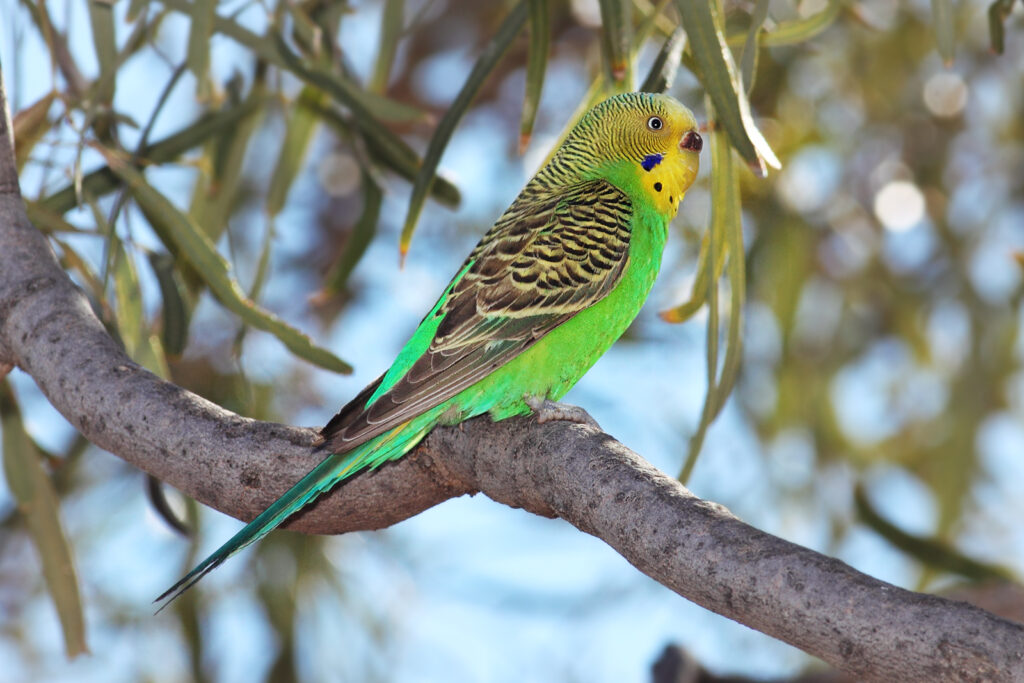
The first 30 days with a new budgie come down to three jobs: make its home safe, get it checked by an avian vet, and show it that you are not a threat. Budgies, called parakeets in the United States, are small and inexpensive, but one avian clinic warns against treating them as easy “beginner birds”, because they need just as much attention as larger parrots.
The week-by-week plan below is our own ordering of the advice in the sources at the end of this guide, not a veterinary schedule. Every bird is different, so move at your budgie’s pace. For the full species profile, see our Budgerigar care guide.
Budgie facts at a glance
| Scientific name | Melopsittacus undulatus |
|---|---|
| Wild home | Flocks across inland Australia |
| Adult weight | 25 to 35 g |
| Mean life span | 7 to 15 years |
| Room temperature | 21 to 27°C (70 to 80°F) is generally acceptable |
| Male or female | Cere may be blue in males, pink or brown in females, pearlescent in juveniles |
Figures from LafeberVet’s budgerigar information sheet.
Before you bring your budgie home
Choose a healthy bird
If you are buying rather than adopting, the Long Island Bird & Exotics clinic says to look for a bird that is bright, alert and active, with smooth, shiny feathers, clean nostrils and smooth feet, nails and beak. Unsanitary housing raises the chance of illness. VCA also suggests asking about the seller’s warranty period in case your vet finds a problem. Our guide to choosing a responsible breeder covers what else to ask.
Choose the cage
Bigger is better. VCA’s minimum for a budgie is 30 x 30 x 60 cm (1 x 1 x 2 ft), the Long Island clinic’s is 20 x 12 x 18 inches, and LafeberVet’s is 46 cm wide and long, adding that length matters more than height. The RSPCA sets its minimum by the bird instead: height, width and depth of at least twice the wingspan for a bird that spends most of its time in the cage. Treat all of these as floors. Look for:
- A long, rectangular shape. Birds move side to side more than straight up, and they like corners, so VCA advises against tall, narrow and round cages.
- Narrow bar spacing. LafeberVet suggests about 1 cm (3/8 inch). The bird must not be able to fit its head through the bars.
- Safe materials. VCA prefers powder-coated or stainless steel, and warns that some older cage coatings contain zinc. The AAV says galvanised wire should ideally not be used.
Set it up
- Perches: natural wood in varied thicknesses, roughly 1 to 2 cm across for a budgie, so that its toes wrap about three-quarters of the way around. VCA and the AAV both warn against sandpaper covers, which can cause foot sores.
- Dishes: fixed to the sides, not on the floor and not under a perch, so droppings cannot fall in. Keep food and water apart: birds dunk food, and dirty water breeds bacteria.
- Liner: plain newspaper or paper towel, changed daily so you can check droppings. Sand, wood shavings and corn cob are not suitable.
- Toys: a few at first, with no snaps, clasps, open chain links, bell clappers or loose fibres. VCA points out that bird toys have no quality regulation, so check them yourself.
- Also buy: a travel carrier and a digital scale that reads single grams.
Choose the right spot
RSPCA Australia suggests a corner away from main walkways, at about chest height, because a cage on the floor with people and pets looming over it can frighten a bird. Keep it out of direct sun and away from radiators, fires and stoves. Sources differ on draughts: the RSPCA says to avoid them, while the AAV says healthy birds tolerate them and that fresh air and good ventilation matter. A sensible middle ground is good airflow, but no cage directly in a cold stream of air.
Never house a budgie in the kitchen. VCA says smaller birds, including budgies, are the most sensitive to fumes from overheated non-stick coatings, and sudden death may be the only sign. Other sources of harmful fumes include air fresheners, scented candles, cigarette smoke and aerosols. Our bird first aid guide covers what to do after an exposure.
Day 1: bringing your budgie home
- Ask what it eats, and buy the same food. NC State’s veterinary hospital warns that parrots may stop eating if their diet changes suddenly.
- Travel in a secure, ventilated carrier, warm and partly covered.
- Move it into the cage calmly, then give it space. The RSPCA’s training advice is to go at its pace, stay calm and avoid loud noises and fast hand movements.
- Check that it is really eating. Seed husks left in the bowl can look like seed, so empty and refill the dish daily.
- Give it a full night’s sleep. The AAV says most birds do best with 10 to 12 hours a night. Long evenings with the lights and television on can cause sleep deprivation.
Week 1: vet check and quiet routine
See an avian vet. VCA and the AAV both say to do this as soon as possible after getting a new bird, even if it looks well. Expect a full examination, a recorded weight and a discussion of tests. Our guide on how to find an avian vet lists official directories.
Quarantine it if you have other birds. VCA advises 30 to 45 days in a separate room, because a new bird may carry an infection such as chlamydia, salmonella, polyomavirus or psittacine beak and feather disease. Chlamydia and salmonella can also pass to people, so tell your doctor about your bird if you become ill.
Start your records. Weigh your budgie and note the number. Then the AAV’s routine is simple: weigh weekly, change the paper daily, and look at the number, colour and consistency of the droppings. It also notes that nervousness can cause temporarily loose droppings, which should clear up once the stress passes.
Be boring and predictable. Sit nearby and talk softly. Do not reach into the cage to grab your budgie: VCA notes that most pet birds can become protective of their cages.
Weeks 2 and 3: better food and first trust
Improve the diet slowly
All-seed diets are common, and the AAV says they cause malnutrition. VCA says seed mixes are high in fat and carbohydrates, low in protein and short of vitamins and minerals, and that budgies often pick out one or two favourites. Budgies are also prone to obesity and iodine deficiency.
Pellets are the usual answer, with one important catch for small parrots. The AAV warns that budgies can have kidney problems on a pellet-only diet, and recommends free-choice pellets plus some seed as a meal each day. The RSPCA agrees that small parrots need some seed daily, at no more than a tenth of the diet. VCA suggests pellets at 60 to 80% and fruit and vegetables at no more than 20 to 25%. The AAV says the change from seed to pellets can be tricky and should be done with your avian vet’s help.
- Offer: a small-bird pellet, and washed greens and vegetables cut small, such as broccoli, carrot, kale, peas or sweet potato. Remove fresh food within a couple of hours.
- Keep treats small: VCA says millet spray only once or twice a month, and most avian vets do not recommend honey sticks. A thumbnail-sized piece of table food is a dinner-plate portion for a budgie.
- Skip: grit, which budgies do not need and can overeat, causing a blockage.
- Never feed: avocado, chocolate, caffeine, alcohol or very salty foods.
Budgies feed near the ground in the wild, so VCA suggests scattering pellets on a flat surface and tapping among them with your finger like a beak. The RSPCA suggests a mirror or white paper so that budgies can see the food. Keep offering seed until you are sure your bird is eating the new food, then cut it to a small daily amount, as the AAV and RSPCA advise. Weigh your budgie during the change. Full steps are in our guide on what to feed a parrot.
Build trust with food
Start by offering a favourite treat by hand, without asking for anything, over several days. Then hold it so that your budgie has to put one foot, and later both feet, on a perch, and only later your hand, to reach it. Our guide on how to tame a nervous bird explains each step and how to read your budgie’s body language.
Add bathing and activity
The AAV suggests a bath, shower or misting at least once or twice a week unless your bird is afraid of it. Rotate toys about monthly, and introduce new ones slowly, because some birds are frightened by new objects.
Weeks 3 and 4: safe time out of the cage
Budgies need to fly. The Long Island clinic suggests a few hours out of the cage daily, and the RSPCA asks for at least six hours for a bird not kept in an aviary. Give as much as you can safely supervise. Before the first flight:
- Close every window and door, and warn the household.
- Switch off ceiling fans. RSPCA Australia reports dozens of birds treated each year after hitting fans or closed windows.
- Cover or screen large mirrors and windows.
- Put cats and dogs in another room. Even a playful nip is an emergency.
- Keep the toilet lid down and pans off the stove. The AAV lists drowning and burns among the risks of free flight.
- Do not expect expert flying straight away. The RSPCA notes that flying skills have to be learned.
Wing clipping is a decision to discuss with your vet. The AAV says to consider it if you cannot supervise free flight, but notes that it prevents normal behaviour and a good source of exercise, and that it is not allowed in some countries. The RSPCA recommends a microchip or ring so that an escaped bird can be identified. Once your budgie is tame and follows basic requests, start carrier training, so that vet visits are less stressful.
One budgie or two?
Good sources weigh this differently, and your available time is what decides it.
- Keeping a pair or group: the RSPCA lists budgies among colony species that can live in social groups, and RSPCA Australia says pet birds should be housed in compatible pairs or groups to meet their need for contact. The trade-off, according to one avian clinic, is that budgies kept together tend not to bond with people.
- Keeping one: the same clinic says lone budgies do not do well in isolation, though one that is patiently handled from early on can become very tame. You become its flock, which means a lot of daily time.
- Adding a second later: VCA cautions that a bird raised without other birds may not want a new companion. Quarantine first, then move the cages closer over days or weeks, supervise meetings and separate the birds if they fight.
Warning signs in your first month
Birds hide illness, and the AAV says a bird that seems to die suddenly has often been sick for a while. It lists these as reasons to get help at once:
- laboured breathing, or discharge from the nostrils, eyes or mouth;
- eating or drinking much less or much more than usual;
- fluffed feathers and sleeping more than normal;
- vomiting or regurgitation;
- far fewer droppings, or a big change in their smell or consistency;
- blood loss, injury, swelling, seizures or being unable to perch.
Don’t wait until tomorrow. Budgies also have some particular problems: LafeberVet lists obesity and fatty tumours, goitre, tumours, chronic egg laying and scaly face and leg mites, and Merck names budgies among the birds commonly affected by egg binding. Merck lists sitting on the cage floor and straining among the signs, so call your avian vet at once.
Your routine after 30 days
| How often | What to do |
|---|---|
| Daily | Fresh food and water, wash the dishes with hot soapy water, new cage paper, check droppings, supervised time out, training and play |
| Weekly | Weigh and record, bath or mist at least once or twice, clean the cage (RSPCA Australia says ideally every 1 to 2 days) |
| Monthly | Rotate toys, check toys and perches for damage |
| Yearly | Wellness visit with your avian vet, and replace anything expired in your first aid kit |
About this guide
Birbs Editorial compiled this guide from the sources listed below, which we read in November 2026. It has not been individually reviewed by a veterinarian and does not replace one. If your bird seems unwell, contact an avian vet today.
Birds in this guide
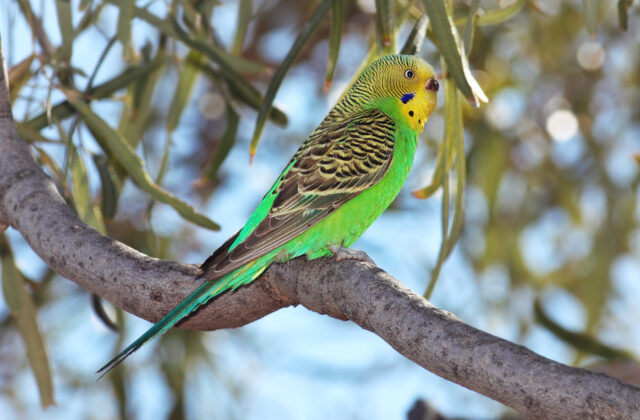 Least Concern
Birb mood:
the chatty pocket parrot
Frequently asked questions
How long does it take a budgie to settle in?
There is no fixed time, and the sources we checked do not give one. Go at your budgie's pace and stop if it seems distressed. Settling in is not a reason to wait on health signs, though: the AAV says to get veterinary help at once if a bird eats or drinks much less than usual.
What size cage does a budgie need?
Published minimums vary. VCA suggests 30 x 30 x 60 cm, and LafeberVet at least 46 cm wide and long, adding that length matters more than height. These are minimums: VCA says bigger is better, and the AAV says birds appreciate as much room as you can provide.
Do budgies need a friend?
Budgies are flock birds, and both RSPCA organisations support keeping them in pairs or groups. VCA notes that a bird raised without other birds usually bonds to its owner and may not want a new companion. A lone budgie needs a lot of your time every day, and one kept with other budgies may not bond with you.
How can I tell if my budgie is male or female?
Look at the cere, the fleshy area above the beak. LafeberVet says it may be blue in males, pink or brown in females, and pearlescent in juveniles. Another avian clinic notes the difference becomes clearer as budgies mature at about 6 to 8 months.
How long do budgies live?
LafeberVet gives a mean life span of 7 to 15 years. Diet and care make a large difference, so a new budgie is a long commitment.
What do budgies eat?
A pelleted food made for small birds, some seed each day, and small amounts of washed vegetables and fruit. The AAV warns that budgies can have kidney problems on pellets alone, and all-seed diets cause malnutrition. Never feed avocado, chocolate, caffeine, alcohol or very salty food.
Do budgies need grit or a cuttlebone?
They do not need grit. VCA and LafeberVet explain that budgies hull their seeds, and some overeat grit, which can cause a life-threatening blockage. A cuttlebone is optional: one avian clinic calls it a good calcium source but not a necessity, and says to avoid it unless you monitor use, because too much can be dangerous.
Should I cover my budgie's cage at night?
What matters is 10 to 12 hours of quiet sleep, according to the AAV. The RSPCA in the UK suggests a cloth over the top of the cage to help a bird feel safe, though not specifically at night, while an RSPCA Australia article suggests a separate night cage instead. Use whichever gives your budgie darkness and quiet.
Sources & further reading
- LafeberVet — Basic Information Sheet: Parakeet (Pollock) (opens in a new tab)
- Association of Avian Veterinarians — Basic Care for Companion Birds (PDF) (opens in a new tab)
- Association of Avian Veterinarians — Signs of Illness in Companion Birds (PDF) (opens in a new tab)
- VCA Animal Hospitals — Budgies: Feeding (opens in a new tab)
- VCA Animal Hospitals — Housing Small Birds (opens in a new tab)
- VCA Animal Hospitals — Introducing a New Pet Bird (opens in a new tab)
- VCA Animal Hospitals — Biting and Screaming in Birds (opens in a new tab)
- VCA Animal Hospitals — Teflon (PTFE) Poisoning in Birds (opens in a new tab)
- VCA Animal Hospitals — Nursing Care for Sick Pet Birds (opens in a new tab)
- RSPCA — Environment: Giving Your Bird a Good Place to Live (opens in a new tab)
- RSPCA — What to Feed Your Pet Bird (opens in a new tab)
- RSPCA — How to Train Your Pet Bird (opens in a new tab)
- RSPCA — Living With Other Birds (opens in a new tab)
- RSPCA Australia — What Kind of Enclosure Does My Bird Need? (Doneley) (opens in a new tab)
- RSPCA Australia — How Should I House My Bird? (opens in a new tab)
- RSPCA Australia — Household Hazards (opens in a new tab)
- NC State Veterinary Hospital — Parrot Nutrition (opens in a new tab)
- Merck Veterinary Manual — Reproductive Disorders of Pet Birds (opens in a new tab)
- Long Island Bird & Exotics Veterinary Clinic — Budgie Care Guide (opens in a new tab)