Diamond Dove Care Guide: Diet, Lifespan, Housing & Health
A vet-informed care guide for the Diamond Dove — a beginner-level companion bird that can live 10-15 years. Housing, diet (and toxic foods to avoid), temperament, health and enrichment.
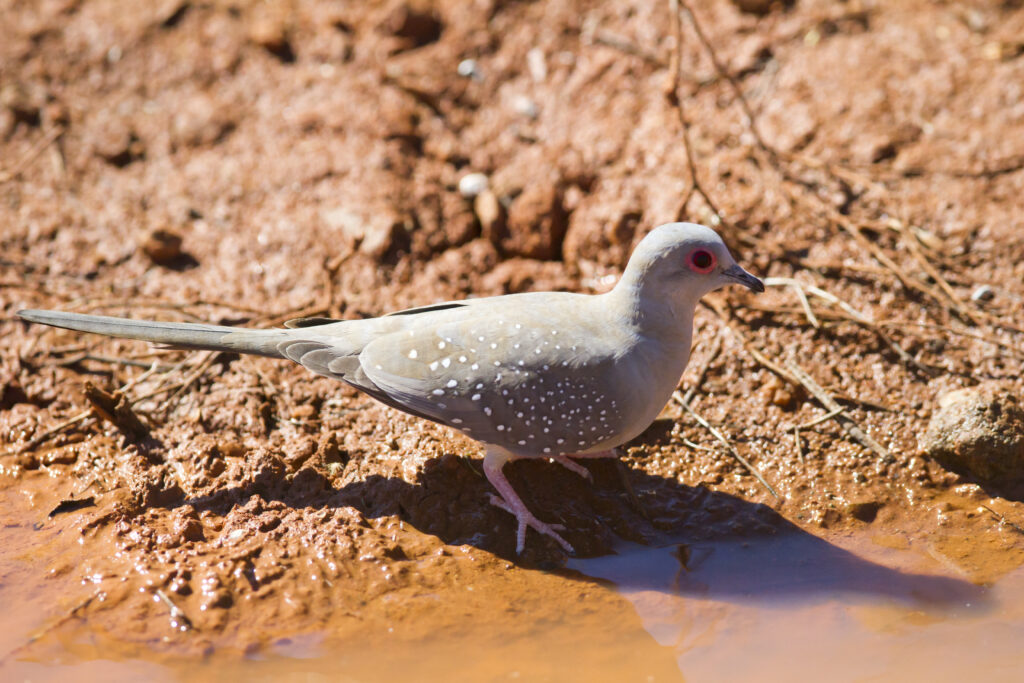
The Diamond Dove (Geopelia cuneata) is a beginner-level companion bird that can live around 10-15 years — a long commitment. Here is how to care for one properly: housing, diet, health, temperament and enrichment, based on avian-veterinary guidance.
Quick facts
| Care level | Beginner |
|---|---|
| Lifespan | 10-15 (records to ~20) years |
| Adult size | 19-21 cm (7.5-8 in) including the long tail; body small, ~23-32 g |
| Noise level | Quiet |
| Talking ability | None |
| Best for | First-time keepers, apartment dwellers and noise-sensitive homes wanting a peaceful, quiet, relatively long-lived and low-maintenance bird; suits people who prefer a hands-off pet to watch rather than handle. |
Housing a Diamond Dove
Minimum recommended cage: 61 x 61 x 61 cm (24 x 24 x 24 in) recommended for a pair. Doves cannot climb cage bars and move by flying back and forth, so horizontal flight length matters more than height; as ground-feeders they also need floor space to walk and forage. Smaller cages are only acceptable with regular supervised free-flight time.. Bigger is always better — birds fly horizontally, so width matters more than height. Provide varied natural-wood perches of different diameters, and place the cage in a social, draught-free part of the home away from the kitchen (cooking fumes, especially from non-stick cookware, are deadly to birds).
What to feed a Diamond Dove
Staple: A quality small-seed/dove mix (e.g. white millet, canary/grass seed, panicum) is the traditional staple; avian vets increasingly recommend basing the diet on a small-bird or small-dove formulated pellet with a measured seed mix rather than seed alone, since an all-seed diet is high in fat and nutritionally incomplete. Provide a cuttlebone or crushed eggshell/oyster shell for calcium. Doves swallow seed whole, so unlike parrots grit is not strictly required; offer only a small amount of soluble grit (crushed eggshell/oyster shell), mainly as a calcium source, because excess grit can cause crop/gizzard impaction.
Fresh foods: Small amounts of chopped greens such as dark leafy greens, dandelion greens and finely shredded vegetables; most of the diet remains seed/pellet-based and fresh foods are offered in modest quantities.
Foods that are toxic to your Diamond Dove — never feed these
Avocado (persin), chocolate, caffeine, alcohol, onion and garlic, and salty / processed human foods (chips, salted snacks, junk food). Also avoid an all-seed diet long-term (obesity/fatty liver) and any moldy or spoiled seed.
Temperament & social needs
Gentle, calm and non-aggressive; rarely bites. Peaceful and pleasant to watch but generally a hands-off bird rather than a cuddly hand-tame pet.
Best kept in a bonded same-species pair; happiest with a companion. Tolerates people well as a gentle hands-off or lightly-handled bird. Do not house with larger or aggressive birds, which can bully or injure them.
Enrichment
Horizontal flight room and floor space for ground foraging, several perches of varying diameter (kept low to reduce fall/injury risk), a shallow bath dish, and nesting material for pairs. Soft cooing and gentle display behavior are normal.
Common health problems in Diamond Dove
Canker/trichomoniasis (Trichomonas gallinae — the classic pigeon/dove disease, often carried subclinically and flaring under stress; causes throat/crop lesions, laboured breathing, weight loss), respiratory infections (wheezing, nasal discharge, open-mouth breathing), internal parasites (worms, coccidiosis) and external parasites/mites, egg binding in hens (linked to calcium deficiency and chronic egg-laying), and stress- or boredom-related feather plucking. Generally regarded as hardy and adaptable when housed and fed well.
Birds hide illness until they are seriously unwell — a bird that looks "off" is an emergency. Establish care with an avian vet before you need one, and schedule an annual well-bird check.
Setup essentials
Birbs.com may earn a commission from qualifying purchases made through links on this page, at no extra cost to you.
In the wild
The Diamond Dove is also a wild bird — see the Diamond Dove species profile for its natural range, behaviour and conservation status.
Frequently asked questions
How long do Diamond Dove live?
With good care a Diamond Dove typically lives 10-15 years — a long-term commitment.
Is a Diamond Dove a good pet for beginners?
It is rated Beginner-level. Diamond Doves suit first-time keepers, apartment dwellers and noise-sensitive homes wanting a peaceful, quiet, relatively long-lived and low-maintenance bird; suits people who prefer a hands-off pet to watch rather than handle.
What can Diamond Dove not eat?
Never feed a Diamond Dove: Avocado (persin), chocolate, caffeine, alcohol, onion and garlic, and salty / processed human foods (chips, salted snacks, junk food). Also avoid an all-seed diet long-term (obesity/fatty liver) and any moldy or spoiled seed.. These are toxic to birds.
Sources & further reading
- Lafeber Pet Birds - Diamond Dove (opens in a new tab)
- VCA Animal Hospitals - Feeding Pigeons and Doves - grit not required, ~50% pellets, toxic foods list (opens in a new tab)
- DiamondDove.info - Caring for Diamond Doves (cage size, seed mix, cuttlebone, egg binding)
- Dial A Vet - Diamond Dove Full Profile and Care (opens in a new tab)
- IOC World Bird List v15.1 (Gill, Donsker & Rasmussen) - Geopelia cuneata (Latham, 1801), current binomial/genus