How to Build Your First Aviary: Size, Mesh, Safety and Setup
Planning your first aviary? Size rules, safe wire and mesh, double doors, predator proofing, shelter, flooring, which birds can mix, and legal checks to make.

A good first aviary is large enough for your birds to really fly, built from bird-safe materials, secure against predators and escapes, and sheltered from the weather. The RSPCA calls a large outdoor enclosure the best way to let birds fly, climb, perch, hide, feed and roost as they would in the wild. Sunshine, light winds and rain also help to keep them fit and mentally stimulated.
Plan on paper before you buy anything. Birdline Parrot Rescue’s advice is not to rush out for materials, because unexpected setbacks will happen. This guide goes through the decisions in the order that you need to make them. Rules and suitable sizes vary by country and species, so check locally as well.
Step 1: check the rules
- Planning and building rules: Birdline advises checking with your local council, as you may need a permit, depending on whether it is permanent. An aviary attached to your house may have to follow building regulations.
- Your landlord, if you rent. Even a structure that can be taken down may breach your tenancy.
- Your neighbours. Talk to them early about noise and views. Birdline points out that a playful parrot can be noisy.
- Registering your birds. In England and Wales, GOV.UK says that you must register captive birds within one month of keeping them, including pets. Parrots, cockatiels, canaries and finches are exempt only if they are fully housed indoors with no access to open air, which an outdoor aviary is not, and you must also register if you take them outdoors at any time. Scotland has its own register. Other places have their own rules, so ask your local government or vet.
- The birds themselves. Some species need paperwork. Our guide to choosing a responsible breeder covers CITES documents, and consider adopting first.
Step 2: choose your birds first
The species you plan to keep decides the size, the mesh and who can live together. The RSPCA’s guidance is:
| Type of bird | Can they share? | What to watch |
|---|---|---|
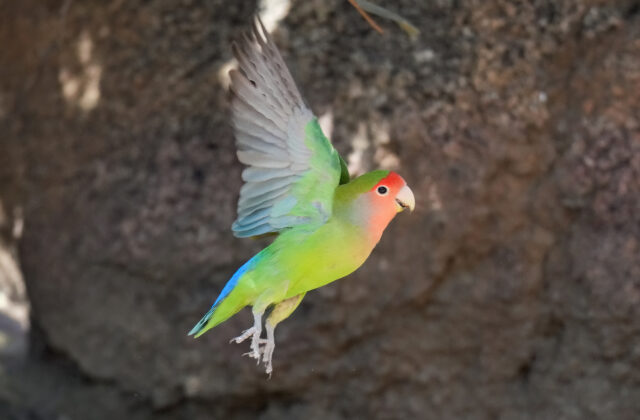
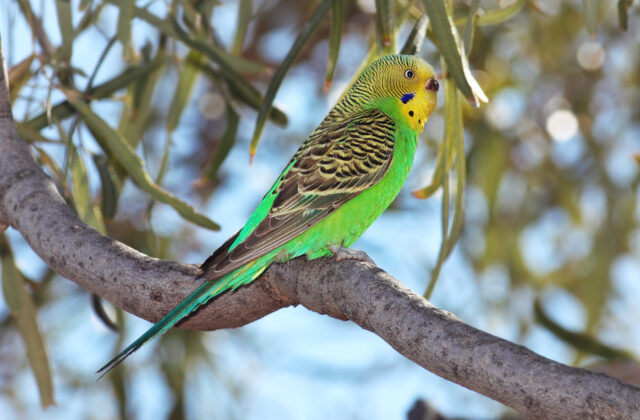
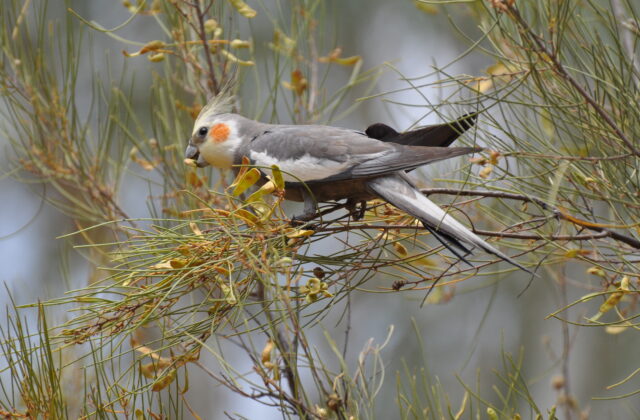
| Colony species: budgies, cockatiels, lovebirds, canaries, zebra finches, galahs | Yes, in social groups | Species must be compatible, with room to fly and to get away from each other |
| Large parrots: Amazons, African greys, cockatoos, macaws | A single pair only | A home aviary is unlikely to be big enough for more than one pair. Male cockatoos can seriously injure or kill their mates |
| Birds that cannot fly | Only with other non-flying birds | They may be attacked or kept from food. Fit perches and food where they can climb |
| Hand-reared birds | May not get on with other birds | They may prefer people. A closed ring often suggests that a bird was hand-reared |
Do not mix large and small birds. Birdline warns that large birds can easily kill or maim smaller ones, and that birds may act very differently outdoors than they do inside.
Step 3: pick the site
Birdline’s checklist says to look for a spot:
- away from fences and overhanging trees, which give predators a route in, allow droppings to fall through, and can come down in a storm;
- clear of toxic shrubs and away from favourite roosts of wild birds such as feral pigeons;
- away from drainpipes, which can overflow, and exhaust vents, which bring hot air and harmful gases;
- with good air circulation and away from direct sunlight;
- a reasonable distance from your neighbours.
Think through both extremes. Even with shade, Birdline warns that birds can become seriously ill in sweltering heat. In winter, you need a plan to deal with cold and wind.
Step 4: work out the size
The RSPCA’s rule is that the height, width and depth must each be at least four times the flying wingspan of the largest bird, plus 20% for each new bird. It adds that a bird’s wingspan is likely to be more than twice the length of its body, so measure or look up your species.
As a simple worked example of the arithmetic, not a recommendation for any species: if the largest bird’s wingspan is 30 cm, the minimum is 120 cm in each direction. Add a second bird, and the size goes up by 20%.
Build longer rather than taller. RSPCA Australia notes that birds do not usually fly straight up and down, so narrow, tall enclosures work poorly. Treat every number as a minimum.
Step 5: choose safe materials
Birds chew everything, so anything they can reach must be safe to chew. Birdline’s guide for parrots lists:
- Safer choices: stainless steel, aluminium, PVC piping, untreated and unstained timber such as plain pine, and UV-protective debris nets.
- Avoid: lead, zinc, nickel, copper and anything galvanised, non-stick (PTFE) coatings, and any wood or material treated with insecticides, fungicides, pesticides or herbicides.
Birdline says a timber frame has a shorter life, as untreated wood is easy to chew and weathers faster. A non-toxic metal frame lasts longer.
Step 6: get the wire right
This is the most important technical choice. RSPCA Australia’s article by avian specialist Prof Bob Doneley says the wire must be strong enough to resist chewing, fine enough to keep out wild birds, rust-proof and not so heavily galvanised that zinc becomes a danger. It suggests:
| Bird size | Mesh aperture (mm) | Wire thickness (mm) |
|---|---|---|
| Small (20 to 80 g) | 12 x 12 | 0.7 to 0.8 |
| Medium (80 to 200 g) | 12 to 25 x 12 | 1.24 |
| Medium to large (200 to 500 g) | 12 to 25 x 12 | 1.6 to 1.8 |
| Large (over 500 g) | 25 to 75 x 25 to 50 | 1.24 to 2.0 |
RSPCA Australia’s housing article gives slightly different figures: 1.6 mm for most medium parrots and 1.7 mm for most small to medium parrots and finches. It adds that the ability to chew through wire depends on species as much as size.
A few more points on wire:
- Size to the smallest bird, and strength to the strongest beak.
- Avoid chicken wire. Large parrots can chew and swallow it, which can cause heavy metal poisoning.
- Use two layers on the walls. Birdline says the inner mesh should sit at least 5 cm from the outer.
- Paint it black if you can do so safely. Doneley notes that black wire is easier to see through, because silver wire reflects light. Use only a bird-safe product, as VCA warns that birds can chip and swallow paint.
The problem with galvanised wire
Galvanising coats metal with zinc, and Pet Poison Helpline calls zinc the most common metal poisoning in caged birds. Merck adds that galvanised wire may also contain some lead. The AAV says that ideally it should not be used. Stainless steel avoids the problem.
If you use galvanised wire, RSPCA Australia suggests how to reduce the risk:
- Brush it thoroughly to remove loose flakes and metal “dags”.
- Wash new wire with a mild acid such as vinegar, then rinse it with water.
- Ideally, let it weather naturally before building. Weathering a new cage for twelve months also helps.
- Keep watching birds that chew wire for signs of poisoning. Merck lists weakness, regurgitation, loss of appetite, and increased thirst and urination.
Step 7: build in the safety features
Double doors
Fit a safety porch and double doors, as the RSPCA and AAV both advise. Birdline suggests at least a metre between the inner and outer door. The porch can double as a space for preparing food.
Predator-proof floor
Concrete or paving slabs are Birdline’s preferred floor, because they last, are easy to disinfect, and make it harder for predators to get in. Fit adequate drainage, repair cracks, and let the floor dry before birds walk on it.
If you use soft ground, stop digging predators with wire mesh underneath. RSPCA Australia suggests concrete barriers or galvanised steel or mesh buried to a depth of 300 mm. Soft floors can become waterlogged and need replacing often. Birdline advises against pebbles and gravel, which birds can swallow.
A secure roof
Mesh must cover the top as well as the sides. Birdline recommends a solid roof, or a double-mesh roof with a debris net, as protection from predators and avian influenza in wild birds. It warns that plastic roof coverings can blow off in bad weather.
Security
Birdline also suggests padlocks, security lights and keeping the aviary out of public view to deter theft.
Step 8: shelter from heat, cold and weather
- Indoor area: the RSPCA says your aviary should have inside and outside parts, with the inside big enough for all your birds in harsh weather. It should be draught-proof, insulated and safely heated.
- Temperature: aim for what your species would experience in the wild. The RSPCA says tropical and subtropical birds need between 12 and 26°C.
- Shade: at least a third of the outside area should have shade and protection from the weather.
- Wind and rain: RSPCA Australia recommends solid cladding over at least a third of the total roof and wall area, running continuously around three walls, and open mesh on at least three-quarters of one wall.
- Heating: use a suitable heater covered with mesh. Birdline suggests fixing lights and wiring outside the aviary so that birds cannot chew them, and polycarbonate sheets over the outside in winter.
- Light: the RSPCA says birds kept indoors need artificial UVA and UVB lighting, with flicker-free lamps giving 12% UVA and 2.4% UVB. Birdline suggests 8 to 12 hours a day for artificial light, and the RSPCA says to keep UV lamps on for as long as your bird would have daylight in the wild.
Plan for extremes. RSPCA Australia suggests extra water, mist systems, a gentle fan and added shade on days above 33°C, and a warm room, higher-energy food such as nuts and seed, and shelter from wind on days below 4°C. A heat-stressed bird holds its wings out and pants. A cold one sits quietly with fluffed feathers, and sick birds can look the same.
Step 9: fit it out
- Perches: natural, non-toxic wood in different thicknesses, enough for every bird at once, and placed so that birds fly between them. Don’t place them over dishes or other perches.
- Safe branches: VCA suggests apple, elm, ash, maple or willow, washed and disinfected. It advises against apricot, cherry, nectarine, peach, prune, plum, oak, laurel, Chinese snake tree, pitch pine and yew.
- Food and water: Birdline suggests several covered stations, so that all birds can reach them and droppings cannot get in. Stainless steel, glass or glazed ceramic suit most birds, and galvanised dishes should never be used.
- Bathing: keep bath water shallow so that birds cannot drown, and separate from drinking water.
- Toys and enrichment: RSPCA Australia suggests untreated wood and sturdy, hard plastic toys. Sources differ on rope: Birdline lists untreated natural fibre ropes as safe but warns that frayed strands can tangle legs and cause serious injury, while RSPCA Australia says to avoid cotton and natural fibre ropes, which are often eaten and can cause obstructions.
- Nest boxes: the RSPCA warns that dark, enclosed spaces can encourage nesting and aggression towards other birds, and Birdline advises against them in parrot aviaries. Doneley calls them contentious, noting that some species, such as conures and small macaws, sleep in them.
Step 10: plan for cleaning and disease control
- Daily: clean and disinfect food and water dishes, replace food, and spot-clean. Clear away food debris, which can go mouldy and attract rodents.
- Regularly: hose or jet-wash and disinfect hard floors with a bird-safe product. Store food in sealed containers somewhere cool.
- Keep wild birds out. Merck says a key way to prevent bird flu is to keep domestic birds away from wild birds, as it spreads through droppings and discharge. Separate any bird with breathing problems or other signs of illness, and have a vet examine it quickly. Check your government’s current rules: in England, for example, additional rules apply in a disease control zone.
- Quarantine new birds. VCA advises a vet check, then 30 to 45 days in a separate room, before any new bird meets the others.
Step 11: move your birds in gradually
Introduce your birds with care. The RSPCA’s steps for a bird new to an aviary are:
- Choose the warmest time of year, and a day with little or no wind.
- Take your bird in with its carrier, and ask it to step up onto your hand.
- Show it where the food and water are.
- If it seems confident, ask it to step down onto a perch or a container.
- If it doesn’t want to, keep walking around with it on your hand, or calmly go back indoors and try another day.
- Keep sessions to 10 minutes at first, and make them longer as your bird grows more confident.
This relies on your bird being used to a carrier and stepping up. See our guide on how to tame a nervous bird.
When adding to an existing group, the RSPCA suggests watching from a distance, especially around food and high perches. Preening or feeding together are good signs. If the others are aggressive, take the new birds out, then build up gradually.
First aviary checklist
- Rules checked: council, landlord, neighbours, bird registration
- Species chosen and compatible
- Site away from trees, fences, drains and vents
- Height, width and depth at least 4 x wingspan, plus 20% per extra bird
- Non-toxic frame, and mesh sized for your birds
- Galvanised wire avoided, or brushed, washed and weathered
- Double door or safety porch
- Solid floor, or mesh buried below ground
- Secure top that keeps out predators and droppings
- Insulated indoor area, plus shade over at least a third of the outside
- Enough perches and covered food and water stations for every bird
- Bird-safe branches and plants only
- Vet found, quarantine space ready, and a first aid kit to hand
About this guide
Birbs Editorial compiled this guide from the sources listed below, which we read in November 2026. It is general guidance, not building, legal or veterinary advice. Rules and suitable designs vary by country and species, so check with your local authority and an avian vet or experienced keeper before you build.
Birds in this guide
 Least Concern
 Least Concern
Birb mood:
the chatty pocket parrot
 Least Concern
Frequently asked questions
How big should an aviary be?
The RSPCA says the height, width and depth should each be at least four times the flying wingspan of the largest bird, with 20% added for each new bird. Length matters more than height, because birds do not usually fly straight up and down. Build as large as you reasonably can.
What is the best wire for an aviary?
Stainless steel avoids the zinc in galvanised wire. RSPCA Australia suggests 12 x 12 mm mesh and 0.7 to 0.8 mm wire for small birds of 20 to 80 g, with wire matched to each species' chewing ability. Avoid chicken wire, which large parrots can chew and swallow.
Is galvanised wire safe for birds?
It carries a risk. The AAV says it should ideally not be used, and Pet Poison Helpline calls zinc the most common metal poisoning in caged birds. If you must use it, RSPCA Australia suggests brushing off loose flakes, washing with a mild acid such as vinegar, rinsing, and weathering it for twelve months.
Which birds can live together in an aviary?
The RSPCA lists colony species such as budgies, cockatiels, lovebirds, canaries and zebra finches as suitable for social groups, if they are compatible and have room. Large parrots should be kept only as a single pair. Birds that cannot fly should not share with birds that can, and Birdline warns that large birds can kill or maim small ones.
Do I need permission to build an aviary?
Possibly. Birdline advises checking with your local council about permits, asking your landlord if you rent, and talking to your neighbours about noise and views. Rules vary by place, and some places also require you to register your birds.
Do I have to register aviary birds in the UK?
In England and Wales, you must register captive birds within one month of keeping them, including pets. Parrots, cockatiels, canaries and finches are exempt only if they are fully housed indoors with no access to open air, so an outdoor aviary needs registration. Scotland has its own register.
Does an aviary need a roof?
It needs a fully secure top. Birdline recommends a solid roof, or a double-mesh roof with a debris net. This keeps out predators and reduces contact with wild birds and their droppings, which can carry disease.
Does an aviary need heating?
It needs an indoor area that is draught-proof, insulated and safely heated, according to the RSPCA, which says birds from tropical or subtropical habitats need between 12 and 26°C. Cover any heater with mesh, and keep cables out of reach.
Sources & further reading
- RSPCA — Environment: Giving Your Bird a Good Place to Live (opens in a new tab)
- RSPCA — Living With Other Birds (opens in a new tab)
- RSPCA — How to Train Your Pet Bird (opens in a new tab)
- RSPCA Australia — How Should I House My Bird? (opens in a new tab)
- RSPCA Australia — What Kind of Enclosure Does My Bird Need? (Doneley) (opens in a new tab)
- RSPCA Australia — Household Hazards (opens in a new tab)
- Birdline Parrot Rescue — Aviary Construction (opens in a new tab)
- Association of Avian Veterinarians — Basic Care for Companion Birds (PDF) (opens in a new tab)
- Merck Veterinary Manual — Toxicoses of Pet Birds (professional) (opens in a new tab)
- Merck Veterinary Manual — Avian Influenza (Bird Flu) (opens in a new tab)
- Pet Poison Helpline — Top 5 Toxins in Companion Birds (opens in a new tab)
- VCA Animal Hospitals — Housing Small Birds (opens in a new tab)
- VCA Animal Hospitals — Introducing a New Pet Bird (opens in a new tab)
- GOV.UK — Register as a Keeper of Less Than 50 Poultry or Other Captive Birds (opens in a new tab)
- GOV.UK — Bird Flu: How to Prevent It and Stop It Spreading (opens in a new tab)
- Scottish Government — Register Your Birds (opens in a new tab)