Gouldian Finch Care Guide: Diet, Lifespan, Housing & Health
A vet-informed care guide for the Gouldian Finch — an intermediate-level companion bird that can live 5-8 years. Housing, diet (and toxic foods to avoid), temperament, health and enrichment.
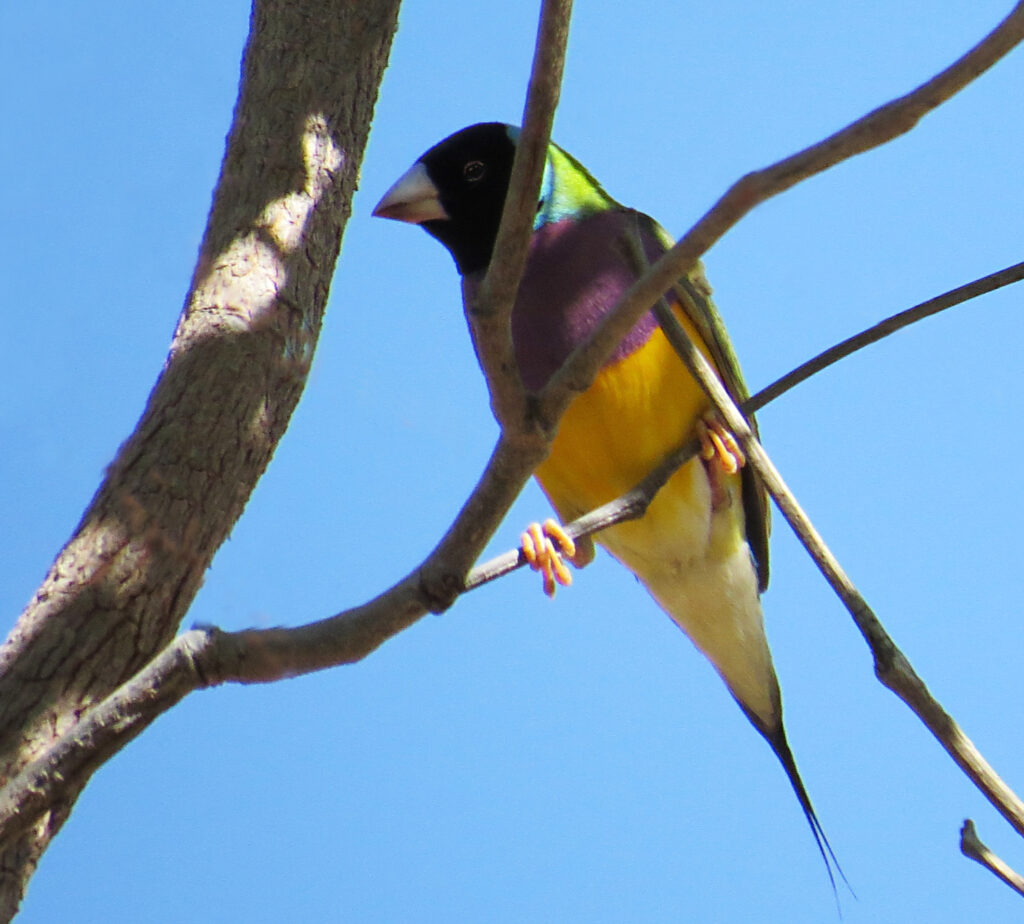
The Gouldian Finch (Chloebia gouldiae) is an intermediate-level companion bird that can live around 5-8 years — a long commitment. Here is how to care for one properly: housing, diet, health, temperament and enrichment, based on avian-veterinary guidance.
Quick facts
| Care level | Intermediate |
|---|---|
| Lifespan | 5-8 years |
| Adult size | 13-15 cm (5-6 in) |
| Noise level | Quiet |
| Talking ability | None |
| Best for | Keepers with some finch experience who want an aviary/display bird and can provide warmth, flight space and mite monitoring; not ideal as a child's first bird due to fragility. |
Housing a Gouldian Finch
Minimum recommended cage: 76 x 45 x 45 cm (30 x 18 x 18 in) minimum for a pair; larger/flight cage or planted aviary strongly preferred as they need to fly for exercise. Bar spacing ~1.25 cm (1/2 in) or less. Bigger is always better — birds fly horizontally, so width matters more than height. Provide varied natural-wood perches of different diameters, and place the cage in a social, draught-free part of the home away from the kitchen (cooking fumes, especially from non-stick cookware, are deadly to birds).
What to feed a Gouldian Finch
Staple: A quality finch seed mix (white/Japanese millet, panicum, canary seed, hulled oats, Niger/rape seed) or a formulated finch pellet base; cuttlebone, shell grit and a mineral/charcoal source for calcium. Egg food is important, especially in breeding season and molt.
Fresh foods: Fresh greens such as endive, chickweed, spinach/silverbeet and sprouted or half-ripe seeding grass heads; small live food (small mealworms/insects) mainly during breeding.
Foods that are toxic to your Gouldian Finch — never feed these
Avocado (persin), chocolate, caffeine, alcohol, onion and garlic, and salty/oily processed human foods.
Temperament & social needs
Stunningly colorful but delicate, nervous flock birds that spook easily; a display/aviary bird rather than a hands-on pet.
Social species that should be kept at least as a pair or in a group; not a bird for handling and prefers the company of other finches over people.
Enrichment
Ample flight space (ideally a planted aviary), warmth and draft-free housing, varied perching and bathing water; managed daylight and temperature to support healthy molts.
Common health problems in Gouldian Finch
Air-sac mite (Sternostoma tracheacolum) infection is especially common and serious in this species; also scaly-face/leg mite, sensitivity to cold and drafts, respiratory disease, and complications during molt and breeding. Needs warmth (~21-25 C / 70-77 F).
Birds hide illness until they are seriously unwell — a bird that looks "off" is an emergency. Establish care with an avian vet before you need one, and schedule an annual well-bird check.
Setup essentials
Birbs.com may earn a commission from qualifying purchases made through links on this page, at no extra cost to you.
In the wild
The Gouldian Finch is also a wild bird — see the Gouldian Finch species profile for its natural range, behaviour and conservation status.
Frequently asked questions
How long do Gouldian Finch live?
With good care a Gouldian Finch typically lives 5-8 years — a long-term commitment.
Is a Gouldian Finch a good pet for beginners?
It is rated Intermediate-level. Gouldian Finchs suit keepers with some finch experience who want an aviary/display bird and can provide warmth, flight space and mite monitoring; not ideal as a child's first bird due to fragility.
What can Gouldian Finch not eat?
Never feed a Gouldian Finch: Avocado (persin), chocolate, caffeine, alcohol, onion and garlic, and salty/oily processed human foods.. These are toxic to birds.
Sources & further reading
- LafeberVet - Basic Information Sheet: Finch (opens in a new tab)
- Lafeber Pet Birds - Lady Gouldian Finch (opens in a new tab)
- WebMD (veterinary-reviewed) - What to Know About the Gouldian Finch (opens in a new tab)
- finchinfo.com - Lady Gouldian Finch species profile
- VCA Animal Hospitals - Feeding Finches (opens in a new tab)