Society Finch Care Guide: Diet, Lifespan, Housing & Health
A vet-informed care guide for the Society Finch — a beginner-level companion bird that can live 5-10 years. Housing, diet (and toxic foods to avoid), temperament, health and enrichment.
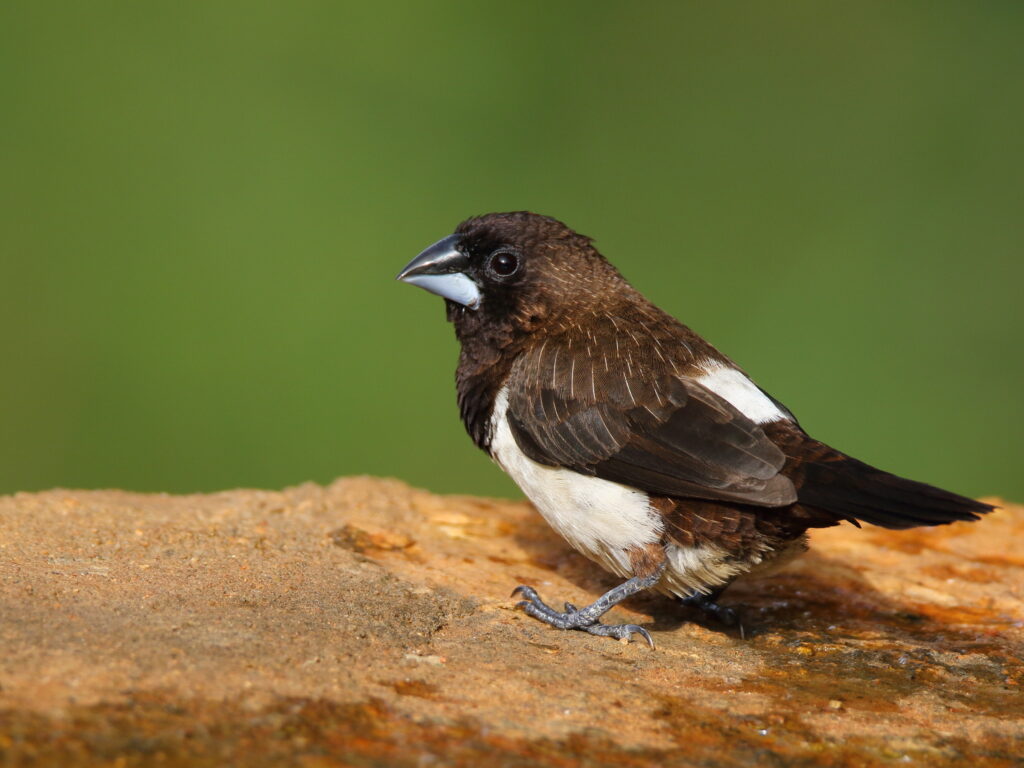
The Society Finch (Lonchura striata) is a beginner-level companion bird that can live around 5-10 years — a long commitment. Here is how to care for one properly: housing, diet, health, temperament and enrichment, based on avian-veterinary guidance.
Quick facts
| Care level | Beginner |
|---|---|
| Lifespan | 5-10 (7-10 most commonly cited by vet sources; up to ~12 with excellent care) years |
| Adult size | 10-12 cm (4-5 in) |
| Noise level | Quiet |
| Talking ability | None |
| Best for | First-time keepers, families, apartments, and breeders needing calm foster parents; an ideal starter finch. |
Housing a Society Finch
Minimum recommended cage: 76 x 45 x 45 cm (30 x 18 x 18 in) minimum for a pair, longer/horizontal preferred for flight; bar spacing ~1.25 cm (1/2 in) or less. Bigger is always better — birds fly horizontally, so width matters more than height. Provide varied natural-wood perches of different diameters, and place the cage in a social, draught-free part of the home away from the kitchen (cooking fumes, especially from non-stick cookware, are deadly to birds).
What to feed a Society Finch
Staple: Formulated finch pellets as the staple (aim minimum ~70% of the diet); limit a good finch/small-seed mix (millets, canary grass seed, cereal seeds) to no more than ~1 level teaspoon per bird per day. Offer cuttlebone/mineral block; egg food supports breeding and molt.
Fresh foods: About 20% of the diet as fresh greens and veg: kale, parsley, carrot tops, broccoli florets, red-leaf lettuce, plus sprouted seed; avoid low-nutrition iceberg lettuce and celery as staples.
Foods that are toxic to your Society Finch — never feed these
Avocado (persin) and onions (reported toxic), chocolate, caffeine, alcohol, salty foods (chips, pretzels, popcorn), and anything cooked with spices, oil or butter.
Temperament & social needs
Exceptionally peaceful, gregarious and hardy little birds; one of the easiest finches to keep and famous as reliable foster parents for other finch species.
Highly social and roosts communally (huddling together, often piling into one nest); must be kept in a pair or small group and should never be housed alone. Not a hand-tame species; content with its own kind.
Enrichment
Flock companionship, room to fly, multiple perches, a nest/roost cup, and a shallow bath; very tolerant of cage life.
Common health problems in Society Finch
Air-sac mites (respiratory signs; societies are relatively resistant but are documented carriers/transmitters, relevant given their foster-parent role), scaly-face/leg mite (Knemidokoptes), egg binding and chronic egg-laying in hens, and nutritional problems (goiter/fatty tumors) on all-seed diets; otherwise a robust, adaptable species.
Birds hide illness until they are seriously unwell — a bird that looks "off" is an emergency. Establish care with an avian vet before you need one, and schedule an annual well-bird check.
Setup essentials
Birbs.com may earn a commission from qualifying purchases made through links on this page, at no extra cost to you.
In the wild
The Society Finch is also a wild bird — see the Society Finch species profile for its natural range, behaviour and conservation status.
Frequently asked questions
How long do Society Finch live?
With good care a Society Finch typically lives 5-10 years — a long-term commitment.
Is a Society Finch a good pet for beginners?
It is rated Beginner-level. Society Finchs suit first-time keepers, families, apartments, and breeders needing calm foster parents; an ideal starter finch.
What can Society Finch not eat?
Never feed a Society Finch: Avocado (persin) and onions (reported toxic), chocolate, caffeine, alcohol, salty foods (chips, pretzels, popcorn), and anything cooked with spices, oil or butter.. These are toxic to birds.
Sources & further reading
- VCA Animal Hospitals - Feeding Finches - confirms 70% pellets, <=1 level tsp seed/bird/day, ~20% produce with named veg, and the toxic-food list (avocado, onions, chocolate, salty foods, caffeine, alcohol) (opens in a new tab)
- VCA Animal Hospitals - Egg Binding in Birds
- LafeberVet - Basic Information Sheet: Finch; Lafeber Pet Birds - Society Finch
- finchinfo.com - Society (Bengalese) Finch profile and Air Sac/Tracheal Mites page
- Wikipedia - Society finch and White-rumped munia (domestic-form/wild-ancestor taxonomy, L. s. swinhoei derivation)