Bird First Aid: What to Do in an Emergency Before the Vet
What to do if your pet bird is bleeding, bitten, poisoned or struggling to breathe: first aid steps, a kit checklist and when to call an avian vet at once.
If your bird is injured or suddenly ill, call an avian vet straight away. Meanwhile, keep it warm, quiet and handled as little as possible. LafeberVet says the goal of first aid is to stabilise your bird until a vet can treat it. It is not a substitute for veterinary care.
Speed matters because birds hide illness. The AAV explains that a bird which seems to fall ill or die suddenly has often been sick for some time. Its advice is plain: don’t wait to see how your bird is tomorrow.
This guide is about pet birds and does not cover injured wild birds.
Is it an emergency? When to call the vet
Call your vet immediately
- Huddled, weak, unresponsive or on the cage floor
- Difficulty breathing
- Bleeding that does not stop
- Any animal attack, or a deep cut or puncture
- Straining to pass droppings or an egg
- Extensive burns
- Eating or breathing in any possible poison
- Loss of balance, seizures or a hit to the head
- Blood in droppings or regurgitated fluid
Call your vet the same day
- Loss of appetite
- Eye injury or irritation
- Diarrhoea
- Swallowing a foreign object (if it could be a poison, such as metal, call immediately)
- Self-mutilation
- Fluffed and ruffled appearance
- Sudden swelling anywhere on the body
- Lameness or a drooping wing
- Unusual thirst or urination
Based on LafeberVet’s list, with signs added from the Merck Veterinary Manual and AAV. If you are unsure, call.
What to do first in almost any emergency
- Make the room safe. Close windows and doors, turn off ceiling fans, and shut out cats and dogs.
- Call your avian vet or nearest emergency clinic and say that it is a bird. Follow their advice over anything here. Our guide on how to find an avian vet lists directories by country.
- Move your bird to a warm, secure place, such as its carrier, or a small cage covered on all sides but one. Merck notes that a spare bathroom is easy to warm.
- Add gentle warmth, unless your bird has a head injury. The AAV suggests 27 to 29°C (80 to 85°F) for most sick birds. Put a heating pad on low under or beside the cage, with towels between, and cover the cage. Rapid breathing or wings held away from the body mean that it is too hot.
- Keep it calm. Handle only if you must. Keep noise and activity low.
- Put food and water within easy reach, unless your bird is vomiting or regurgitating.
- Write down what happened, when, and what you have seen. LafeberVet advises not relying on memory under stress.
A note on heat sources
Sources differ here. LafeberVet says not to use a lamp, which can burn skin, dry the airways and disrupt your bird’s day and night rhythm. Merck accepts a shaded incandescent bulb outside the cage as an alternative. The AAV warns that heaters and bulbs can overheat a bird. VCA also lists heat lamps as a possible source of PTFE fumes. A heating pad is the one option LafeberVet, Merck and the AAV all accept. Never let your bird reach the cord, and never use a heater that gives off fumes.
Mistakes that can make things worse
- Waiting until tomorrow. This is the AAV’s first warning.
- Giving human medicine or home remedies. The AAV says not to give anything that was not prescribed for your bird.
- Putting food or liquid in the mouth of a weak bird. It may not be able to swallow. Merck warns that syringe feeding can cause aspiration, and should be done only under veterinary guidance.
- Pressing on the chest. Merck says to wrap a towel around the back and never put pressure on the chest.
- Using greasy ointments or butter. Merck advises against greasy ointments unless prescribed. RSPCA Australia warns that butter and oils mat feathers and can chill a bird.
- Picking at a clot. Once bleeding has stopped, Merck says not to touch the area, or it could start again.
- Leaving a bright light on all night. VCA says sick birds should keep their normal day and night cycle.
How to hold an injured bird safely
Use a towel: Merck suggests a small washcloth for small parrots and a large towel for bigger birds. Wrap gently around the back, and never put pressure on the chest. Ask your avian vet to show you how at a routine visit, as LafeberVet recommends. If you can’t hold your bird safely, don’t struggle: move it to a carrier and go to the vet. It also helps if your bird is used to a towel and a carrier long before an emergency.
Bleeding
First, find out whether it is still bleeding or whether you are looking at dried blood. Merck treats any ongoing bleeding as an emergency, especially from the wing, beak or foot. If it has stopped, leave the clot alone, but still have your bird examined as soon as possible.
LafeberVet’s steps are: if bleeding is minimal, put your bird in the warm hospital cage and see whether it stops. If it has not stopped within 5 minutes, hold your bird safely and:
- Minor skin wound: apply firm, gentle, continuous pressure for at least 1 to 2 minutes.
- Broken blood feather: apply styptic gel or powder with direct pressure for 1 to 2 minutes. A blood feather is a new feather that still has blood in its shaft.
- Bleeding beak or nail: wipe away the blood, give supportive care and monitor for an hour. If it continues, use styptic gel, as Merck suggests.
Afterwards, watch your bird for about an hour, and book a vet check. If you can’t stop the bleeding, if it returns, or if your bird is weak, call your vet immediately.
Should you pull a blood feather?
Not at home. LafeberVet calls pulling a painful, traumatic procedure, only rarely performed by vets with proper equipment, pain relief or anaesthesia. That decision belongs to your vet.
Styptic: gel or powder?
Merck suggests gel and says to avoid powders that might be inhaled. LafeberVet accepts either. Both limit its use: not on severe open wounds or skin (Merck), and never on major wounds, the vent, inside the mouth, or on the eyes or eyelids (LafeberVet).
Cat, dog and other animal bites
Go to the vet immediately, even if your bird looks normal. LafeberVet says that puncture wounds can be subtle, and bites can cause crushing and internal injury even when contact looked light. RSPCA Australia warns that bacteria from a dog’s or cat’s mouth can cause fatal blood poisoning in less than a day. Merck’s veterinary chapter calls antibiotic treatment crucial for these wounds, so this is not something first aid at home can solve.
Head injury and flying into things
Birds commonly hit walls, mirrors, windows or ceiling fans. LafeberVet warns that even a bird that seems fine at first can develop potentially fatal problems later. Signs include depression, loss of balance, weakness, seizures and loss of consciousness.
- Move your bird to a cage, remove the perches and pad the floor with a large towel.
- Do not add heat, which can increase swelling in the brain and make things worse.
- Dim the lights or cover most of the cage.
- Keep your bird calm and quiet, and call your vet immediately.
If your bird has just panicked and crash-landed without obvious injury, the RSPCA suggests waiting a few seconds, then moving carefully and offering your hand. Don’t rush in to pick it up. Watch closely afterwards.
Trouble breathing
Warning signs include tail bobbing and open-mouth breathing, and laboured breathing or abnormal breathing sounds. Merck says birds in this state usually need oxygen at a veterinary hospital, so leave right away. Keep your bird warm and quiet in a carrier, with no pressure on its chest. If fumes may be the cause, get your bird into fresh air first.
Fumes, smoke and non-stick (PTFE) poisoning
VCA says birds’ respiratory systems are highly efficient, leaving them very sensitive to inhaled toxins. If you suspect exposure, VCA’s advice is to move your bird out of the area into fresh air immediately, then call your vet or a poison line. Birds usually need hospital care, and Merck calls the outlook guarded.
- What happens: overheated PTFE (Teflon is the best-known brand) releases colourless, odourless particles and gases. Merck says gas is released at temperatures reaching 280°C (536°F), and small birds often die suddenly after minimal exposure.
- Signs: agitation, rapid or laboured breathing, wheezing, wobbling, weakness, seizures, coma. Often the only sign is sudden death.
- Sources: most cases involve overheated or burned cookware, such as a pan boiling dry. Others include drip pans, waffle irons, clothes irons, ironing board covers, some self-cleaning ovens, heating elements and some heat lamps. VCA notes that poisoning has also been reported from products used at recommended temperatures, and birds can be poisoned from another room.
- Other airborne dangers: Pet Poison Helpline lists carbon monoxide, tobacco smoke, new carpets and furniture, air fresheners, scented candles, paints, glues, cleaning products, mothballs, hair spray and nail polish.
VCA says the only reliable prevention is to avoid products containing PTFE. Otherwise, ventilate well, and don’t keep birds in or near the kitchen.
If your bird has eaten something poisonous
Call immediately, even if your bird seems fine. If your bird has collapsed, is having seizures or is struggling to breathe, call your vet first: Animal PoisonLine says the same. Pet Poison Helpline says not to give home antidotes, and not to make a pet vomit without advice. Have the packaging to hand, as you will be asked what your bird was exposed to, how much and how long ago.
- US: Pet Poison Helpline, open 24 hours a day, 855-764-7661. A fee of $99 per incident applies.
- UK: Animal PoisonLine, open 24 hours a day, 01202 509 000. A per-call fee applies, so have a credit card ready.
- Elsewhere: call your vet or nearest emergency clinic.
Common dangers include:
- Avocado: can cause sudden death, with no antidote. See foods parrots should never eat.
- Zinc: found in galvanised wire, mesh, staples, nails and toys, and in pennies minted after 1982. Pet Poison Helpline calls it the most common metal poisoning in caged birds.
- Lead: found in old paint, curtain weights, some bells, costume jewellery, mirror backings and bird toys. Merck lists signs of metal poisoning including weight loss, regurgitation, diarrhoea, weakness, seizures, and increased thirst and urination.
- Household poisons: RSPCA Australia warns about rat poison, which parrots find very tasty, as well as pesticides, herbicides, mothballs, cleaners and medication. Store them where a bird cannot get at them.
Egg binding
A female straining to pass an egg needs a vet immediately. Merck lists these signs: sitting on the cage floor, weakness, low energy, straining, bloody droppings, tail bobbing, a sudden stop in laying and a swollen abdomen. Cockatiels, budgies and lovebirds are commonly affected. Keep your bird warm and calm, and leave the egg to your vet: Merck describes X-rays, calcium, fluids, lubrication, and removal under sedation or by surgery.
Burns and electrical injuries
Extensive burns are an emergency. RSPCA Australia describes birds landing in hot oil or on a hot plate, and getting at electrical cords. For your own safety, if a cord may still be live, turn off the power before you touch your bird. Don’t apply butter, oil or ointment, and go to the vet. Prevention is simplest: keep birds out of the kitchen entirely.
Heat stress and cold stress
- Too hot: RSPCA Australia says a heat-stressed bird holds its wings out and pants heavily. On hot days it advises extra water, moving birds indoors if possible, shade and a gentle fan. If panting continues, call your vet.
- Too cold: a cold bird sits quietly with fluffed feathers. Move it to a warm room, without covering the cage. The same posture can mean illness, so call your vet if it persists once your bird is warm.
Seizures
The AAV lists seizures as a sign needing help at once. VCA notes that most birds vocalise during a seizure, so get immediate help for any call you have never heard. Causes include head trauma, poisoning and, in African greys especially, low blood calcium. Call your vet at once and handle your bird as little as possible. If it followed a blow to the head, use the head injury steps above.
Trapped legs, fractures and drooping wings
Merck gives the example of a bird that has struggled for hours with a bleeding leg caught in a band: it may suffer more from low blood sugar and anaemia than from the break. So vets stabilise the whole bird first, and so should you. Merck lists tweezers for string around toes, if you can use them without a struggle. Keep your bird warm and calm, and leave any fracture to your vet. Merck says to use pressure wraps only if your vet has shown you the proper technique.
Getting your bird to the vet
Merck’s three key points are warmth, darkness and a secure carrier. Use a well-ventilated carrier placed on a heating pad or next to a warm water bottle, covered on at least three sides with a towel. Take your notes. A bird with head trauma should not have added heat.
Your bird first aid kit
Keep everything in one place, and replace expired items yearly. Ask your vet what to add for your own bird. Merck’s suggestions, with additions from LafeberVet:
- Phone numbers: your avian vet, emergency clinics that treat birds, and animal poison control
- Restraining towel of the right size
- Styptic gel with applicator
- Sterile, non-stick gauze pads, cotton balls and swabs
- Bandage materials that don’t stick to feathers, such as self-cling wrap or roll gauze
- Disinfectant: diluted chlorhexidine or iodine, for skin and superficial wounds only, away from the eyes, mouth and ears
- Sterile saline, for flushing wounds or eyes as your vet directs
- Tweezers or small hemostats, scissors and a metal nail file
- Penlight, and a 3 ml syringe without a needle, to use only under veterinary guidance
- Gram scale, heating pad, thermometer, notepad and pen
- A secure carrier that can double as a hospital cage
Be ready before an emergency
- Find a vet now. The AAV says an existing relationship gives your vet baseline information such as your bird’s normal weight. Find out which local emergency clinics see birds, and post the numbers where family can see them.
- Know what is normal. Weigh your bird weekly on a gram scale, and treat a change of about 10% either way as a reason to go in. Use plain paper in the cage, and note how many droppings there are and how they look.
- Bird-proof your home. The RSPCA’s checklist covers closing windows and doors, turning off fans, screening mirrors and keeping birds out of the kitchen.
- Look after yourself too. Some bird diseases can pass to people. VCA advises keeping a sick bird away from other birds, and telling your doctor about your bird if you become ill.
About this guide
Birbs Editorial compiled this guide from the sources listed below, which we read in November 2026. It has not been individually reviewed by a veterinarian. It is for stabilising a bird on the way to a vet, and it does not replace one. Always follow your own vet’s instructions.
Birds in this guide
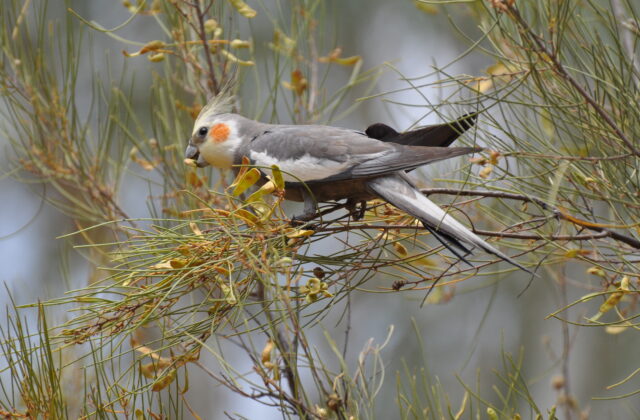 Least Concern
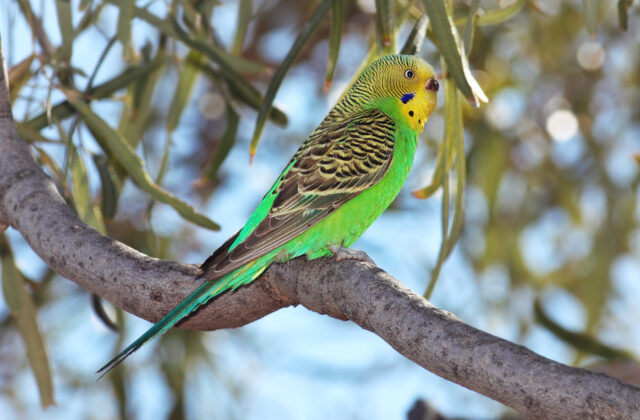 Least Concern
Birb mood:
the chatty pocket parrot
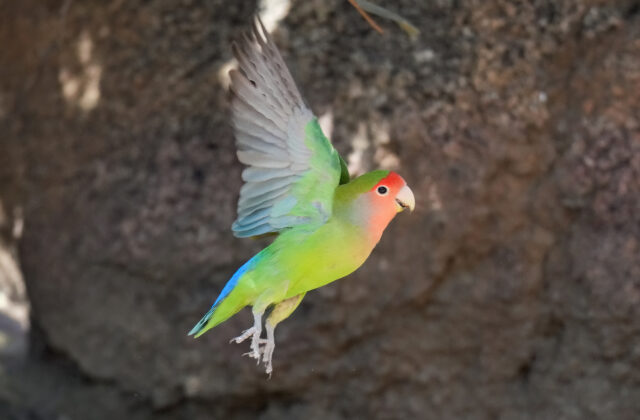 Least Concern
Frequently asked questions
What should I do first if my bird is hurt?
Make the room safe, call your avian vet, and put your bird in a warm, quiet, secure carrier or cage with as little handling as possible. If it has hit its head, do not add heat. Go to the vet even if your bird seems to recover, because bites and head injuries can become serious later.
What are the signs of a dying or seriously ill bird?
Merck says a bird that is huddled, weak, unresponsive or lying on the cage bottom is an emergency: call your vet and go immediately. The AAV also lists laboured breathing, seizures, inability to perch and blood loss as signs needing help at once.
How do I stop a bird's nail or blood feather from bleeding?
If it does not stop by itself within about 5 minutes, LafeberVet advises applying styptic gel or powder with direct pressure for 1 to 2 minutes on a broken blood feather. Merck prefers gel, as powder might be inhaled. Watch your bird for an hour afterwards and call your vet if the bleeding returns or it seems weak.
Should I pull out a broken blood feather?
Not at home. LafeberVet says pulling is a painful, traumatic procedure only rarely performed by vets with proper equipment and pain relief. You may see older advice saying otherwise. Control the bleeding and let your vet decide.
My cat barely touched my bird. Does it still need a vet?
Yes, immediately. LafeberVet says puncture wounds can be subtle and bites can cause crushing and internal injury, even when contact seemed light. RSPCA Australia warns that bacteria from a cat or dog bite can cause fatal infection in less than a day.
How warm should I keep a sick bird?
The AAV suggests 27 to 29°C (80 to 85°F) for most sick birds. If your bird breathes rapidly or holds its wings away from its body, it is too hot. For a bird with head trauma, LafeberVet says not to add heat, because this can worsen swelling in the brain.
Is non-stick cookware really dangerous to birds?
Yes. When overheated, PTFE coatings release colourless, odourless fumes that can kill birds quickly, even from another room, and VCA says sudden death may be the only sign. Move your bird to fresh air immediately and call your vet or a poison line.
Can I give my bird human painkillers or other medicine?
No. The AAV says not to give any drugs or remedies that were not specifically prescribed for your bird. Call your vet instead.
Sources & further reading
- LafeberVet — Do's and Don'ts of Avian First Aid (PDF) (opens in a new tab)
- Merck Veterinary Manual — Injuries and Accidents of Pet Birds (opens in a new tab)
- Merck Veterinary Manual — Traumatic Injury of Pet Birds (professional) (opens in a new tab)
- Merck Veterinary Manual — Toxicoses of Pet Birds (professional) (opens in a new tab)
- Merck Veterinary Manual — Reproductive Disorders of Pet Birds (opens in a new tab)
- Merck Veterinary Manual — Nutritional Disorders of Pet Birds (opens in a new tab)
- Association of Avian Veterinarians — Signs of Illness in Companion Birds (PDF) (opens in a new tab)
- VCA Animal Hospitals — Teflon (PTFE) Poisoning in Birds (opens in a new tab)
- VCA Animal Hospitals — Nursing Care for Sick Pet Birds (opens in a new tab)
- VCA Animal Hospitals — Biting and Screaming in Birds (opens in a new tab)
- Pet Poison Helpline — Top 5 Toxins in Companion Birds (opens in a new tab)
- Pet Poison Helpline — 24/7 Animal Poison Control (opens in a new tab)
- Animal PoisonLine (UK) — Veterinary Poisons Information Service (opens in a new tab)
- RSPCA Australia — Household Hazards (opens in a new tab)
- RSPCA — Environment: Giving Your Bird a Good Place to Live (opens in a new tab)
- RSPCA — Understanding Your Pet Bird's Behaviour (opens in a new tab)