American Goldfinch vs Pine Siskin: How to Tell Them Apart
How to tell a American Goldfinch from a Pine Siskin — size, range, family and status compared side by side, with links to each bird’s full ID guide.
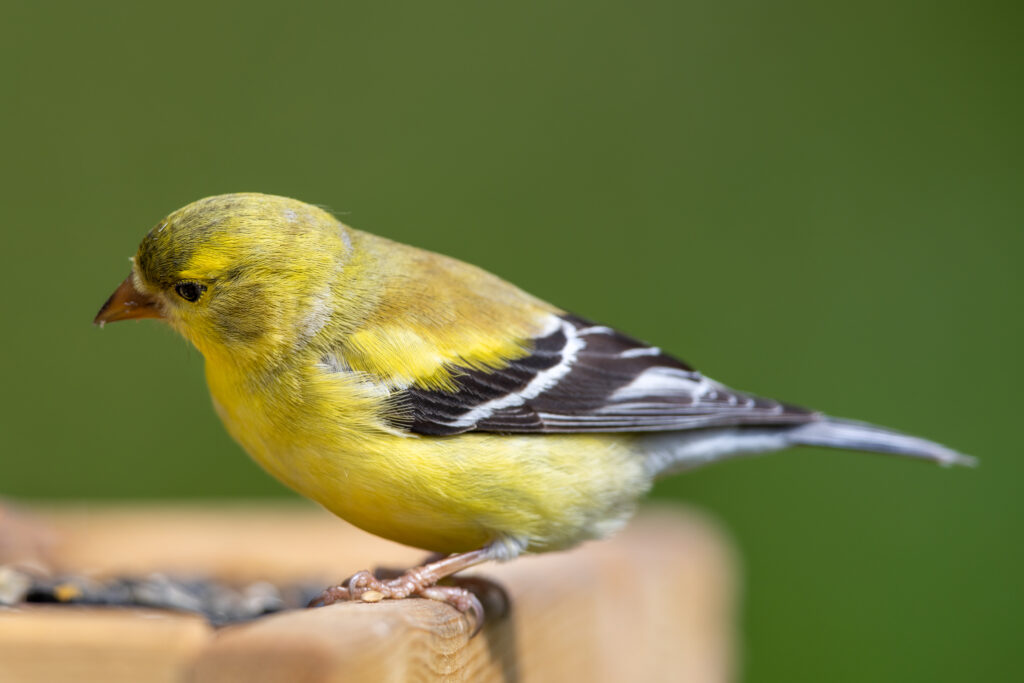
The American Goldfinch and the Pine Siskin are easy to mix up. Here is how the two compare across every fact we track — size, range, family and status.
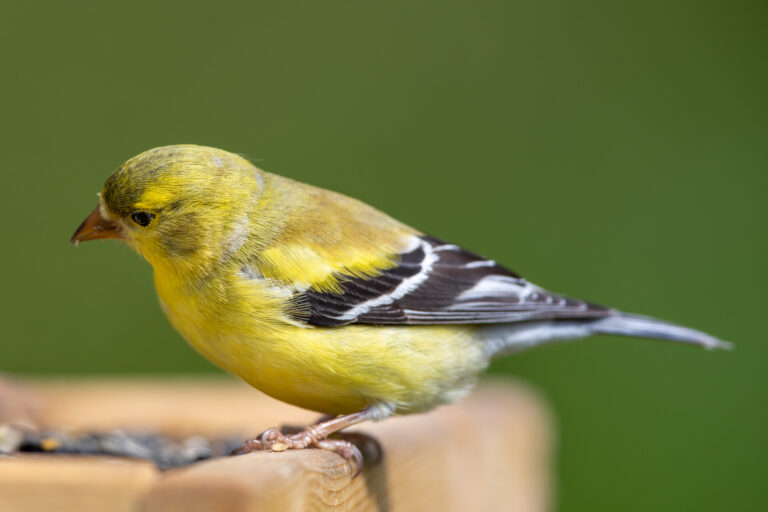 American GoldfinchSpinus tristis
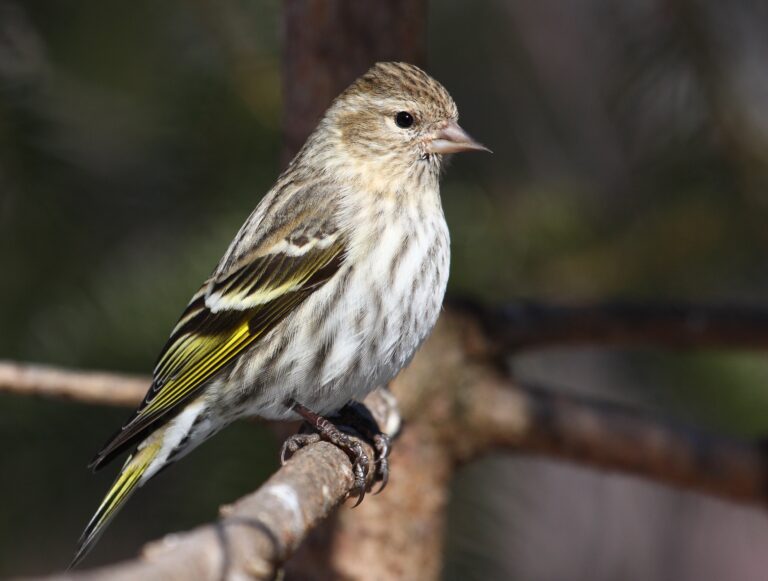 Pine SiskinSpinus pinus
See the American Goldfinch → See the Pine Siskin →
How to tell them apart in the field
Any heavy body/breast/flank streaking = Pine Siskin (thin sharp bill, yellow only as a wing/tail flash); a clean unstreaked bird with a stubby conical bill = American Goldfinch.
| Field mark | American Goldfinch | Pine Siskin |
|---|---|---|
| Streaking | Body unstreaked in every plumage — clean yellow (breeding) or plain buffy-brown (nonbreeding) | Heavy dark-brown streaking over the whole body, breast, and flanks (sparrow-like); Cornell uses this as the primary separator |
| Yellow | Broadly yellow (males brilliant lemon in summer; still yellow-toned face even in winter) | Yellow restricted to the bases of the flight and tail feathers — flashes yellow in the wing and tail base, mainly in flight; often just thin yellow lines at rest |
| Bill | Short, stubby, triangular conical bill | Thin, slender, sharply pointed bill (finer than most finches') |
| Wing pattern | Clean black wings with two bold pale (white/buff) wingbars | Dark wings with thin buffy wingbars plus yellow feather edging/flash |
| Head / overall tone | Smooth, clean look; breeding male has a black FOREHEAD patch (lores + front of crown), not a full cap | Streaky, brown, 'dirty' look with no clean cap and a streaked crown |
Telling females & immatures apart: The confusion case is the nonbreeding/female American Goldfinch (plain buffy, unstreaked). Separate it from Pine Siskin by the total lack of body streaking, the stubbier conical bill, and its clean blackish wings with bold pale wingbars — a siskin's wings are duller with thin buffy bars and yellow edging.
By season, plumage or range: Pine Siskin is irruptive — abundant some winters, scarce or absent others; both flock at nyjer/thistle feeders together in winter, which is where they get directly compared.
By voice: Pine Siskin gives a diagnostic rising, buzzy 'zzzreeee' (zipper- or watch-winding-like) plus a harsh 'tit-a-tit' in flight; American Goldfinch gives a bouncy 'po-ta-to-chip' flight call and a canary-like song.
Side by side
For plumage, calls and the finer field marks, open each bird’s full profile — every one has photos, sounds and ID notes.
More bird showdowns
- American Crow vs Northern Raven: How to Tell Them Apart
- Bald Eagle vs Golden Eagle: How to Tell Them Apart
- Barn Swallow vs Tree Swallow: How to Tell Them Apart
- Belted Kingfisher vs Great Blue Heron: How to Tell Them Apart
- Black Vulture vs Turkey Vulture: How to Tell Them Apart
- Black-capped Chickadee vs Carolina Chickadee: How to Tell Them Apart
Figures are the data we hold for each species (body weight, size class, family, range and conservation status); they describe typical individuals and can vary. Plumage and voice details live on each bird’s profile.
Frequently asked questions
Is the American Goldfinch bigger than the Pine Siskin?
Yes — the American Goldfinch is heavier, around 12.8 g, versus about 12.7 g for the Pine Siskin.
Are the American Goldfinch and the Pine Siskin related?
Yes — both are Fringillidae, so they are close relatives.
Do the American Goldfinch and the Pine Siskin live in the same places?
Range: both range across Central America & Caribbean and North America, so it won’t help you tell them apart.