Black Vulture vs Turkey Vulture: How to Tell Them Apart
How to tell a Black Vulture from a Turkey Vulture — size, range, family and status compared side by side, with links to each bird’s full ID guide.
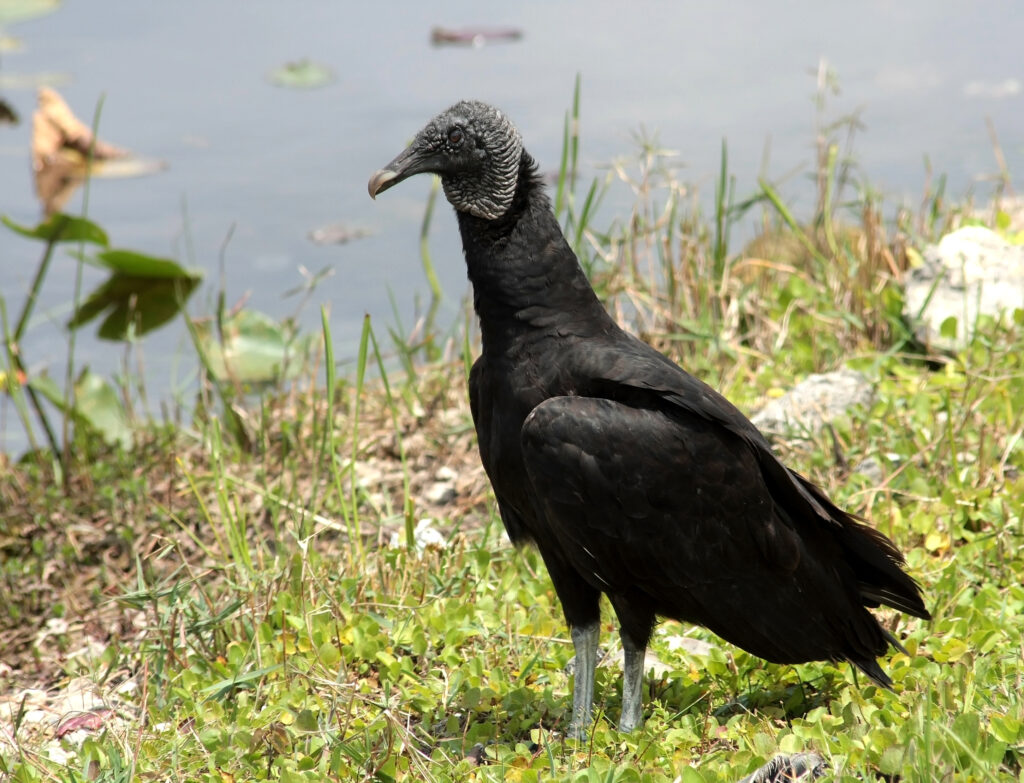
The quickest tell is size: the Black Vulture is noticeably heavier (around 1.9 kg) than the Turkey Vulture (around 1.5 kg). Here is how the two compare across every fact we track.
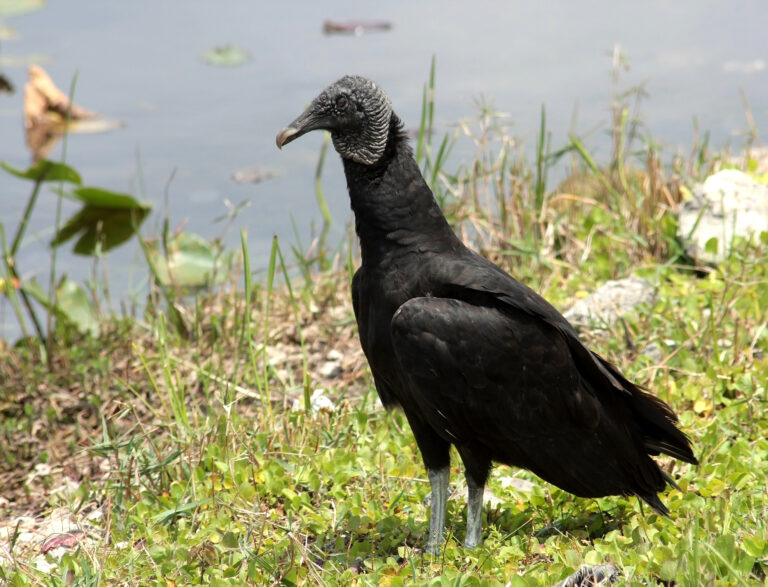 Black VultureCoragyps atratus
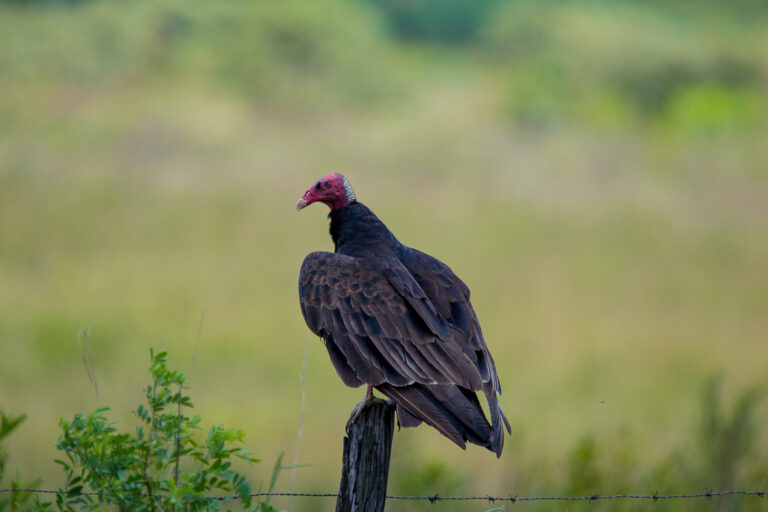 Turkey VultureCathartes aura
See the Black Vulture → See the Turkey Vulture →
How to tell them apart in the field
In the air, read the underwing and the wing set: Black Vulture is all-black with a small silvery patch confined to the wingtips and holds its short broad wings flat; Turkey Vulture shows two-toned underwings (the whole trailing half silvery) and teeters on wings held in a shallow V (dihedral).
| Field mark | Black Vulture | Turkey Vulture |
|---|---|---|
| Underwing pattern (flight) | All black except a bright silver-white patch confined to the outer wingtips ('white gloves' / star-tipped) | Two-toned: dark black wing linings (leading half) contrast with the entire silvery-grey trailing half of the wing (all flight feathers pale) |
| Wing hold / flight style | Wings held flat; steady flight with quick, choppy, snappy wingbeats between short glides | Wings held in a shallow V (dihedral); rocks and teeters, rarely flaps, slow deep wingbeats when it does |
| Silhouette / tail | Broad, short, paddle-like wings and a very short tail that barely projects past the wings – compact and stubby | Long, narrow wings and a longer tail; rangier, more slender and elegant silhouette |
| Head colour (adult) | Bare head dull gray/blackish, small | Bare head red (adult); note immature Turkey Vultures have a dark gray head – fall back on flight shape and underwing |
| Feet in flight | Pale legs/feet often project to or past the short tail tip | Feet fall well short of the longer tail tip |
By voice: Both are near-silent; they lack a syrinx, so away from the nest/roost you get only low hisses and grunts – not a useful field separator.
Side by side
For plumage, calls and the finer field marks, open each bird’s full profile — every one has photos, sounds and ID notes.
More bird showdowns
- American Crow vs Northern Raven: How to Tell Them Apart
- American Goldfinch vs Pine Siskin: How to Tell Them Apart
- Bald Eagle vs Golden Eagle: How to Tell Them Apart
- Barn Swallow vs Tree Swallow: How to Tell Them Apart
- Belted Kingfisher vs Great Blue Heron: How to Tell Them Apart
- Black-capped Chickadee vs Carolina Chickadee: How to Tell Them Apart
Figures are the data we hold for each species (body weight, size class, family, range and conservation status); they describe typical individuals and can vary. Plumage and voice details live on each bird’s profile.
Frequently asked questions
Is the Black Vulture bigger than the Turkey Vulture?
Yes — the Black Vulture is heavier, around 1.9 kg, versus about 1.5 kg for the Turkey Vulture.
Are the Black Vulture and the Turkey Vulture related?
Yes — both are Cathartidae, so they are close relatives.
Do the Black Vulture and the Turkey Vulture live in the same places?
Range: both range across Central America & Caribbean, North America and South America, so it won’t help you tell them apart.