Barn Swallow vs Tree Swallow: How to Tell Them Apart
How to tell a Barn Swallow from a Tree Swallow — size, range, family and status compared side by side, with links to each bird’s full ID guide.
The Barn Swallow and the Tree Swallow are easy to mix up. Here is how the two compare across every fact we track — size, range, family and status.
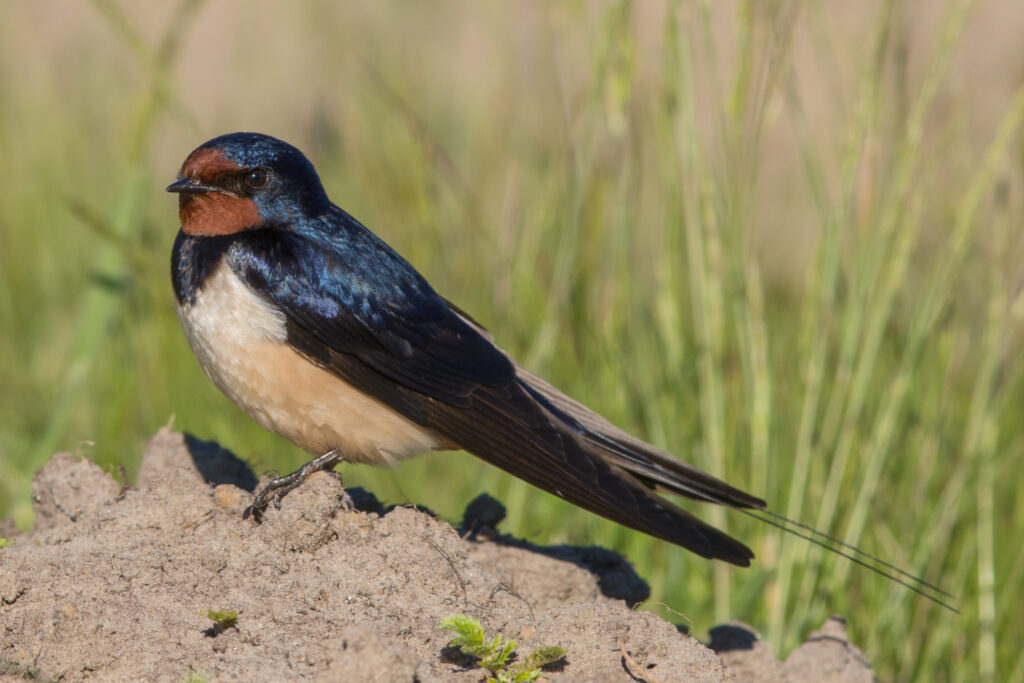
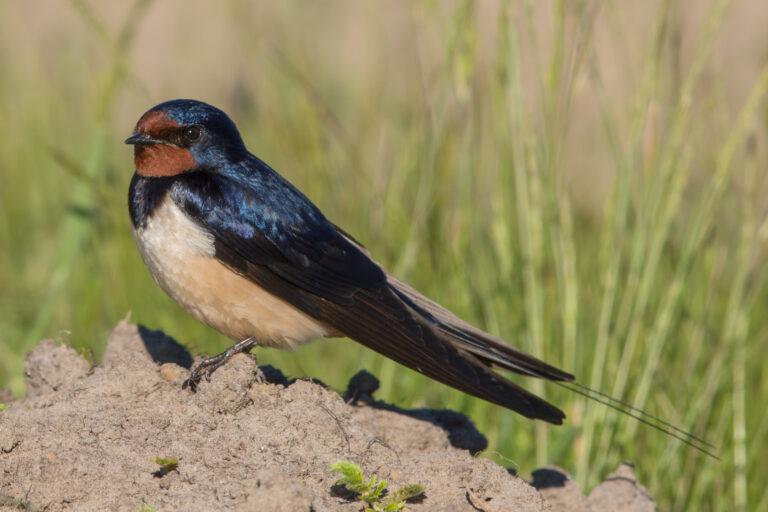 Barn SwallowHirundo rustica
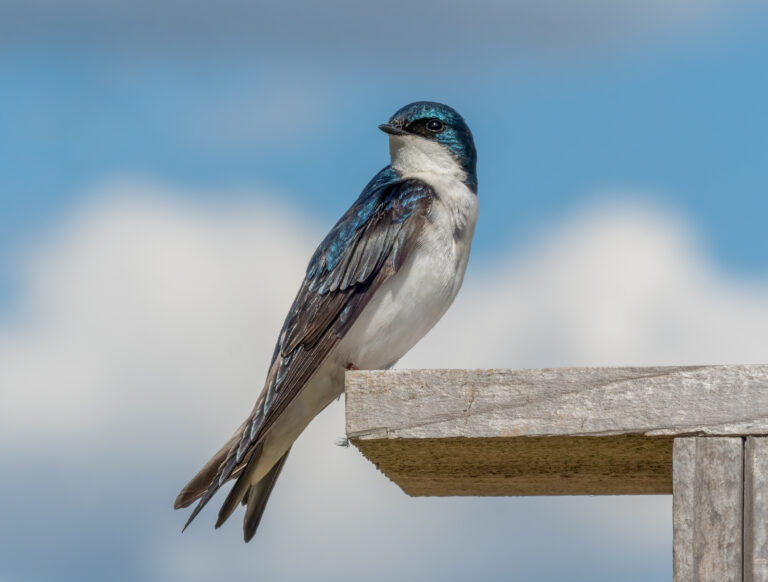 Tree SwallowTachycineta bicolor
See the Barn Swallow → See the Tree Swallow →
How to tell them apart in the field
Check the underparts and the tail: Barn Swallow is rusty-cinnamon on the throat with tawny-buff underparts and a long, deeply forked tail trailing thin streamers well past the wingtips; Tree Swallow is clean snow-white below from chin to undertail with a short, squared-to-slightly-notched tail and no streamers.
| Field mark | Barn Swallow | Tree Swallow |
|---|---|---|
| Underparts | Rufous-cinnamon throat grading into tawny-buff breast and belly — nothing clean white below | Snow-white from chin to undertail, sharply cut off from the dark upperparts |
| Tail | Long, deeply forked tail with thin outer streamers extending well past the wingtips; a row of white spots shows across the tail when spread | Short, squared to slightly notched tail with no streamers and no white spots |
| Face | Dark steely-blue cap and face enclosing a cinnamon forehead patch and a rufous throat | Dark cap comes down only to eye level; cheek, chin, and throat below it are pure white |
| Upperparts color | Uniform steely cobalt-blue across back, wings, and tail | Iridescent blue-green back contrasting with blackish flight feathers (young females duller, often brownish) |
| Flight style | Fluid, loose wingbeats with constant tight turns and dives, rarely gliding, often hunting low over fields and water | Steadier, more linear flight with slower wingbeats and frequent glides between flap bursts |
Telling females & immatures apart: The trap is late-summer juveniles: young Barn Swallows have much shorter tail streamers and paler, whitish-buff underparts, which can suggest a Tree Swallow — but they keep the rusty forehead-and-throat and still show a forked tail with white spots. Going the other way, first-year female Tree Swallows are dull brown above rather than blue-green (older females come closer to the male's gloss), but they remain clean white below. Between these two species, any rusty or buffy tone on the underparts means Barn Swallow — just don't stretch that rule to other swallows, since Cliff and Cave Swallows also show rusty or buffy throats.
By season, plumage or range: Neither species changes plumage seasonally in a way that affects this ID, but timing helps at the season's edges: Tree Swallows can digest berries, so they arrive weeks earlier in spring and linger later into fall than Barn Swallows — a very early March or very late autumn swallow in the north is far more likely a Tree Swallow.
By voice: Barn Swallow gives a husky "veet" or two-syllable "vit-veet" and a long twittering warble interrupted by odd mechanical-sounding whirrs; Tree Swallow's voice is a bright, liquid chirping — cheerful chirp-whine-gurgle phrases with a watery, bubbling quality and no mechanical rattle.
Side by side
For plumage, calls and the finer field marks, open each bird’s full profile — every one has photos, sounds and ID notes.
More bird showdowns
- American Crow vs Northern Raven: How to Tell Them Apart
- American Goldfinch vs Pine Siskin: How to Tell Them Apart
- Bald Eagle vs Golden Eagle: How to Tell Them Apart
- Belted Kingfisher vs Great Blue Heron: How to Tell Them Apart
- Black Vulture vs Turkey Vulture: How to Tell Them Apart
- Black-capped Chickadee vs Carolina Chickadee: How to Tell Them Apart
Figures are the data we hold for each species (body weight, size class, family, range and conservation status); they describe typical individuals and can vary. Plumage and voice details live on each bird’s profile.
Frequently asked questions
Is the Tree Swallow bigger than the Barn Swallow?
Yes — the Tree Swallow is heavier, around 21.2 g, versus about 17.9 g for the Barn Swallow.
Are the Barn Swallow and the Tree Swallow related?
Yes — both are Hirundinidae, so they are close relatives.
Do the Barn Swallow and the Tree Swallow live in the same places?
Range: their ranges overlap in North America.