Trumpeter Swan vs Tundra Swan: How to Tell Them Apart
How to tell a Trumpeter Swan from a Tundra Swan — size, range, family and status compared side by side, with links to each bird’s full ID guide.
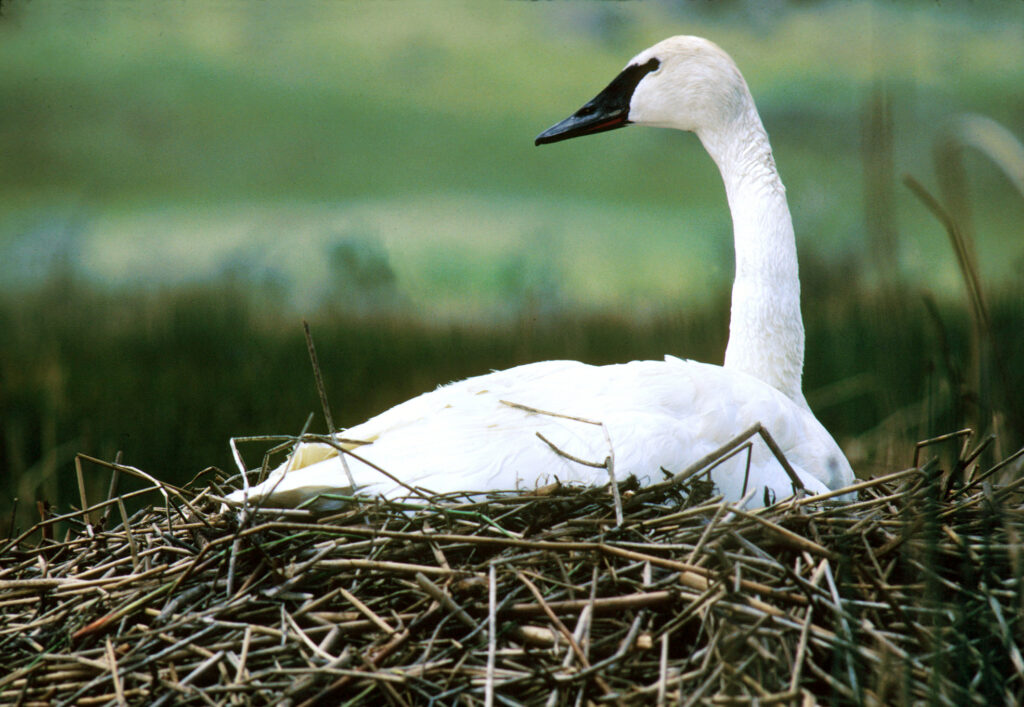
The quickest tell is size: the Trumpeter Swan is noticeably heavier (around 11.1 kg) than the Tundra Swan (around 6.4 kg). Here is how the two compare across every fact we track.
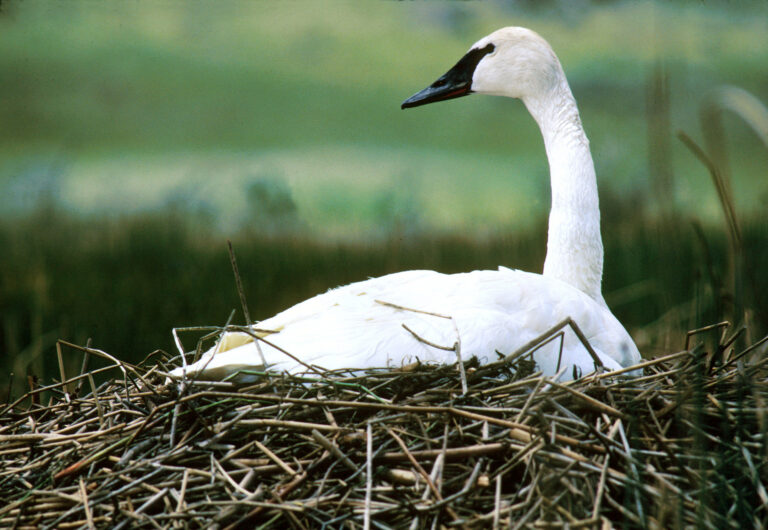 Trumpeter SwanCygnus buccinator
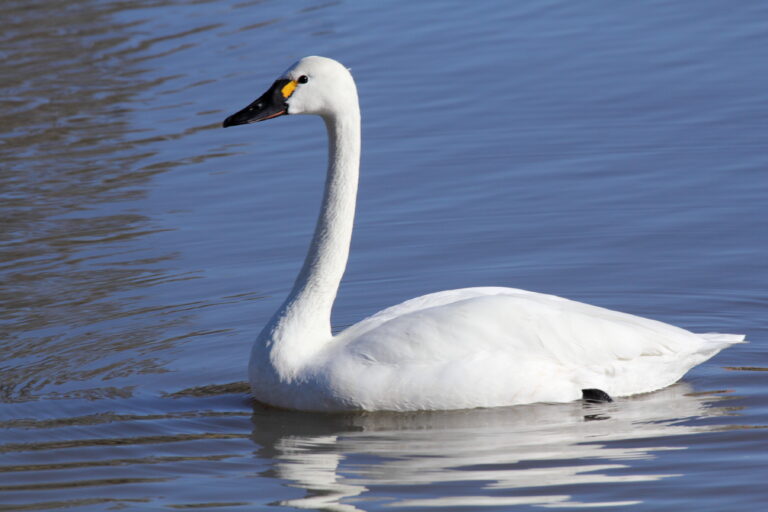 Tundra SwanCygnus columbianus
See the Trumpeter Swan → See the Tundra Swan →
How to tell them apart in the field
Check the lore and the bill base: a yellow spot in front of the eye means Tundra (present on most birds); an all-black bill running solidly to the eye with a V-shaped forehead border means Trumpeter.
| Field mark | Trumpeter Swan | Tundra Swan |
|---|---|---|
| Yellow loral spot | None — bill solid black to the eye (matches the ~10% of Tundras that are also all-black, so absence alone is not proof) | Small yellow patch in front of the eye on most birds (~10% have a large spot, ~10% are all-black); variable, so use with other marks |
| Bill-to-forehead border | Black feathering forms a sharp V pointing down onto the forehead; bill looks long and wedge-like, blending straight into the head | Border is rounded/U- or spoon-shaped; bill smaller with a slightly concave (scooped) profile |
| Eye | Eye broadly connected to and contained within the black bill/facial skin, so it is hard to see as separate from the bill | Eye looks more distinct, nearly separate from the bill (aided by the yellow lore and rounded border) |
| Size | Larger and heavier with a longer neck; largest native North American waterfowl (roughly twice the bulk of a Tundra) | Noticeably smaller and more compact |
| Voice | Deep, resonant, low-pitched bugling honk, trumpet-like; carries a long way | Higher-pitched, quavering, whistling/yelping calls (formerly the "Whistling Swan") |
By season, plumage or range: First-winter immatures of both are dusky gray with pinkish bills; separate by the same bill-shape/forehead-border and eye-to-bill structure, which holds regardless of age.
By voice: Trumpeter gives a deep, resonant, low-pitched bugle/trumpet-like honk; Tundra's call is higher, quavering and more whistling/yelping (its old name was Whistling Swan). Voice is often the surest tell on distant or intermediate-looking birds.
Side by side
For plumage, calls and the finer field marks, open each bird’s full profile — every one has photos, sounds and ID notes.
More bird showdowns
- American Crow vs Northern Raven: How to Tell Them Apart
- American Goldfinch vs Pine Siskin: How to Tell Them Apart
- Bald Eagle vs Golden Eagle: How to Tell Them Apart
- Barn Swallow vs Tree Swallow: How to Tell Them Apart
- Belted Kingfisher vs Great Blue Heron: How to Tell Them Apart
- Black Vulture vs Turkey Vulture: How to Tell Them Apart
Figures are the data we hold for each species (body weight, size class, family, range and conservation status); they describe typical individuals and can vary. Plumage and voice details live on each bird’s profile.
Frequently asked questions
Is the Trumpeter Swan bigger than the Tundra Swan?
Yes — the Trumpeter Swan is heavier, around 11.1 kg, versus about 6.4 kg for the Tundra Swan.
Are the Trumpeter Swan and the Tundra Swan related?
Yes — both are Anatidae, so they are close relatives.
Do the Trumpeter Swan and the Tundra Swan live in the same places?
Range: their ranges overlap in North America.