Eastern Bluebird vs Indigo Bunting: How to Tell Them Apart
How to tell a Eastern Bluebird from a Indigo Bunting — size, range, family and status compared side by side, with links to each bird’s full ID guide.
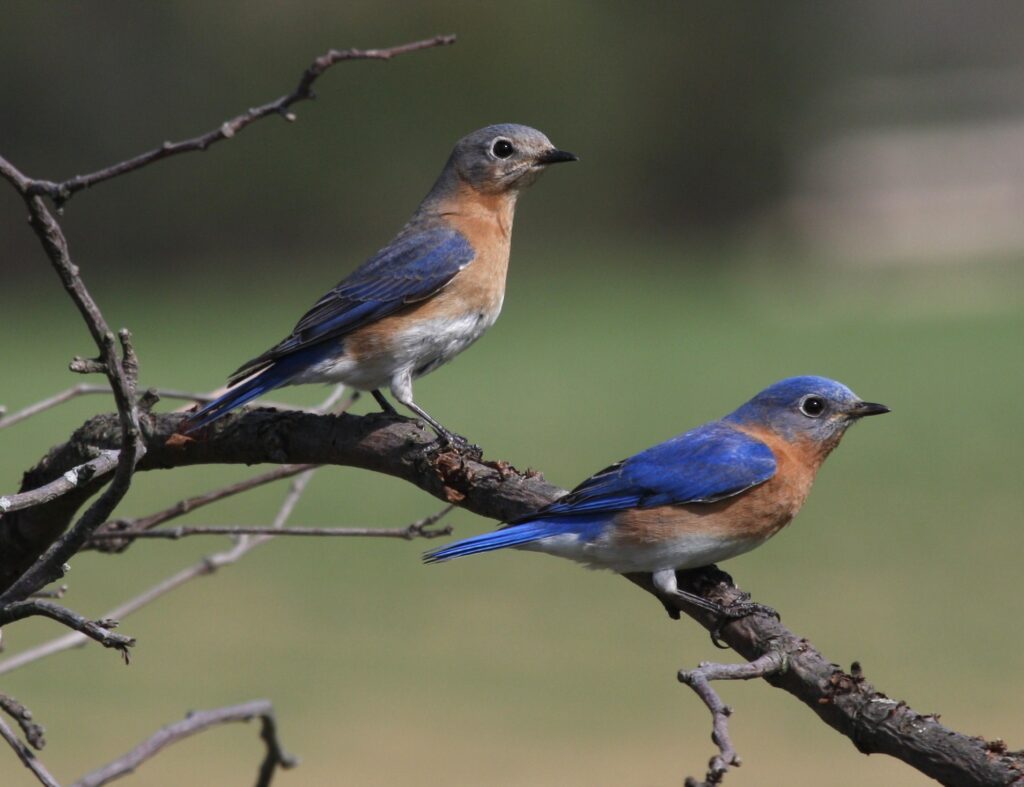
The quickest tell is size: the Eastern Bluebird is noticeably heavier (around 27.5 g) than the Indigo Bunting (around 14.7 g). Here is how the two compare across every fact we track.
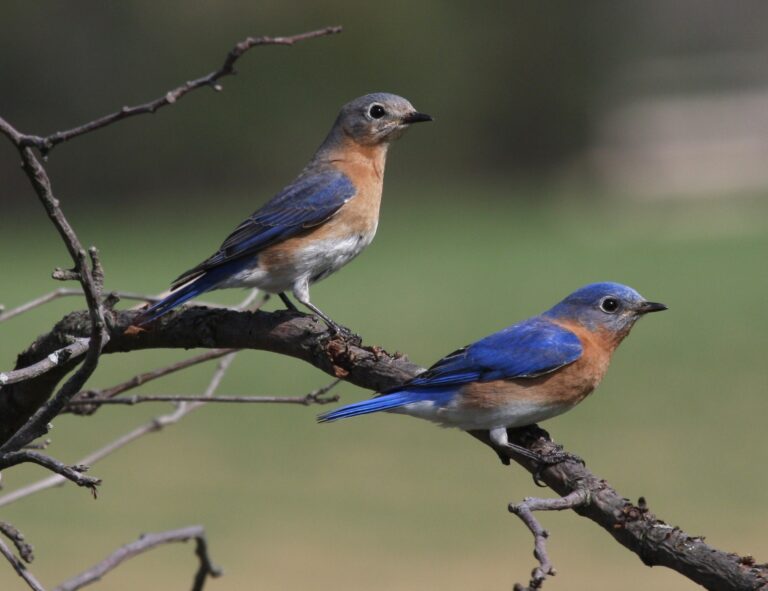 Eastern BluebirdSialia sialis
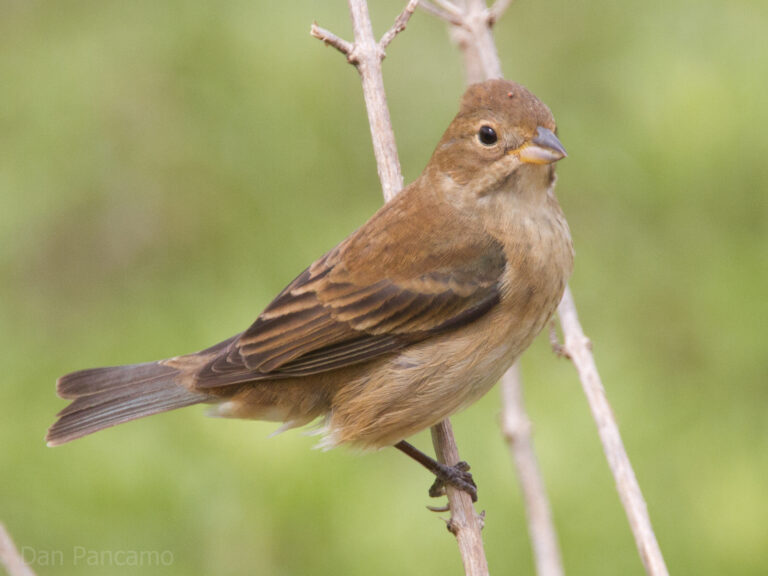 Indigo BuntingPasserina cyanea
See the Eastern Bluebird → See the Indigo Bunting →
How to tell them apart in the field
Look at the underparts first: a male Eastern Bluebird wears a rusty-orange throat and breast over a clean white belly, while a breeding male Indigo Bunting is blue from head to tail with no rust and no white. Then check the bill — thin and straight on the larger, thrush-shaped bluebird; short, thick, and conical on the sparrow-sized bunting.
| Field mark | Eastern Bluebird | Indigo Bunting |
|---|---|---|
| Underparts | Rusty-orange throat and breast sharply set off from a white belly and undertail — the two-tone front is the instant tell | Entirely blue below on breeding males — no rusty breast, no white belly |
| Bill shape | Thin, straight, dark thrush bill built for grabbing insects | Short, stout, conical seed-cracking bill with a silvery-gray sheen, giving a finch-like face |
| Size and build | Larger (6.3-8.3 in), plump and round-bodied with a big rounded head and short tail; sits upright and alert | Sparrow-sized (4.7-5.1 in), stocky, compact and short-tailed — noticeably smaller and slighter |
| Perch and foraging style | Perches erect on wires, fence posts, and nest boxes over open grassland, dropping to the ground for insects | Sings from treetop tips, shrubs, and roadside wires along brushy edges and weedy fields; forages low in seed heads and foliage |
| Tone of blue | Even, bright royal blue across head, back, wings, and tail, contrasting with the rusty chest | Deeper indigo, richest and darkest on the head; like other all-blue songbirds it can look blackish in flat light |
Telling females & immatures apart: The females trip people up in opposite directions: a female Eastern Bluebird is gray-brown but keeps obvious blue in the wings and tail plus a subdued orange-brown wash on the breast, while a female Indigo Bunting is plain warm brown overall with faint blurry breast streaks, a whitish throat, and at most a hint of blue in the wing or tail. Brown bird with an orange chest that flashes blue in flight: bluebird. Small, nearly featureless brown finch with a conical bill: bunting.
By season, plumage or range: Only the bluebird stays blue all year. Male Indigo Buntings molt into a brown, female-like plumage for fall and winter with just patches of blue (first-spring males are mottled blue-and-brown), so an all-blue male bunting is a spring-summer sight; Eastern Bluebirds keep the blue-and-rust pattern in every season.
By voice: Eastern Bluebird gives a soft, low, querulous "tu-a-wee" and a gentle, warbling two-second song; Indigo Bunting sings a bright, buzzy series of paired phrases — "sweet-sweet, chew-chew, sweet-sweet" — from an exposed perch even through midsummer heat, with a sharp, dry "spit" or "chip" call.
Side by side
For plumage, calls and the finer field marks, open each bird’s full profile — every one has photos, sounds and ID notes.
More bird showdowns
- American Crow vs Northern Raven: How to Tell Them Apart
- American Goldfinch vs Pine Siskin: How to Tell Them Apart
- Bald Eagle vs Golden Eagle: How to Tell Them Apart
- Barn Swallow vs Tree Swallow: How to Tell Them Apart
- Belted Kingfisher vs Great Blue Heron: How to Tell Them Apart
- Black Vulture vs Turkey Vulture: How to Tell Them Apart
Figures are the data we hold for each species (body weight, size class, family, range and conservation status); they describe typical individuals and can vary. Plumage and voice details live on each bird’s profile.
Frequently asked questions
Is the Eastern Bluebird bigger than the Indigo Bunting?
Yes — the Eastern Bluebird is heavier, around 27.5 g, versus about 14.7 g for the Indigo Bunting.
Are the Eastern Bluebird and the Indigo Bunting related?
Not closely — the Eastern Bluebird is a Turdidae while the Indigo Bunting is a Cardinalidae.
Do the Eastern Bluebird and the Indigo Bunting live in the same places?
Range: their ranges overlap in North America.